

Northern Lapwing vs Song Thrush
Vanellus vanellus versus Turdus philomelos
Play a quiz with Northern Lapwing and Song Thrush
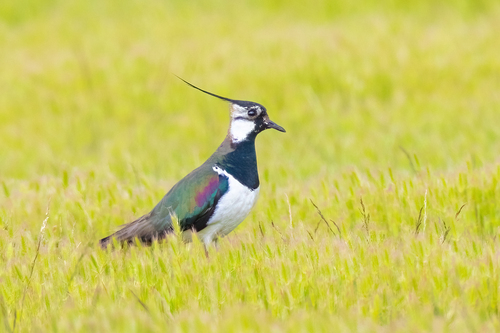 Northern Lapwing
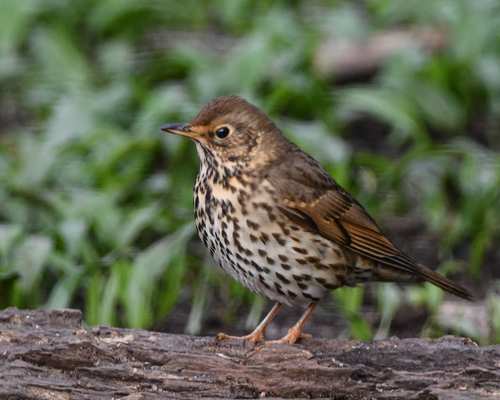 Song Thrush
In short
Northern Lapwing and Song Thrush are unlikely confusion species in most contexts, but distant or brief views—especially of juveniles or birds in flight—can cause mix-ups. The most reliable separation is structural: lapwings are broad-winged waders with a long crest and rounded wings, while song thrushes are compact, upright songbirds with plain brown upperparts and spotted underparts. Juvenile lapwings and thrushes both show some streaking, but lapwings have a greenish gloss and a white face, while thrushes are always brown above and never crested. In flight, lapwings show striking black-and-white wing patterns and slow, floppy wingbeats, unlike the direct, bounding flight of thrushes. Voice, habitat, and jizz are also strong clues.
Identification tips
- Crested head (all ages): Lapwings have a prominent, wispy crest (longest in males), never shown by song thrushes.
- Wing shape in flight: Lapwings have broad, rounded wings with a striking black-and-white pattern; thrushes have narrower, pointed wings with no bold contrast, and show a yellow underwing.
- Plumage gloss: Lapwing upperparts are greenish and iridescent, especially in good light; song thrushes are always plain brown above.
- Facial pattern: Lapwings have a white face with a black crown and throat (especially males); song thrushes have a plain face with no strong contrast or crest.
- Underparts: Song thrushes show neat black spots on cream or buff underparts; lapwings have mainly white underparts with a black breast and throat (in males), never spotted.
- Flight style: Lapwings fly with slow, floppy, butterfly-like wingbeats and perform tumbling display flights; song thrushes fly directly, sometimes with bounding, and never display acrobatics.
- Leg length: Lapwings have relatively short legs for a wader, but still longer than a thrush; song thrushes have pink legs of typical passerine length.
- Bill shape: Lapwings have a short, straight bill; song thrushes have a longer, slightly downcurved bill, yellowish in color.
- Juvenile confusion: Juvenile lapwings may have less distinct head markings but still show a crest and greenish gloss; juvenile song thrushes have extra streaking on the back and coverts but are always brown above and never crested.
- Habitat context: Lapwings are found in open, wet fields and farmland; song thrushes prefer gardens, hedges, and woodland edges.
- Vocal clues: Lapwing's 'pee-wit' call is unique and loud; song thrushes sing rich, repeated musical phrases and call with a 'tsip' or 'chook-chook.'
- Group size: Lapwings often form flocks, especially outside breeding season; song thrushes are usually solitary or in small groups.
- Seasonal context: Lapwings are more likely in open fields in winter flocks; song thrushes are resident year-round but more vocal in spring.
- Display behavior: Only lapwings perform aerial tumbling displays; thrushes sing from perches.
- Upperwing in flight (all ages): Lapwing shows bold black-and-white contrast; song thrush shows plain brown upperwing with yellow underwing.
Size
Northern Lapwing is noticeably larger and heavier than Song Thrush. While the lapwing measures 28–33 cm in length and is bulkier (body mass 128–330 g), the song thrush is smaller at 20–23.5 cm and lighter (body mass 72 g). In the field, lapwings appear much bigger, with longer wings and a more robust build, especially when seen side by side or with familiar species for scale.
Plumage
- Juvenile/immature birds: Juvenile lapwings resemble adults but with shorter crests and less distinct head markings; their upperparts have a greenish gloss and the face is white, with a blackish crown and throat in males. Juvenile song thrushes look like adults but have buff or orange streaks on the back and wing coverts, and always lack any green or iridescent tones. Both have some streaking, but lapwings are boldly patterned with black-and-white, while thrushes are brown above and heavily spotted below.
- Adults: Adult lapwings are boldly black-and-white with a greenish back and a prominent crest; males have a longer crest and more sharply marked head. Song thrushes are plain brown above, with cream or buff underparts covered in neat black spots, and a warm yellow underwing visible in flight. Lapwings have rounded wings with a striking black-and-white pattern in flight, while thrushes show uniform brown upperwings and a yellowish underwing.
- Flight: Lapwings display a dramatic, high-contrast black-and-white wing pattern and rounded wings in flight; thrushes show no such contrast, with brown upperwings and a yellow underwing.
Behaviour
Lapwings are often seen in open fields, marshes, or mudflats, walking slowly or performing tumbling display flights with floppy, butterfly-like wingbeats. They may gather in flocks, especially outside the breeding season. Song thrushes are more solitary or in small groups, foraging on the ground in gardens, woodland edges, or hedgerows with a hopping gait. In flight, thrushes are direct and purposeful, sometimes bounding between perches, and never display the erratic, acrobatic flight of lapwings.
Habitat
Northern Lapwing prefers open country: wet meadows, pastures, farmland, and mudflats, rarely venturing into woodland or dense cover. Song Thrush is a classic woodland-edge and garden species, found in parks, hedgerows, and sometimes open ground but always near cover. If you see a bird in a wet, open field, lapwing is far more likely; in a bushy garden or woodland, expect song thrush.
Voice
Lapwing calls are loud, shrill, and distinctive: the classic 'pee-wit' or 'peewit' is diagnostic, especially in display. Song thrushes have a rich, musical song with repeated phrases, and their calls are short 'tsip' or 'chook-chook' notes. If you hear a repeated, musical song from a treetop, it's a thrush; if you hear a sharp, nasal 'pee-wit' over open fields, it's a lapwing.