

Motmot

Northern Harrier vs American Goshawk

Circus hudsonius versus Astur atricapillus

Play a quiz with Northern Harrier and American Goshawk
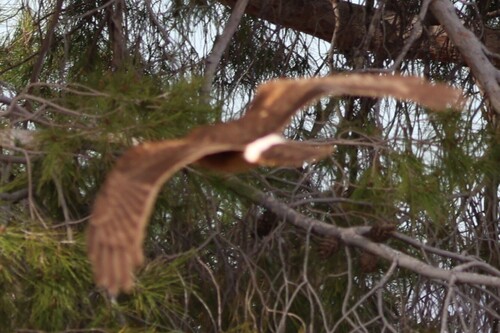
Northern Harrier (Circus hudsonius) Northern Harrier
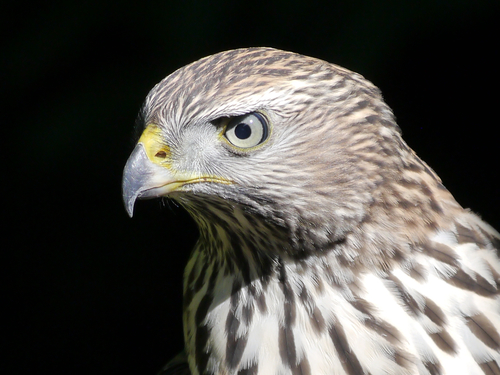
American Goshawk (Astur atricapillus) American Goshawk

Media

Loading…

In short

The most reliable field mark between Northern Harrier and American Goshawk is the harrier’s distinctive long, narrow wings held in a shallow V and its white rump patch, especially obvious in flight of all ages. Juvenile and immature plumages can cause confusion, but goshawks never show a white rump and have broader, shorter wings with a heavy, powerful flight. Harriers are typically seen flying low over open fields or marshes, while goshawks are bulkier, forest-adapted raptors with strong, direct flight and a more robust, broad-headed look. Structural differences—especially in flight silhouette and tail-to-wing proportions—are key, as plumage overlap in young birds can be misleading.

Identification tips

  1. White rump patch (all ages, all seasons): Northern Harrier always shows a bright white rump in flight—this is never present in American Goshawk. If you see this mark, it is diagnostic for harrier.
  2. Wing shape and flight style: Harrier has long, narrow wings held in a shallow V, giving a buoyant, tilting, low flight. Goshawk has broader, shorter wings relative to body, with deep, deliberate wingbeats and a more powerful, direct flight.
  3. Tail-to-wing proportions: Harrier’s tail is very long and narrow, often fanned in flight. Goshawk’s tail is broad and appears shorter relative to its robust body.
  4. Juvenile underpart streaking: Juvenile harrier is brown above with streaked underparts, but the streaking is less heavy and more diffuse than in goshawk. Juvenile goshawk has heavy, even, vertical streaking on the chest and belly, never with rusty tones.
  5. Facial disc: Harrier has a subtle owl-like facial disc (especially visible at close range), which is absent in goshawk.
  6. Perched structure: Harrier appears slim, long-tailed, and small-headed when perched. Goshawk is thickset, broad-headed, and upright.
  7. Adult male plumage: Adult male harrier is pale gray above and below ('Grey Ghost'), while adult goshawk is finely barred gray below and darker above, with a bold white eyebrow.
  8. Adult female/immature confusion: Female and immature harriers are darker and more rufous than Eurasian Hen Harrier, but still show the white rump. Goshawk never shows rufous tones or a white rump.
  9. Habitat context: Harrier is almost never found in dense forest; goshawk is rarely seen in open country. Use habitat as a strong supporting clue.
  10. Flight behavior: Harrier hunts by drifting low over open ground, often quartering fields. Goshawk uses rapid, powerful flight through trees, often ambushing prey.
  11. Relative abundance: Harrier is common in open habitats across northern North America; goshawk is much scarcer and more secretive, mainly in mature forests.
  12. Bill and head shape: Harrier has a small, delicate bill and small head; goshawk has a large, robust bill and broad head.
  13. Voice: Harrier is mostly silent, with occasional 'kek' notes; vocalizations are not a reliable field mark for separation.
  14. Size impression: Harrier is lighter, more graceful; goshawk is heavier, more muscular and imposing.
  15. Common pitfalls: Juvenile harriers may be mistaken for accipiters due to streaked underparts, but always check for the white rump and flight style. Goshawk juveniles may be confused with large Cooper’s Hawks, but are bulkier with heavier streaking and never show a white rump.

Size

Northern Harrier is somewhat smaller and more slender overall, with males averaging 350 g and females 530 g, and a wingspan of 97–122 cm. American Goshawk is a bulkier, heavier bird with a broader body and head, and while exact measurements are not provided here, it is consistently larger and more powerful-looking than harrier, with no overlap in wing and tail length with even the largest Cooper’s Hawk. Harrier’s wings and tail are proportionally longer and narrower relative to body size, giving it a lighter, more buoyant appearance in flight.

Plumage

Juvenile and immature birds are the main source of confusion. Northern Harrier of all ages shows a conspicuous white rump patch in flight, which is never present in goshawk. Juvenile harriers are brown above with streaked underparts, while juvenile goshawks have heavy, vertical streaking on the chest and belly, but lack the harrier’s white rump. Adult male harriers are pale gray above and below, earning the nickname 'Grey Ghost,' while females are darker brown and more rufous than similar Eurasian species. Adult goshawks have finely barred gray underparts and a bold white supercilium, with no rusty tones or white rump. Goshawk juveniles have even, heavy streaking (not teardrop-shaped as in Cooper’s Hawk), and their underparts are never rusty. In perched birds, harrier’s facial disc is subtle but present, while goshawk has a robust, fierce look with a broad head and no facial disc.

Behaviour

Northern Harrier hunts by flying low over open ground with wings held in a shallow V, often tilting and gliding close to the contours of the land, using both vision and hearing to locate prey. Goshawk is a forest hunter, using powerful, direct flight with deep, deliberate wingbeats, often ambushing prey from cover. Harrier’s flight is buoyant and drifting, while goshawk appears more forceful and muscular, with less gliding and more rapid acceleration. Perched, harrier appears slim and long-tailed; goshawk is bulkier and more upright.

Habitat

Northern Harrier is almost always seen in open country—marshes, grasslands, fields—rarely in forested areas. American Goshawk is a bird of forests, especially mature woodlands, and is seldom encountered in open habitats. If you see a raptor hunting low over a marsh or field, it is almost certainly a harrier; a large accipiter in dense woods or forest edge is likely a goshawk.

Voice

Northern Harrier is mostly silent, but both sexes give short, rapid 'kek' notes, especially in alarm or during breeding. Female harrier may emit a loud scream in the breeding season. Goshawk vocalizations are not detailed here, but are not a primary field mark in separation from harrier, as harrier is generally quieter and less vocal overall.

Submit a better description

Use the same sections as the comparison. Your text is published immediately.

The most reliable field mark between Northern Harrier and American Goshawk is the harrier’s distinctive long, narrow wings held in a shallow V and its white rump patch, especially obvious in flight of all ages. Juvenile and immature plumages can cause confusion, but goshawks never show a white rump and have broader, shorter wings with a heavy, powerful flight. Harriers are typically seen flying low over open fields or marshes, while goshawks are bulkier, forest-adapted raptors with strong, direct flight and a more robust, broad-headed look. Structural differences—especially in flight silhouette and tail-to-wing proportions—are key, as plumage overlap in young birds can be misleading.

  1. White rump patch (all ages, all seasons): Northern Harrier always shows a bright white rump in flight—this is never present in American Goshawk. If you see this mark, it is diagnostic for harrier.
  2. Wing shape and flight style: Harrier has long, narrow wings held in a shallow V, giving a buoyant, tilting, low flight. Goshawk has broader, shorter wings relative to body, with deep, deliberate wingbeats and a more powerful, direct flight.
  3. Tail-to-wing proportions: Harrier’s tail is very long and narrow, often fanned in flight. Goshawk’s tail is broad and appears shorter relative to its robust body.
  4. Juvenile underpart streaking: Juvenile harrier is brown above with streaked underparts, but the streaking is less heavy and more diffuse than in goshawk. Juvenile goshawk has heavy, even, vertical streaking on the chest and belly, never with rusty tones.
  5. Facial disc: Harrier has a subtle owl-like facial disc (especially visible at close range), which is absent in goshawk.
  6. Perched structure: Harrier appears slim, long-tailed, and small-headed when perched. Goshawk is thickset, broad-headed, and upright.
  7. Adult male plumage: Adult male harrier is pale gray above and below ('Grey Ghost'), while adult goshawk is finely barred gray below and darker above, with a bold white eyebrow.
  8. Adult female/immature confusion: Female and immature harriers are darker and more rufous than Eurasian Hen Harrier, but still show the white rump. Goshawk never shows rufous tones or a white rump.
  9. Habitat context: Harrier is almost never found in dense forest; goshawk is rarely seen in open country. Use habitat as a strong supporting clue.
  10. Flight behavior: Harrier hunts by drifting low over open ground, often quartering fields. Goshawk uses rapid, powerful flight through trees, often ambushing prey.
  11. Relative abundance: Harrier is common in open habitats across northern North America; goshawk is much scarcer and more secretive, mainly in mature forests.
  12. Bill and head shape: Harrier has a small, delicate bill and small head; goshawk has a large, robust bill and broad head.
  13. Voice: Harrier is mostly silent, with occasional 'kek' notes; vocalizations are not a reliable field mark for separation.
  14. Size impression: Harrier is lighter, more graceful; goshawk is heavier, more muscular and imposing.
  15. Common pitfalls: Juvenile harriers may be mistaken for accipiters due to streaked underparts, but always check for the white rump and flight style. Goshawk juveniles may be confused with large Cooper’s Hawks, but are bulkier with heavier streaking and never show a white rump.

Northern Harrier is somewhat smaller and more slender overall, with males averaging 350 g and females 530 g, and a wingspan of 97–122 cm. American Goshawk is a bulkier, heavier bird with a broader body and head, and while exact measurements are not provided here, it is consistently larger and more powerful-looking than harrier, with no overlap in wing and tail length with even the largest Cooper’s Hawk. Harrier’s wings and tail are proportionally longer and narrower relative to body size, giving it a lighter, more buoyant appearance in flight.

Juvenile and immature birds are the main source of confusion. Northern Harrier of all ages shows a conspicuous white rump patch in flight, which is never present in goshawk. Juvenile harriers are brown above with streaked underparts, while juvenile goshawks have heavy, vertical streaking on the chest and belly, but lack the harrier’s white rump. Adult male harriers are pale gray above and below, earning the nickname 'Grey Ghost,' while females are darker brown and more rufous than similar Eurasian species. Adult goshawks have finely barred gray underparts and a bold white supercilium, with no rusty tones or white rump. Goshawk juveniles have even, heavy streaking (not teardrop-shaped as in Cooper’s Hawk), and their underparts are never rusty. In perched birds, harrier’s facial disc is subtle but present, while goshawk has a robust, fierce look with a broad head and no facial disc.

Northern Harrier hunts by flying low over open ground with wings held in a shallow V, often tilting and gliding close to the contours of the land, using both vision and hearing to locate prey. Goshawk is a forest hunter, using powerful, direct flight with deep, deliberate wingbeats, often ambushing prey from cover. Harrier’s flight is buoyant and drifting, while goshawk appears more forceful and muscular, with less gliding and more rapid acceleration. Perched, harrier appears slim and long-tailed; goshawk is bulkier and more upright.

Northern Harrier is almost always seen in open country—marshes, grasslands, fields—rarely in forested areas. American Goshawk is a bird of forests, especially mature woodlands, and is seldom encountered in open habitats. If you see a raptor hunting low over a marsh or field, it is almost certainly a harrier; a large accipiter in dense woods or forest edge is likely a goshawk.

Northern Harrier is mostly silent, but both sexes give short, rapid 'kek' notes, especially in alarm or during breeding. Female harrier may emit a loud scream in the breeding season. Goshawk vocalizations are not detailed here, but are not a primary field mark in separation from harrier, as harrier is generally quieter and less vocal overall.

Discard your changes?

You have unsaved edits. If you leave now, those changes will be lost.

Northern Harrier · American Goshawk · My Tricky Birds