

Motmot

Northern Gannet vs Great Cormorant

Morus bassanus versus Phalacrocorax carbo

Play a quiz with Northern Gannet and Great Cormorant
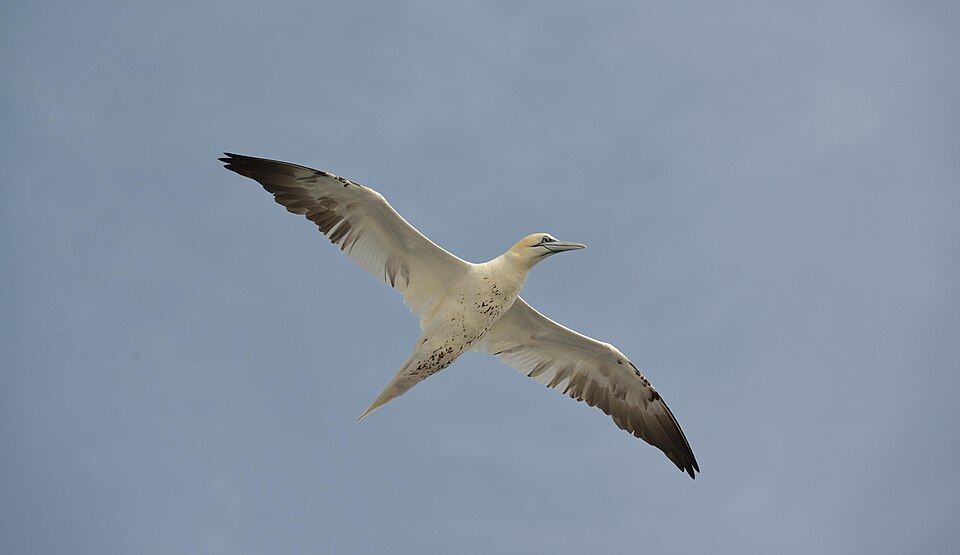
Northern Gannet (Morus bassanus) Northern Gannet
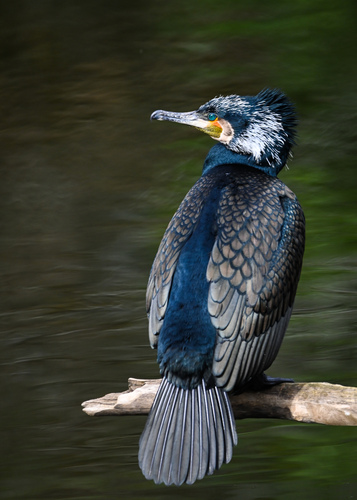
Great Cormorant (Phalacrocorax carbo) Great Cormorant

Media

Loading…

In short

The most reliable field mark between Northern Gannet and Great Cormorant is overall color: adult gannets are strikingly white with black wingtips, while cormorants are mostly black with a slight iridescent sheen. For immature birds in flight, note that juvenile gannets are dark brown and gradually become white over several years, whereas juvenile cormorants have pale underparts but never approach the gannet’s white adult look. Structurally, gannets are bulkier with longer, narrower wings and a pointed, blue-grey bill, while cormorants have a shorter, hooked bill and a heavier, more compact body. In perched views, gannets show a pale head with a buff tinge (especially in breeding season), whereas cormorants are always dark with a yellow or red throat patch.

Identification tips

  1. Overall color in adults: Northern Gannet is almost entirely white with black wingtips and tail, while Great Cormorant is black with a metallic sheen. This is the fastest check at a distance in good light.
  2. Juvenile/immature plumage: Young gannets are dark brown and mottled, becoming whiter over years; young cormorants have pale underparts but never become white overall. If you see a mostly white large seabird with black wingtips, it is not a cormorant of any age.
  3. Bill shape and color: Gannet’s bill is long, pointed, and blue-grey with black skin around the base; cormorant’s bill is shorter, thicker, and hooked, with yellow or red gular skin at the base. This is best seen at moderate range or when perched.
  4. Head and facial pattern: Adult gannets have a pale head with a buff wash (especially in breeding season), and black skin around the eyes and bill; cormorants have a dark head with a yellow or red throat patch and lack any pale or buff coloration.
  5. Tail color and shape: Gannet’s tail is all white in adults, while cormorant’s is long, black, and wedge-shaped (14 feathers). This is visible in flight or when perched with tail fanned.
  6. Wing pattern in flight: Adult gannets show clean white wings with black primaries and tips; cormorants’ wings are uniformly dark with a bronze or greenish gloss, lacking any white panels or sharp contrasts.
  7. Body structure and posture: Gannets are longer-necked, more streamlined, and have longer, narrower wings; cormorants are bulkier, with a shorter neck and heavier build. In flight, gannets soar and glide more, while cormorants have steadier, slower wingbeats.
  8. Perched behavior: Cormorants often perch upright with wings spread to dry; gannets rarely do this and are more often seen on cliffs or flying.
  9. Habitat context: Gannets are almost always at sea or on offshore cliffs; cormorants are common on inland lakes, rivers, and even urban water bodies.
  10. Breeding season marks: Cormorants may show white thigh and head patches in breeding season, but these are limited compared to the gannet’s overall white and buff plumage.
  11. Eye color: Adult cormorants have striking deep sea-green eyes; gannets’ eyes are pale blue, but this is rarely visible at distance.
  12. Flight style: Gannets soar with long, stiff wings and make plunge-dives; cormorants fly with slower, deeper wingbeats and dive from the water’s surface.
  13. Vocalization: Not a strong field mark; both are mostly silent away from colonies.
  14. Size impression: Gannets are larger and longer-winged (average 2999g vs 2200g), but size alone is unreliable without direct comparison.
  15. Pitfalls: In poor light, a juvenile gannet can appear dark and may be confused with a cormorant, but look for the gannet’s longer wings, pointed bill, and lack of yellow throat patch. Cormorants never show the gannet’s white adult plumage or buff head.

Size

Northern Gannet is the larger of the two, with an average adult body mass of about 2999g compared to the Great Cormorant's 2200g [wikidata]. Gannets also have a longer wingspan (170–180 cm) and a more elongated, streamlined body and neck. Cormorants are still large birds but appear heavier and more compact, with a shorter neck and tail relative to their body size. In direct comparison, a gannet will look longer-winged and more graceful, while a cormorant appears stockier and less elegant in flight or at rest.

Plumage

Juvenile and immature gannets are mostly grey-brown, gradually whitening over five years; their wings and body are mottled, lacking the iridescence of cormorants. Adult gannets are almost entirely white with black wingtips and an all-white tail, and in breeding season, the head and nape show a buff wash. Great Cormorants, by contrast, are black at all ages, with adults showing bronze to greenish iridescence on the wings and purple on the body. Juvenile cormorants have pale or whitish underparts but retain dark upperparts and never become fully white. In breeding season, cormorants show white filoplume patches on thighs and head, but these are much less extensive than the gannet's overall white appearance. The cormorant’s tail is long and black (14 feathers), while the gannet’s is white in adults. Bill color is also a clue: gannets have a blue-grey, pointed bill with black facial skin, while cormorants have a dark, hooked bill with a yellow or red gular patch.

Behaviour

Northern Gannets are often seen soaring with long, stiff, narrow wings and making dramatic plunge-dives from height into the sea. They rarely perch on inland structures. Great Cormorants are more versatile, often seen perched upright on rocks, posts, or trees with wings spread to dry. Their flight is more labored, with slower, deeper wingbeats and a heavier, lower profile. Cormorants dive from the water’s surface rather than from the air, and are frequently seen swimming low in the water with just the head and neck exposed.

Habitat

Northern Gannets are strictly marine, breeding and foraging along rocky coasts and offshore islands in the North Atlantic, rarely venturing inland. They nest in dense colonies on cliffs or isolated islands. Great Cormorants have a much broader habitat range: they breed and forage on coasts, rivers, lakes, and reservoirs, and are common both inland and at sea across much of the Old World and Atlantic North America. Cormorants are more likely to be seen on freshwater bodies and human-made structures.

Submit a better description

Use the same sections as the comparison. Your text is published immediately.

The most reliable field mark between Northern Gannet and Great Cormorant is overall color: adult gannets are strikingly white with black wingtips, while cormorants are mostly black with a slight iridescent sheen. For immature birds in flight, note that juvenile gannets are dark brown and gradually become white over several years, whereas juvenile cormorants have pale underparts but never approach the gannet’s white adult look. Structurally, gannets are bulkier with longer, narrower wings and a pointed, blue-grey bill, while cormorants have a shorter, hooked bill and a heavier, more compact body. In perched views, gannets show a pale head with a buff tinge (especially in breeding season), whereas cormorants are always dark with a yellow or red throat patch.

  1. Overall color in adults: Northern Gannet is almost entirely white with black wingtips and tail, while Great Cormorant is black with a metallic sheen. This is the fastest check at a distance in good light.
  2. Juvenile/immature plumage: Young gannets are dark brown and mottled, becoming whiter over years; young cormorants have pale underparts but never become white overall. If you see a mostly white large seabird with black wingtips, it is not a cormorant of any age.
  3. Bill shape and color: Gannet’s bill is long, pointed, and blue-grey with black skin around the base; cormorant’s bill is shorter, thicker, and hooked, with yellow or red gular skin at the base. This is best seen at moderate range or when perched.
  4. Head and facial pattern: Adult gannets have a pale head with a buff wash (especially in breeding season), and black skin around the eyes and bill; cormorants have a dark head with a yellow or red throat patch and lack any pale or buff coloration.
  5. Tail color and shape: Gannet’s tail is all white in adults, while cormorant’s is long, black, and wedge-shaped (14 feathers). This is visible in flight or when perched with tail fanned.
  6. Wing pattern in flight: Adult gannets show clean white wings with black primaries and tips; cormorants’ wings are uniformly dark with a bronze or greenish gloss, lacking any white panels or sharp contrasts.
  7. Body structure and posture: Gannets are longer-necked, more streamlined, and have longer, narrower wings; cormorants are bulkier, with a shorter neck and heavier build. In flight, gannets soar and glide more, while cormorants have steadier, slower wingbeats.
  8. Perched behavior: Cormorants often perch upright with wings spread to dry; gannets rarely do this and are more often seen on cliffs or flying.
  9. Habitat context: Gannets are almost always at sea or on offshore cliffs; cormorants are common on inland lakes, rivers, and even urban water bodies.
  10. Breeding season marks: Cormorants may show white thigh and head patches in breeding season, but these are limited compared to the gannet’s overall white and buff plumage.
  11. Eye color: Adult cormorants have striking deep sea-green eyes; gannets’ eyes are pale blue, but this is rarely visible at distance.
  12. Flight style: Gannets soar with long, stiff wings and make plunge-dives; cormorants fly with slower, deeper wingbeats and dive from the water’s surface.
  13. Vocalization: Not a strong field mark; both are mostly silent away from colonies.
  14. Size impression: Gannets are larger and longer-winged (average 2999g vs 2200g), but size alone is unreliable without direct comparison.
  15. Pitfalls: In poor light, a juvenile gannet can appear dark and may be confused with a cormorant, but look for the gannet’s longer wings, pointed bill, and lack of yellow throat patch. Cormorants never show the gannet’s white adult plumage or buff head.

Northern Gannet is the larger of the two, with an average adult body mass of about 2999g compared to the Great Cormorant's 2200g [wikidata]. Gannets also have a longer wingspan (170–180 cm) and a more elongated, streamlined body and neck. Cormorants are still large birds but appear heavier and more compact, with a shorter neck and tail relative to their body size. In direct comparison, a gannet will look longer-winged and more graceful, while a cormorant appears stockier and less elegant in flight or at rest.

Juvenile and immature gannets are mostly grey-brown, gradually whitening over five years; their wings and body are mottled, lacking the iridescence of cormorants. Adult gannets are almost entirely white with black wingtips and an all-white tail, and in breeding season, the head and nape show a buff wash. Great Cormorants, by contrast, are black at all ages, with adults showing bronze to greenish iridescence on the wings and purple on the body. Juvenile cormorants have pale or whitish underparts but retain dark upperparts and never become fully white. In breeding season, cormorants show white filoplume patches on thighs and head, but these are much less extensive than the gannet's overall white appearance. The cormorant’s tail is long and black (14 feathers), while the gannet’s is white in adults. Bill color is also a clue: gannets have a blue-grey, pointed bill with black facial skin, while cormorants have a dark, hooked bill with a yellow or red gular patch.

Northern Gannets are often seen soaring with long, stiff, narrow wings and making dramatic plunge-dives from height into the sea. They rarely perch on inland structures. Great Cormorants are more versatile, often seen perched upright on rocks, posts, or trees with wings spread to dry. Their flight is more labored, with slower, deeper wingbeats and a heavier, lower profile. Cormorants dive from the water’s surface rather than from the air, and are frequently seen swimming low in the water with just the head and neck exposed.

Northern Gannets are strictly marine, breeding and foraging along rocky coasts and offshore islands in the North Atlantic, rarely venturing inland. They nest in dense colonies on cliffs or isolated islands. Great Cormorants have a much broader habitat range: they breed and forage on coasts, rivers, lakes, and reservoirs, and are common both inland and at sea across much of the Old World and Atlantic North America. Cormorants are more likely to be seen on freshwater bodies and human-made structures.

Discard your changes?

You have unsaved edits. If you leave now, those changes will be lost.

Northern Gannet · Great Cormorant · My Tricky Birds