

Northern Gannet vs European Shag
Morus bassanus versus Gulosus aristotelis
Play a quiz with Northern Gannet and European Shag
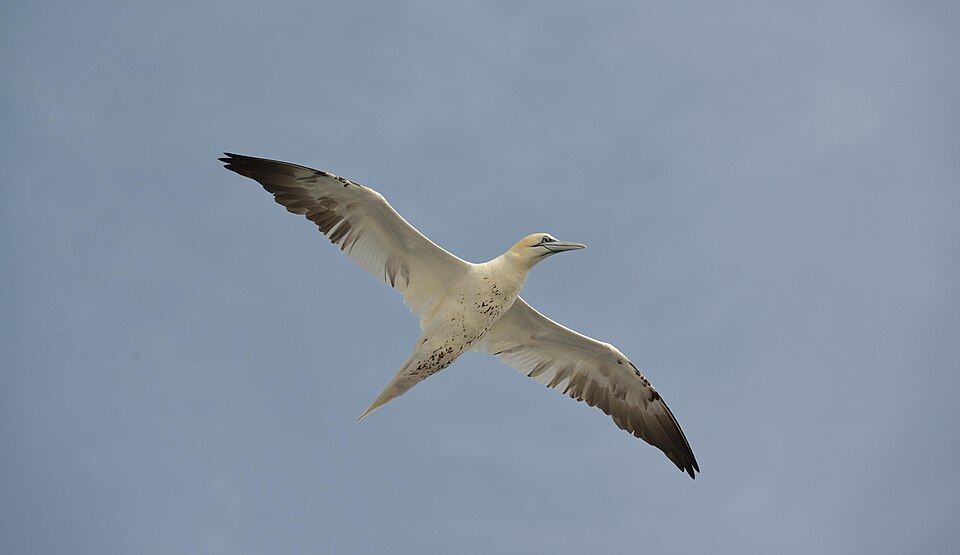 Northern Gannet
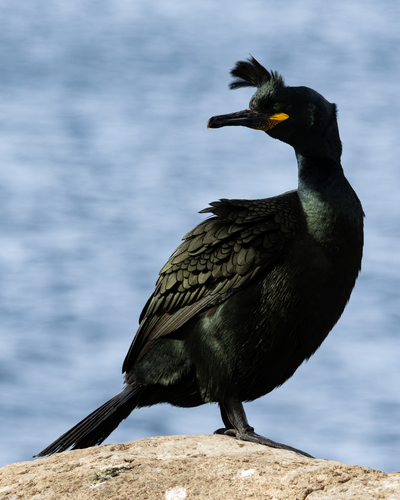 European Shag
In short
The most reliable field mark between Northern Gannet and European Shag is overall color and size: adult gannets are strikingly large, mostly white seabirds with black wingtips and a pale buff head, while shags are much smaller, entirely dark birds with a greenish sheen and a yellow throat patch. Immature gannets can be confusing due to their dark, mottled plumage, but they remain bulkier and show contrasting white patches as they age, unlike the uniformly dark juvenile shag. Bill shape and structure are also key: gannets have a thick, long, blue-grey bill, while shags have a thinner, more delicate bill. In flight or at rest, gannets appear massive and streamlined, while shags are more slender and cormorant-like.
Identification tips
- Juvenile/immature flight pattern: Young Northern Gannets show a patchy, mottled appearance with white and dark areas on the wings and body, especially as they age through their first five years. Juvenile shags are uniformly dark with no white patches. This is a key mark for separating immatures in flight.
- Overall color: Adult gannets are almost entirely white with black wingtips; shags are entirely dark with a greenish gloss. Even at a distance, this contrast is obvious in good light.
- Bill shape and color: Gannets have a long, thick, blue-grey bill with black bare skin around the mouth and eyes. Shags have a thinner, more delicate bill that is dark, and a yellow throat patch at the base.
- Head and face: Breeding gannets show a pale buff wash on the head and nape, absent in shags. Shags in breeding season may show a small crest.
- Tail: Gannets have an all-white tail; shags have a long, dark tail. This is visible both in flight and when perched.
- Size and bulk: Gannets are much larger and heavier-bodied, with a massive, streamlined look. Shags are medium-sized, slender, and cormorant-like.
- Wing shape and flight: Gannets have long, narrow wings and a direct, powerful flight. Shags have shorter, broader wings and a more labored, rapid wingbeat.
- Perching behavior: Shags often perch on rocks or jetties with wings spread to dry; gannets rarely perch except at nesting colonies.
- Habitat: Gannets are usually seen far offshore or at remote colonies; shags are coastal, often close to land and human activity.
- Underparts: Juvenile shags have darker underparts, while young gannets become increasingly white below as they mature.
- Facial skin: Gannets have black bare skin around the eyes and bill base; shags have a yellow throat patch and no black facial skin.
- Crest: Only shags show a small crest in breeding season; gannets never do.
- Jizz: Gannets appear massive, streamlined, and powerful; shags look slender, long-tailed, and cormorant-like.
- Plumage transition: Gannets take up to five years to reach full adult plumage, so intermediate birds can be confusing but will always show some white patches and a larger, bulkier structure than any shag.
- Pitfalls: In poor light, immature gannets may look dark and could be confused with shags, but check for size, bill shape, and any white in the plumage. Shags never show white patches or a buff head.
Size
Northern Gannet is dramatically larger: adults average nearly 3 kg in mass and reach 87–100 cm in length with a wingspan of 170–180 cm [wikidata][wikipedia]. European Shag is much smaller, at 68–78 cm long and a wingspan of 95–110 cm [wikipedia]. Even at a distance, gannets appear huge and heavy-bodied compared to the more svelte, medium-sized shag. Size alone is often enough to separate them when seen together.
Plumage
- Juvenile/immature birds: Juvenile Northern Gannets are mostly grey-brown with white mottling, gradually gaining more white over five years; they may show a patchy, piebald look in flight, especially on the upperwings and underparts. Juvenile European Shags are uniformly dark, with darker underparts and lack the contrasting white patches seen in immature gannets. This makes young gannets appear much more patterned and variable than the consistently dark young shags.
- Adults: Adult Northern Gannets are almost entirely white with black wingtips and a pale buff wash on the head and nape (especially in breeding season). Their tail is all white. Adult European Shags are glossy black with a green sheen, a yellow throat patch, and a small crest in breeding season. The shag’s tail is long and dark, never white. In all plumages, gannets have a blue-grey bill with black bare skin around the face, while shags have a thinner, dark bill and a yellow throat patch.
Behaviour
Northern Gannets are powerful, direct fliers and are often seen plunging dramatically into the sea from great heights to catch fish. They nest in dense colonies on cliffs and offshore islands. European Shags are more likely to be seen swimming low in the water, diving for fish, or perching on rocks with wings outstretched to dry. Their flight is less direct and more labored, with rapid wingbeats and a more cormorant-like silhouette. Gannets rarely perch on rocks near shore, while shags often do.
Habitat
Northern Gannets are strictly pelagic outside the breeding season, usually seen far offshore except when nesting on steep, remote cliffs or islands. European Shags are coastal birds, rarely venturing far from land, and are commonly seen around rocky shores, harbors, and islands. If you see a large white seabird far out to sea, it is almost certainly a gannet; a dark bird hugging the coastline or perched on rocks is likely a shag.