

Northern Bobwhite vs Willow Ptarmigan
Colinus virginianus versus Lagopus lagopus
Play a quiz with Northern Bobwhite and Willow Ptarmigan
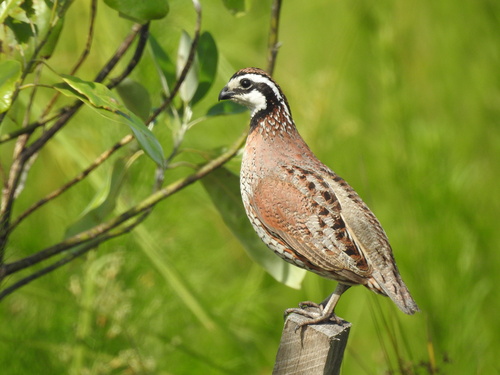 Northern Bobwhite
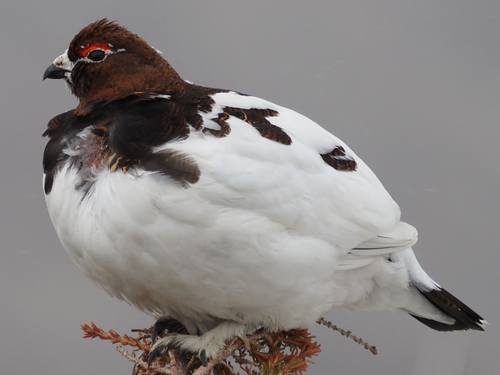 Willow Ptarmigan
In short
The most reliable way to separate Northern Bobwhite from Willow Ptarmigan is by size and overall structure: Willow Ptarmigan is nearly four times heavier, with a much bulkier, deep-chested build and a longer neck. In all plumages, Willow Ptarmigan shows a striking seasonal change—entirely white in winter except for a black tail, while Northern Bobwhite remains rufous and mottled year-round. Bobwhite males have a crisp white throat and brow stripe, lacking in ptarmigan. In flight, Willow Ptarmigan appears larger and more ponderous, with broad wings and a longer wingspan. Habitat is also a strong clue: Bobwhite favors grasslands and open woods in temperate regions, while Willow Ptarmigan is tied to northern tundra and moorland.
Identification tips
- Size is the fastest separator: Willow Ptarmigan is nearly four times heavier and much longer than Northern Bobwhite. If the bird looks chicken-sized or larger, it is not a bobwhite.
- Overall shape: Willow Ptarmigan is deep-chested, long-necked, and broad-bodied; bobwhite is compact, short-necked, and rounded.
- Seasonal plumage change: Only Willow Ptarmigan turns almost entirely white in winter (except for the black tail); bobwhite never does, remaining mottled rufous and gray year-round.
- Male head pattern: Northern Bobwhite males have a sharp white throat and brow stripe bordered by black, creating a strong face pattern. Willow Ptarmigan lacks this; its head is plain brown in summer, white in winter.
- Tail color: Willow Ptarmigan always shows a black tail (even in winter, when the rest of the bird is white); bobwhite has a gray tail that blends with the body.
- Legs: Willow Ptarmigan has heavily feathered legs and feet in all seasons, an adaptation to cold climates. Bobwhite legs are bare and unfeathered.
- Bill: Willow Ptarmigan has a thicker, broader bill; bobwhite's bill is short, curved, and more delicate.
- Eye combs: In breeding season, male Willow Ptarmigan show red, fleshy combs above the eyes; bobwhite never shows this feature.
- Flight style: Willow Ptarmigan is heavy and slow in flight, with broad wings and a longer glide. Bobwhite explodes from cover with rapid wingbeats and flies low.
- Habitat: Bobwhite is found in temperate grasslands, fields, and open woods; Willow Ptarmigan is in northern tundra, moorland, or birch forest. Habitat alone is often diagnostic.
- Voice: The clear, rising "bob-WHITE" whistle is unique to Northern Bobwhite. Willow Ptarmigan produces croaks and clucks, not whistles.
- Sexual dimorphism: Bobwhite is sexually dimorphic (males with white face), while Willow Ptarmigan sexes are similar, especially in winter.
- Plumage in immatures: Both species' juveniles resemble adults; no unique immature wing pattern is noted for either, so use size and structure for young birds.
- Context: If you see a covey in a farm field or grassland in the U.S. east or Midwest, it's almost certainly bobwhite. If in northern tundra or moor, it's ptarmigan.
- Pitfalls: In rare cases, captive or introduced birds may appear out of range, but the size and plumage differences remain clear.
Size
Willow Ptarmigan is dramatically larger: adults average about 650 g, compared to just 171 g for Northern Bobwhite [wikidata]. Ptarmigan are 35–44 cm long with a 60–65 cm wingspan, while bobwhite are only 24–28 cm long with a 33–38 cm wingspan [wikipedia]. In the field, Willow Ptarmigan looks much bulkier, with a deep chest, long neck, and a broad, rounded body. Bobwhite is compact and rounded, with a short neck and tail, and a noticeably smaller, more delicate frame.
Plumage
- Juvenile/immature wing pattern: No specific age-related upperwing marks are described for either species; both resemble adults in structure and flight, so age is not a primary separator here [wikipedia].
- Adult and seasonal plumage: Northern Bobwhite is rufous with gray mottling, white scalloped flanks, and a gray tail year-round. Males have a bold white throat and brow stripe bordered by black. Willow Ptarmigan, in summer, is marbled brown with a reddish neck and breast, black tail, and white wings and underparts; females are similar but duller. In winter, Willow Ptarmigan becomes almost entirely white except for the black tail, a transformation never seen in bobwhite. Willow Ptarmigan males have red eye combs in breeding season, absent in bobwhite. Both sexes of ptarmigan have feathered legs, unlike bobwhite.
Behaviour
Both species are ground-dwelling, but Willow Ptarmigan often forms larger flocks outside the breeding season, and is more likely to be seen in open tundra or moorland, sometimes migrating short distances to lower elevations in winter. Northern Bobwhite is typically found in small coveys, moving through grass or brush, and is less likely to be seen in open, treeless landscapes. In flight, Willow Ptarmigan is heavier and slower, with broad, rounded wings and a longer glide, while bobwhite is quick and bursts away low to the ground with rapid wingbeats.
Habitat
Northern Bobwhite is a species of temperate agricultural fields, grasslands, open woodlands, and edges in eastern and central North America. Willow Ptarmigan is strictly northern, found in birch forests, moorlands, and especially tundra across Alaska, Canada, and northern Eurasia. Bobwhite is never found in tundra or above the treeline, while Willow Ptarmigan avoids the lowland agricultural and woodland habitats favored by bobwhite. If you are in open grassland or farmland in the U.S. southeast or Midwest, it is almost certainly a bobwhite; if you are in northern tundra or moor, it is a ptarmigan.
Voice
Northern Bobwhite has a distinctive, clear, rising whistle: "bob-WHITE" or "bob-bob-WHITE," with slow, widely spaced syllables rising in pitch. Willow Ptarmigan does not produce anything similar; its calls are more guttural, croaking, or clucking, lacking the musical, whistled quality of bobwhite. If you hear the classic "bobwhite" call, you are hearing Colinus virginianus.