

Motmot

Mourning Collared Dove vs Red-eyed Dove

Streptopelia decipiens versus Streptopelia semitorquata

Play a quiz with Mourning Collared Dove and Red-eyed Dove
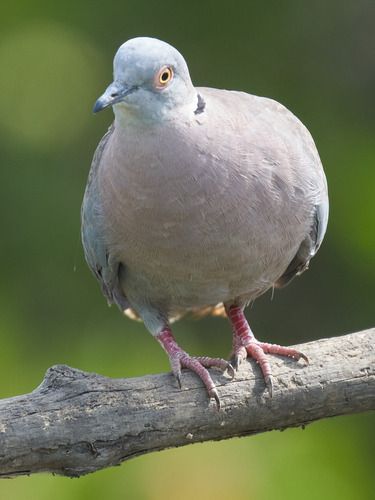
Mourning Collared Dove (Streptopelia decipiens) Mourning Collared Dove
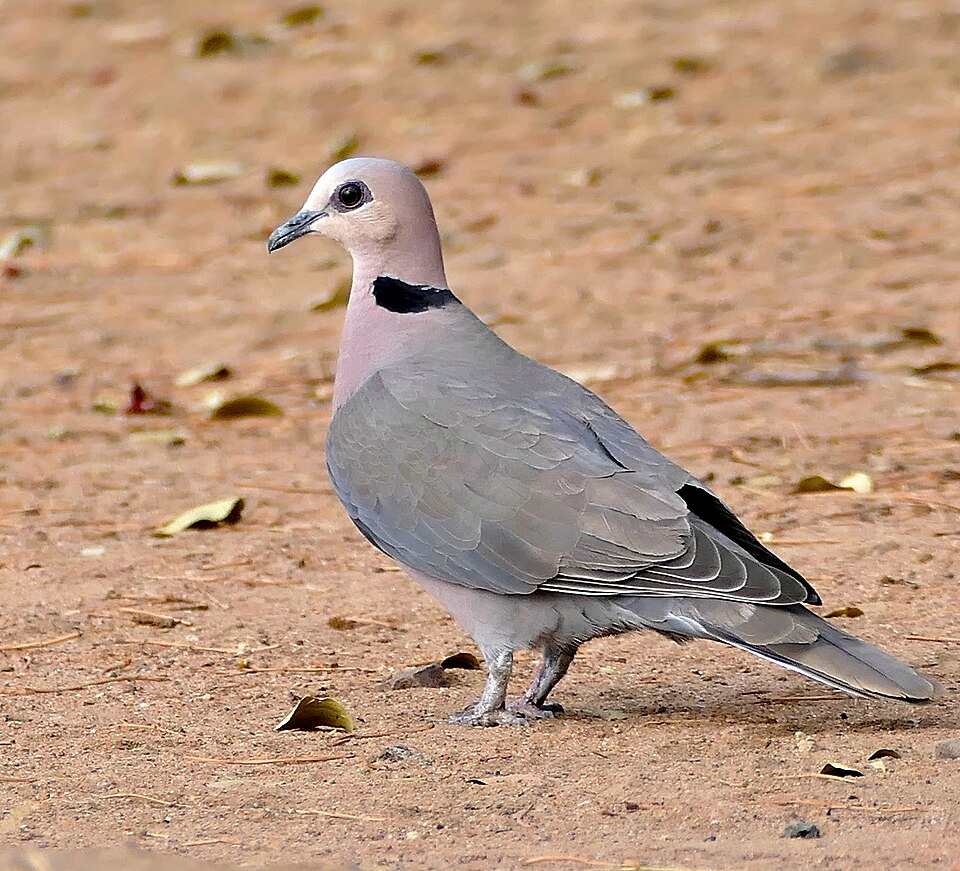
Red-eyed Dove (Streptopelia semitorquata) Red-eyed Dove

Media

Loading…

In short

The most reliable field mark to separate Mourning Collared Dove from Red-eyed Dove is the extensive white in the tail seen in flight on Mourning Collared Dove, which is lacking in Red-eyed Dove. Mourning Collared Dove is also noticeably smaller and stockier, with a paler grey head and pinkish-grey body, while Red-eyed Dove is larger, with a darker, wine-red breast and a distinctive red or orange iris. Both have a black neck collar, but Mourning Collared Dove's is broader and more clearly edged in white. Immature birds of both species are duller, but the tail pattern remains a key distinction in all ages.

Identification tips

  1. Tail pattern in flight: Mourning Collared Dove of all ages shows extensive white in the tail when flying, while Red-eyed Dove lacks this and has a more uniformly grey-brown tail. Always check for white flashes in the tail on takeoff or in direct flight.
  2. Size and structure: Mourning Collared Dove is smaller and stockier (171 g) compared to the larger, bulkier Red-eyed Dove (235 g). If both are present, the size difference is often clear, but beware of lone birds or poor views.
  3. Head and body color: Mourning Collared Dove has a pale grey head and pinkish-grey body, while Red-eyed Dove has a darker, bluish-grey forehead, a crown that grades into a wine-red or mauve-pink breast and underparts, and greyer upperparts. Look for the overall paler impression of Mourning Collared Dove.
  4. Neck collar: Mourning Collared Dove's black half-collar is broad and clearly edged in white, wrapping around the back and sides of the neck. Red-eyed Dove's collar is less distinct, narrower, and restricted to the sides of the neck, often harder to see.
  5. Iris color: Mourning Collared Dove has a pale yellow to brownish iris, while Red-eyed Dove's iris is variable but often red or orange, especially in adults. This is best seen in good light, but beware of lighting effects and age variation.
  6. Bare skin around eye: Mourning Collared Dove has a red patch of bare skin around the eye, while Red-eyed Dove's orbital skin is purplish-red. This is subtle and may not be visible at a distance.
  7. Leg color: Both species have reddish legs, but Red-eyed Dove's are described as purplish-red, while Mourning Collared Dove's are red. This is not a strong field mark.
  8. Wing color and pattern: Mourning Collared Dove's wings are pale brown with darker flight feathers, while Red-eyed Dove has dark slaty-blue outer wing coverts and black primaries. In perched birds, look for the contrast between the wing coverts and the rest of the plumage in Red-eyed Dove.
  9. Juvenile plumage: Both species' juveniles are duller and browner than adults, but the tail pattern (white in Mourning Collared Dove, not in Red-eyed Dove) remains a key mark. Scalloping on the body feathers is noted in immature Mourning Collared Dove.
  10. Behavior and flocking: Mourning Collared Dove is more likely to be seen in groups, especially near water, while Red-eyed Dove is typically alone or in pairs. Context can help but is not diagnostic.
  11. Habitat preference: Mourning Collared Dove favors open areas near water and is often abundant there; Red-eyed Dove prefers forests near rivers and is less tied to open water edges.
  12. Voice: If heard, Mourning Collared Dove's deep, nasal kuk-koooo-kuk hoot is distinctive. Red-eyed Dove's call is not described here, so rely on Mourning Collared Dove's voice if recognized.
  13. Perched posture: Mourning Collared Dove often appears more compact and upright, while Red-eyed Dove is bulkier and longer-bodied. This is subtle and best used with other marks.
  14. Pitfalls: Beware of dull juveniles and poor light, which can obscure iris color and collar details. Always try to see the tail in flight for the most reliable separation.
  15. Sex differences: Both species are sexually similar, so do not rely on sex for identification.

Size

Mourning Collared Dove is medium-sized and stocky, with a typical mass of 171 g, while Red-eyed Dove is larger and heavier, averaging 235 g. Red-eyed Dove is the largest of the 'ringneck' doves, and this size difference is often apparent when seen side by side or when perched in the open. Mourning Collared Dove appears more compact, while Red-eyed Dove has a bulkier, longer appearance.

Plumage

For all ages, Mourning Collared Dove in flight shows extensive white in the tail, a key field mark not present in Red-eyed Dove, which has a tail that is dark grey at the base and light brownish-grey at the tip but lacks prominent white. Mourning Collared Dove has a pale grey head and pinkish-grey body, broad black half-collar edged in white, and pale brown wings with darker flight feathers. Red-eyed Dove has a darker, more bluish-grey forehead, a crown that grades into a wine-red or mauve-pink breast and underparts, and dark slaty-blue outer wing coverts. The neck collar on Red-eyed Dove is less distinct and restricted to the sides of the neck, while Mourning Collared Dove's collar is broader and more conspicuous. Both species' juveniles are duller and browner, but the tail pattern remains a reliable mark. Mourning Collared Dove's iris is pale yellow to brownish, while Red-eyed Dove's iris is yellowish to orange to red or orange-brown, often appearing red in good light.

Behaviour

Both species have a quick, direct flight with regular wingbeats and occasional sharp flicks, typical of pigeons. Mourning Collared Dove is often seen in flocks or mingling with other doves, especially near water, and is more tolerant of company. Red-eyed Dove is less gregarious, usually feeding alone or in pairs, and is less likely to be seen in mixed groups. Both build stick nests in trees, but this is not a field mark.

Habitat

Mourning Collared Dove is most common or abundant near water sources and is often seen in open habitats, including human-altered landscapes. Red-eyed Dove is widespread in sub-Saharan Africa but prefers forests near rivers and is less tied to water edges than Mourning Collared Dove. Red-eyed Dove is less likely to be found in open, arid, or highly disturbed areas compared to Mourning Collared Dove.

Voice

Mourning Collared Dove gives a deep, nasal kuk-koooo-kuk call, which is flat and hoot-like. Red-eyed Dove's call is not described in detail in the notes, so vocalization is less reliable for separation unless Mourning Collared Dove's distinctive hoot is recognized.

Submit a better description

Use the same sections as the comparison. Your text is published immediately.

The most reliable field mark to separate Mourning Collared Dove from Red-eyed Dove is the extensive white in the tail seen in flight on Mourning Collared Dove, which is lacking in Red-eyed Dove. Mourning Collared Dove is also noticeably smaller and stockier, with a paler grey head and pinkish-grey body, while Red-eyed Dove is larger, with a darker, wine-red breast and a distinctive red or orange iris. Both have a black neck collar, but Mourning Collared Dove's is broader and more clearly edged in white. Immature birds of both species are duller, but the tail pattern remains a key distinction in all ages.

  1. Tail pattern in flight: Mourning Collared Dove of all ages shows extensive white in the tail when flying, while Red-eyed Dove lacks this and has a more uniformly grey-brown tail. Always check for white flashes in the tail on takeoff or in direct flight.
  2. Size and structure: Mourning Collared Dove is smaller and stockier (171 g) compared to the larger, bulkier Red-eyed Dove (235 g). If both are present, the size difference is often clear, but beware of lone birds or poor views.
  3. Head and body color: Mourning Collared Dove has a pale grey head and pinkish-grey body, while Red-eyed Dove has a darker, bluish-grey forehead, a crown that grades into a wine-red or mauve-pink breast and underparts, and greyer upperparts. Look for the overall paler impression of Mourning Collared Dove.
  4. Neck collar: Mourning Collared Dove's black half-collar is broad and clearly edged in white, wrapping around the back and sides of the neck. Red-eyed Dove's collar is less distinct, narrower, and restricted to the sides of the neck, often harder to see.
  5. Iris color: Mourning Collared Dove has a pale yellow to brownish iris, while Red-eyed Dove's iris is variable but often red or orange, especially in adults. This is best seen in good light, but beware of lighting effects and age variation.
  6. Bare skin around eye: Mourning Collared Dove has a red patch of bare skin around the eye, while Red-eyed Dove's orbital skin is purplish-red. This is subtle and may not be visible at a distance.
  7. Leg color: Both species have reddish legs, but Red-eyed Dove's are described as purplish-red, while Mourning Collared Dove's are red. This is not a strong field mark.
  8. Wing color and pattern: Mourning Collared Dove's wings are pale brown with darker flight feathers, while Red-eyed Dove has dark slaty-blue outer wing coverts and black primaries. In perched birds, look for the contrast between the wing coverts and the rest of the plumage in Red-eyed Dove.
  9. Juvenile plumage: Both species' juveniles are duller and browner than adults, but the tail pattern (white in Mourning Collared Dove, not in Red-eyed Dove) remains a key mark. Scalloping on the body feathers is noted in immature Mourning Collared Dove.
  10. Behavior and flocking: Mourning Collared Dove is more likely to be seen in groups, especially near water, while Red-eyed Dove is typically alone or in pairs. Context can help but is not diagnostic.
  11. Habitat preference: Mourning Collared Dove favors open areas near water and is often abundant there; Red-eyed Dove prefers forests near rivers and is less tied to open water edges.
  12. Voice: If heard, Mourning Collared Dove's deep, nasal kuk-koooo-kuk hoot is distinctive. Red-eyed Dove's call is not described here, so rely on Mourning Collared Dove's voice if recognized.
  13. Perched posture: Mourning Collared Dove often appears more compact and upright, while Red-eyed Dove is bulkier and longer-bodied. This is subtle and best used with other marks.
  14. Pitfalls: Beware of dull juveniles and poor light, which can obscure iris color and collar details. Always try to see the tail in flight for the most reliable separation.
  15. Sex differences: Both species are sexually similar, so do not rely on sex for identification.

Mourning Collared Dove is medium-sized and stocky, with a typical mass of 171 g, while Red-eyed Dove is larger and heavier, averaging 235 g. Red-eyed Dove is the largest of the 'ringneck' doves, and this size difference is often apparent when seen side by side or when perched in the open. Mourning Collared Dove appears more compact, while Red-eyed Dove has a bulkier, longer appearance.

For all ages, Mourning Collared Dove in flight shows extensive white in the tail, a key field mark not present in Red-eyed Dove, which has a tail that is dark grey at the base and light brownish-grey at the tip but lacks prominent white. Mourning Collared Dove has a pale grey head and pinkish-grey body, broad black half-collar edged in white, and pale brown wings with darker flight feathers. Red-eyed Dove has a darker, more bluish-grey forehead, a crown that grades into a wine-red or mauve-pink breast and underparts, and dark slaty-blue outer wing coverts. The neck collar on Red-eyed Dove is less distinct and restricted to the sides of the neck, while Mourning Collared Dove's collar is broader and more conspicuous. Both species' juveniles are duller and browner, but the tail pattern remains a reliable mark. Mourning Collared Dove's iris is pale yellow to brownish, while Red-eyed Dove's iris is yellowish to orange to red or orange-brown, often appearing red in good light.

Both species have a quick, direct flight with regular wingbeats and occasional sharp flicks, typical of pigeons. Mourning Collared Dove is often seen in flocks or mingling with other doves, especially near water, and is more tolerant of company. Red-eyed Dove is less gregarious, usually feeding alone or in pairs, and is less likely to be seen in mixed groups. Both build stick nests in trees, but this is not a field mark.

Mourning Collared Dove is most common or abundant near water sources and is often seen in open habitats, including human-altered landscapes. Red-eyed Dove is widespread in sub-Saharan Africa but prefers forests near rivers and is less tied to water edges than Mourning Collared Dove. Red-eyed Dove is less likely to be found in open, arid, or highly disturbed areas compared to Mourning Collared Dove.

Mourning Collared Dove gives a deep, nasal kuk-koooo-kuk call, which is flat and hoot-like. Red-eyed Dove's call is not described in detail in the notes, so vocalization is less reliable for separation unless Mourning Collared Dove's distinctive hoot is recognized.

Discard your changes?

You have unsaved edits. If you leave now, those changes will be lost.

Mourning Collared Dove · Red-eyed Dove · My Tricky Birds