

Middle American Leaftosser vs Tawny-winged Woodcreeper
Sclerurus mexicanus versus Dendrocincla anabatina
Play a quiz with Middle American Leaftosser and Tawny-winged Woodcreeper
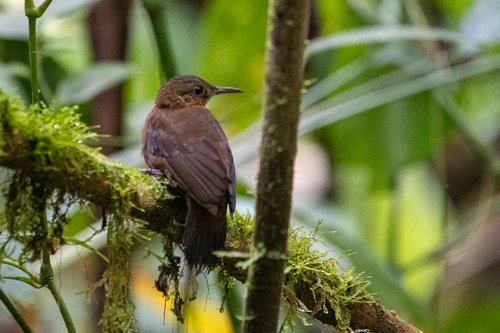 Middle American Leaftosser
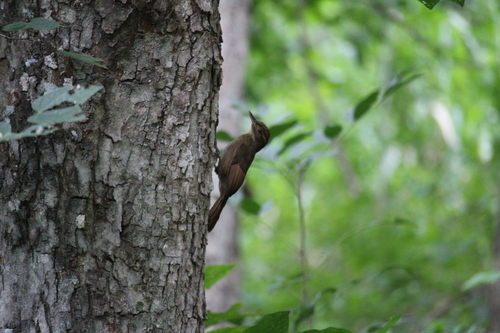 Tawny-winged Woodcreeper
In short
The most reliable field mark between Middle American Leaftosser and Tawny-winged Woodcreeper is their foraging behavior and posture: the leaftosser is almost always seen hopping on the ground, flipping leaves, while the woodcreeper clings vertically to trunks or branches, rarely on the ground except when briefly dropping to snatch prey. In plumage, the leaftosser is a uniform dark reddish to chestnut brown with a tawny throat, while the woodcreeper shows a contrasting buffy supercilium, pale buff throat, and distinctly tawny flight feathers. Juveniles of both species are duller than adults, but the woodcreeper juvenile has a broader supercilium and sometimes a white eye, while the leaftosser juvenile shows light streaks on the throat and breast. Structurally, the woodcreeper is larger, with a straight bill and short tail, compared to the leaftosser's slightly decurved bill and longer tail.
Identification tips
- Foraging posture: Leaftosser is always on the ground, hopping and flipping leaves; woodcreeper is almost always clinging vertically to trunks or branches, only briefly dropping to the ground at ant swarms.
- Juvenile plumage: Young leaftosser has light streaks on throat and breast; young woodcreeper has a broader supercilium and sometimes a white iris, but no throat streaking.
- Supercilium: Woodcreeper shows a distinct buffy supercilium (especially broad in juveniles); leaftosser lacks any supercilium, with a plain face.
- Throat color: Leaftosser has a tawny-rufous throat and chest; woodcreeper's throat is pale buff, contrasting with darker head and underparts.
- Wing pattern: Woodcreeper has tawny flight feathers with dusky tips, creating a two-toned wing effect; leaftosser's wings are darker brown than the back but lack strong contrast.
- Bill shape: Leaftosser's bill is slightly decurved and bicolored (dark above, paler below); woodcreeper's bill is straight, with a dark maxilla and gray/bluish mandible.
- Tail: Woodcreeper has a short tail, cinnamon-rufous to rufous-chestnut; leaftosser's tail is longer and matches the chestnut brown of the back.
- Underparts: Leaftosser's underparts are similar in color to the back, with a uniform look; woodcreeper's underparts are lighter olive-brown, becoming cinnamon on the belly and undertail.
- Iris color: Leaftosser has a brown iris; woodcreeper's iris is yellowish brown to gray (sometimes white in juveniles).
- Leg color: Both species have dark legs, but woodcreeper's are dark blue-gray to blackish, leaftosser's are dark brownish gray.
- Size and bulk: Woodcreeper is larger and heavier (17–19 cm, 29–42 g) than the leaftosser (15–17 cm, 25 g), and appears bulkier in the field.
- Habitat: Leaftosser is restricted to dense forest floor; woodcreeper is more likely at forest edges, semi-open areas, and mangroves, and is rarely on the ground except at ant swarms.
- Behavior at ant swarms: Woodcreeper is a near-obligate ant-follower, often seen with other species at swarms; leaftosser does not join mixed flocks or ant swarms.
- Aggression: Woodcreeper is notably aggressive toward other birds at ant swarms; leaftosser is solitary or in pairs, not aggressive.
- Context: If seen flipping leaves on the ground in dense forest, it's almost certainly a leaftosser; if seen clinging to a trunk or sallying at an ant swarm, it's a woodcreeper.
Size
Tawny-winged Woodcreeper is noticeably larger and heavier than Middle American Leaftosser. The leaftosser measures 15–17 cm in length and weighs about 25 g, while the woodcreeper is 17–19 cm long, with males weighing 34–42 g and females 29–39 g. This size difference is apparent in the field, especially when seen side by side or with familiar reference species. The woodcreeper also appears bulkier and more robust, with a stouter build.
Plumage
Juvenile Middle American Leaftosser is overall duller than adults and shows light streaking on the throat and breast—this is a key mark for young birds. Juvenile Tawny-winged Woodcreeper is also duller but is distinguished by a broader supercilium and sometimes a white iris, lacking the streaked throat of the leaftosser. Adult leaftosser is uniform dark reddish to chestnut brown above and below, with a tawny-rufous throat and chest, and darker brown wings. In contrast, adult woodcreeper has a brown head with a buffy supercilium, gray bare skin around the eye, dark olive-brown upperparts, and a cinnamon-rufous to rufous-chestnut tail. Its wing coverts are dark olive-brown, but the flight feathers are distinctly tawny with dusky tips, creating a two-toned wing effect in flight or when perched. The woodcreeper's underparts are light olive-brown, becoming cinnamon on the belly and undertail coverts, while the leaftosser's underparts match the back in color. Bill color differs: the leaftosser has a slightly decurved, bicolored bill (dark maxilla, paler mandible), while the woodcreeper's bill is straight, with a dark maxilla and gray/bluish mandible. Iris color is brown in the leaftosser, yellowish brown to gray in the woodcreeper.
Behaviour
Middle American Leaftosser forages exclusively on the ground, hopping and tossing leaves to find invertebrates, and is rarely seen above ground level. It forages alone or in pairs and does not join mixed-species flocks. Tawny-winged Woodcreeper is a near-obligate follower of army ant swarms, usually clinging vertically to trunks or branches up to 3 m above the ground, and only briefly drops to the ground to snatch prey. It is aggressive toward other birds and may be seen following squirrel monkeys. The woodcreeper's movement is more vertical and sallying, while the leaftosser is always terrestrial and never seen climbing.
Habitat
Both species overlap in range from Mexico to Panama, but their microhabitat preferences differ. The leaftosser is found in humid forest understory, always on the ground in leaf litter, often in dense, undisturbed forest. The woodcreeper prefers mature humid evergreen forest but is more tolerant of forest edges and semi-open areas, especially on the Yucatán Peninsula and in mangroves in Costa Rica. The woodcreeper is usually seen low on trunks or branches, rarely on the ground except when following ant swarms. Elevationally, the woodcreeper ranges up to 1,500 m, while the leaftosser's elevation range is not specified but is typically lowland to foothill.
Middle American Leaftosser · Tawny-winged Woodcreeper · My Tricky Birds