

Middle American Leaftosser vs Tawny-winged Woodcreeper
Sclerurus mexicanus contro Dendrocincla anabatina
Fai un quiz con Middle American Leaftosser e Tawny-winged Woodcreeper
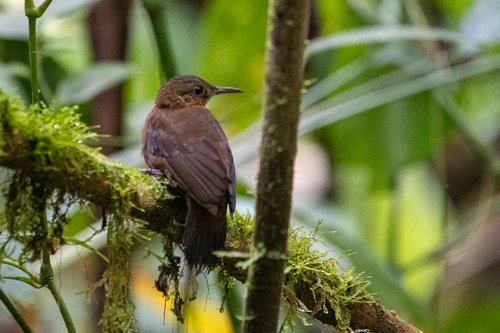 Middle American Leaftosser
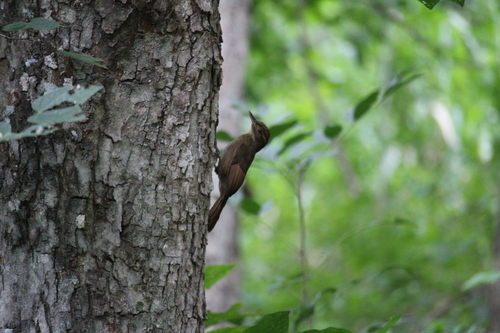 Tawny-winged Woodcreeper
In breve
Il segno distintivo più affidabile tra Middle American Leaftosser e Tawny-winged Woodcreeper è il loro comportamento di foraggiamento e postura: il leaftosser è quasi sempre visto saltellare a terra, girando le foglie, mentre il woodcreeper si aggrappa verticalmente ai tronchi o ai rami, raramente a terra se non per scendere brevemente a prendere prede. Nella livrea, il leaftosser è di un uniforme marrone rossiccio scuro a castano con una gola fulva, mentre il woodcreeper mostra un supercilium buffo contrastante, una gola pallida e piume di volo distintamente fulve. I giovani di entrambe le specie sono più opachi degli adulti, ma il giovane woodcreeper ha un supercilium più ampio e talvolta un occhio bianco, mentre il giovane leaftosser mostra striature chiare sulla gola e sul petto. Strutturalmente, il woodcreeper è più grande, con un becco dritto e una coda corta, rispetto al becco leggermente ricurvo e alla coda più lunga del leaftosser.
Consigli di identificazione
- Foraging posture: Leaftosser è sempre a terra, saltellando e girando le foglie; woodcreeper è quasi sempre aggrappato verticalmente a tronchi o rami, scendendo solo brevemente a terra durante le colonie di formiche.
- Juvenile plumage: Il giovane leaftosser ha striature chiare sulla gola e sul petto; il giovane woodcreeper ha un supercilium più ampio e talvolta un'iride bianca, ma senza striature sulla gola.
- Supercilium: Woodcreeper mostra un supercilium buffo distintivo (soprattutto ampio nei giovani); leaftosser non ha alcun supercilium, con un volto semplice.
- Throat color: Leaftosser ha una gola e un petto fulvi-rossicci; la gola del woodcreeper è pallida, in contrasto con la testa e le parti inferiori più scure.
- Wing pattern: Woodcreeper ha piume di volo fulve con punte scure, creando un effetto di ali bicolore; le ali del leaftosser sono di un marrone più scuro rispetto al dorso ma mancano di un forte contrasto.
- Bill shape: Il becco del leaftosser è leggermente ricurvo e bicolore (scuro sopra, più chiaro sotto); il becco del woodcreeper è dritto, con una maxilla scura e una mandibola grigia/bluastra.
- Tail: Woodcreeper ha una coda corta, da cannella-rossiccia a castano-rossiccio; la coda del leaftosser è più lunga e corrisponde al marrone castano del dorso.
- Underparts: Le parti inferiori del leaftosser sono simili nel colore al dorso, con un aspetto uniforme; le parti inferiori del woodcreeper sono di un marrone oliva più chiaro, diventando cannella sull'addome e sulle copritrici della coda.
- Iris color: Leaftosser ha un'iride marrone; l'iride del woodcreeper è marrone giallastro a grigio (a volte bianca nei giovani).
- Leg color: Entrambe le specie hanno zampe scure, ma quelle del woodcreeper sono di un blu-grigio scuro a nerastro, quelle del leaftosser sono di un grigio marrone scuro.
- Size and bulk: Woodcreeper è più grande e pesante (17–19 cm, 29–42 g) rispetto al leaftosser (15–17 cm, 25 g), e appare più robusto sul campo.
- Habitat: Leaftosser è limitato al suolo della foresta densa; woodcreeper è più probabile che si trovi ai margini della foresta, in aree semiaperte e nelle mangrovie, ed è raramente a terra se non durante le colonie di formiche.
- Behavior at ant swarms: Woodcreeper è un seguace quasi obbligato delle colonie di formiche, spesso visto con altre specie durante le colonie; leaftosser non si unisce a stormi misti o colonie di formiche.
- Aggression: Woodcreeper è notevolmente aggressivo verso altri uccelli durante le colonie di formiche; leaftosser è solitario o in coppie, non aggressivo.
- Context: Se visto girare foglie a terra in una foresta densa, è quasi certamente un leaftosser; se visto aggrapparsi a un tronco o saltellare su una colonia di formiche, è un woodcreeper.
Taglia
Tawny-winged Woodcreeper è visibilmente più grande e pesante rispetto a Middle American Leaftosser. Il leaftosser misura 15–17 cm di lunghezza e pesa circa 25 g, mentre il woodcreeper è lungo 17–19 cm, con i maschi che pesano 34–42 g e le femmine 29–39 g. Questa differenza di dimensioni è evidente sul campo, soprattutto quando visti fianco a fianco o con specie di riferimento familiari. Il woodcreeper appare anche più robusto e massiccio, con una corporatura più robusta.
Piumaggio
Il giovane Middle American Leaftosser è complessivamente più opaco degli adulti e mostra striature chiare sulla gola e sul petto—questo è un segno chiave per i giovani uccelli. Il giovane Tawny-winged Woodcreeper è anch'esso più opaco ma si distingue per un supercilium più ampio e talvolta un'iride bianca, mancando della gola striata del leaftosser. L'adulto leaftosser è uniformemente marrone rossiccio scuro a castano sopra e sotto, con una gola e un petto fulvi-rossicci, e ali di un marrone più scuro. Al contrario, l'adulto woodcreeper ha una testa marrone con un supercilium buffo, pelle nuda grigia attorno all'occhio, parti superiori di un marrone oliva scuro e una coda da cannella-rossiccia a castano-rossiccio. Le sue copritrici delle ali sono di un marrone oliva scuro, ma le piume di volo sono distintamente fulve con punte scure, creando un effetto di ali bicolore in volo o quando posato. Le parti inferiori del woodcreeper sono di un marrone oliva chiaro, diventando cannella sull'addome e sulle copritrici della coda, mentre le parti inferiori del leaftosser corrispondono al dorso nel colore. Il colore del becco differisce: il leaftosser ha un becco leggermente ricurvo e bicolore (maxilla scura, mandibola più chiara), mentre il becco del woodcreeper è dritto, con una maxilla scura e una mandibola grigia/bluastra. Il colore dell'iride è marrone nel leaftosser, marrone giallastro a grigio nel woodcreeper.
Comportamento
Middle American Leaftosser si nutre esclusivamente a terra, saltellando e girando foglie per trovare invertebrati, ed è raramente visto sopra il livello del suolo. Si nutre da solo o in coppie e non si unisce a stormi di specie miste. Tawny-winged Woodcreeper è un seguace quasi obbligato delle colonie di formiche, di solito aggrappato verticalmente a tronchi o rami fino a 3 m sopra il suolo, e scende solo brevemente a terra per prendere prede. È aggressivo verso altri uccelli e può essere visto seguire le scimmie scoiattolo. Il movimento del woodcreeper è più verticale e saltellante, mentre il leaftosser è sempre terrestre e non è mai visto arrampicarsi.
Habitat
Entrambe le specie si sovrappongono nella distribuzione dal Messico a Panama, ma le loro preferenze di microhabitat differiscono. Il leaftosser si trova nel sottobosco di foreste umide, sempre a terra nel fogliame, spesso in foreste dense e indisturbate. Il woodcreeper preferisce foreste sempreverdi umide mature ma è più tollerante ai margini della foresta e ad aree semiaperte, specialmente nella penisola dello Yucatán e nelle mangrovie in Costa Rica. Il woodcreeper è solitamente visto basso su tronchi o rami, raramente a terra se non seguendo colonie di formiche. Elevazionalmente, il woodcreeper si estende fino a 1.500 m, mentre l'intervallo di elevazione del leaftosser non è specificato ma è tipicamente da pianura a foothill.
Middle American Leaftosser · Tawny-winged Woodcreeper · I miei uccelli difficili