

Motmot

Middle American Leaftosser 対 キマユコオニキバシリ

Sclerurus mexicanus 対 Dendrocincla anabatina

Middle American Leaftosserとキマユコオニキバシリのクイズ
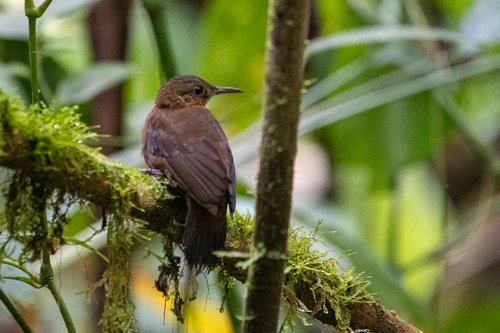
Middle American Leaftosser (Sclerurus mexicanus) Middle American Leaftosser
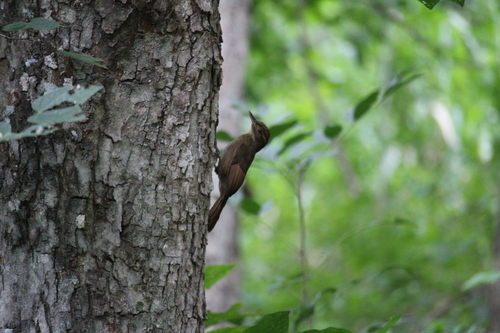
キマユコオニキバシリ (Dendrocincla anabatina) キマユコオニキバシリ

メディア

読み込み中…

要点

Middle American Leaftosserとキマユコオニキバシリの最も信頼できるフィールドマークは、採餌行動と姿勢です:leaftosserはほぼ常に地面を跳ねながら葉をひっくり返しているのが見られ、キマユコオニキバシリは幹や枝に垂直にしがみつき、獲物をつかむために一時的に地面に降りることは稀です。羽毛では、leaftosserは均一な暗赤色から栗色で、淡い喉を持ち、キマユコオニキバシリは対照的な淡い眉斑、淡い喉、明確な淡い飛翔羽を示します。両種の幼鳥は成鳥よりも鈍い色合いですが、キマユコオニキバシリの幼鳥はより広い眉斑を持ち、時には白い目を持つことがありますが、leaftosserの幼鳥は喉と胸に淡い縞模様を示します。構造的には、キマユコオニキバシリは大きく、真っ直ぐなくちばしと短い尾を持ち、leaftosserのわずかに下向きのくちばしと長い尾と比較されます。

識別のコツ

  1. Foraging posture: Leaftosserは常に地面にいて、跳ねたり葉をひっくり返したりしています; キマユコオニキバシリはほぼ常に幹や枝に垂直にしがみつき、アリの群れの時だけ一時的に地面に降りることがあります。
  2. Juvenile plumage: 若いleaftosserは喉と胸に淡い縞模様があります; 若いキマユコオニキバシリはより広い眉斑を持ち、時には白い虹彩を持ちますが、喉の縞模様はありません。
  3. Supercilium: キマユコオニキバシリは明確な淡い眉斑を示します(特に幼鳥では広いです); leaftosserは眉斑がなく、顔は平坦です。
  4. Throat color: Leaftosserは淡い赤褐色の喉と胸を持ち; キマユコオニキバシリの喉は淡い色で、暗い頭部と腹部と対照的です。
  5. Wing pattern: キマユコオニキバシリは淡い飛翔羽を持ち、暗い先端があり、二色の翼の効果を生み出します; leaftosserの翼は背中よりも暗い茶色ですが、強いコントラストはありません。
  6. Bill shape: Leaftosserのくちばしはわずかに下向きで二色(上は暗く、下は明るい); キマユコオニキバシリのくちばしは真っ直ぐで、暗い上顎と灰色/青みがかった下顎を持ちます。
  7. Tail: キマユコオニキバシリは短い尾を持ち、シナモン赤褐色から赤褐色; leaftosserの尾は長く、背中の栗色に合っています。
  8. Underparts: Leaftosserの腹部は背中と同じ色で、均一な外観を持ちます; キマユコオニキバシリの腹部は明るいオリーブ茶色で、腹部と尾羽のカバーはシナモン色になります。
  9. Iris color: Leaftosserは茶色の虹彩を持ち; キマユコオニキバシリの虹彩は黄褐色から灰色(時には幼鳥では白)です。
  10. Leg color: 両種は暗い脚を持ちますが、キマユコオニキバシリの脚は暗い青灰色から黒っぽく、leaftosserの脚は暗い茶色がかった灰色です。
  11. Size and bulk: キマユコオニキバシリはleaftosserよりも大きく重い(17–19 cm、29–42 g)で、フィールドでより大きく見えます。
  12. Habitat: Leaftosserは密な森林の床に限定されます; キマユコオニキバシリは森林の端、半開放的な地域、マングローブにいる可能性が高く、アリの群れの時以外は地面にいることは稀です。
  13. Behavior at ant swarms: キマユコオニキバシリはほぼ義務的なアリの追従者で、群れの他の種と一緒に見られることが多いです; leaftosserは混合フロックやアリの群れに参加しません。
  14. Aggression: キマユコオニキバシリはアリの群れで他の鳥に対して著しく攻撃的です; leaftosserは孤独またはペアで、攻撃的ではありません。
  15. Context: 密な森林の地面で葉をひっくり返しているのが見られた場合、ほぼ確実にleaftosserです; 幹にしがみついているか、アリの群れで飛び出しているのが見られた場合、キマユコオニキバシリです。

大きさ

キマユコオニキバシリはMiddle American Leaftosserよりも明らかに大きく重いです。leaftosserは長さ15–17 cm、重さ約25 gで、キマユコオニキバシリは長さ17–19 cm、オスは34–42 g、メスは29–39 gです。このサイズの違いはフィールドで明らかで、特に並んで見られた場合や馴染みのある参照種と一緒に見られた場合に顕著です。キマユコオニキバシリはまた、よりがっしりとしていて、頑丈に見えます。

羽色

幼鳥のMiddle American Leaftosserは全体的に成鳥よりも鈍い色合いで、喉と胸に淡い縞模様を示します—これは若い鳥の重要なマークです。幼鳥のキマユコオニキバシリも鈍いですが、より広い眉斑と時には白い虹彩で区別され、leaftosserの縞模様の喉はありません。成鳥のleaftosserは上面と下面が均一な暗赤色から栗色で、淡い赤褐色の喉と胸、そして暗い茶色の翼を持ちます。対照的に、成鳥のキマユコオニキバシリは淡い眉斑を持つ茶色の頭、目の周りの灰色の裸の皮膚、暗いオリーブ茶色の上面、シナモン赤褐色から赤褐色の尾を持ちます。翼のカバーは暗いオリーブ茶色ですが、飛翔羽は明確に淡い色で、暗い先端があり、飛行中または止まっているときに二色の翼の効果を生み出します。キマユコオニキバシリの腹部は明るいオリーブ茶色で、腹部と尾羽のカバーはシナモン色になり、leaftosserの腹部は背中の色に合っています。くちばしの色は異なり、leaftosserはわずかに下向きの二色のくちばし(暗い上顎、明るい下顎)を持ち、キマユコオニキバシリのくちばしは真っ直ぐで、暗い上顎と灰色/青みがかった下顎を持ちます。虹彩の色はleaftosserでは茶色で、キマユコオニキバシリでは黄褐色から灰色です。

行動

Middle American Leaftosserは地面でのみ採餌し、跳ねたり葉をひっくり返して無脊椎動物を探し、地面の上で見られることは稀です。単独またはペアで採餌し、混合種の群れには参加しません。キマユコオニキバシリはほぼ義務的なアリの群れの追従者で、通常は地面から3 mまでの幹や枝に垂直にしがみつき、獲物をつかむために一時的に地面に降りることがあります。他の鳥に対して攻撃的で、リスザルを追いかけているのが見られることがあります。キマユコオニキバシリの動きはより垂直で飛び出しが多いのに対し、leaftosserは常に地上にいて、登ることは決してありません。

生息環境

両種はメキシコからパナマまでの範囲で重なっていますが、マイクロハビタットの好みは異なります。leaftosserは湿った森林の下層に見られ、常に地面の落ち葉の中にいて、しばしば密で手つかずの森林にいます。キマユコオニキバシリは成熟した湿った常緑樹林を好みますが、森林の端や半開放的な地域に対してはより耐性があります。特にユカタン半島やコスタリカのマングローブで見られます。キマユコオニキバシリは通常、幹や枝の低い位置で見られ、アリの群れを追いかけるとき以外は地面にいることは稀です。標高的には、キマユコオニキバシリは1,500 mまで分布し、leaftosserの標高範囲は指定されていませんが、通常は低地から丘陵地帯です。

より良い説明を送る

比較と同じ項目を使ってください。文章はすぐに公開されます。

The most reliable field mark between Middle American Leaftosser and Tawny-winged Woodcreeper is their foraging behavior and posture: the leaftosser is almost always seen hopping on the ground, flipping leaves, while the woodcreeper clings vertically to trunks or branches, rarely on the ground except when briefly dropping to snatch prey. In plumage, the leaftosser is a uniform dark reddish to chestnut brown with a tawny throat, while the woodcreeper shows a contrasting buffy supercilium, pale buff throat, and distinctly tawny flight feathers. Juveniles of both species are duller than adults, but the woodcreeper juvenile has a broader supercilium and sometimes a white eye, while the leaftosser juvenile shows light streaks on the throat and breast. Structurally, the woodcreeper is larger, with a straight bill and short tail, compared to the leaftosser's slightly decurved bill and longer tail.

  1. Foraging posture: Leaftosser is always on the ground, hopping and flipping leaves; woodcreeper is almost always clinging vertically to trunks or branches, only briefly dropping to the ground at ant swarms.
  2. Juvenile plumage: Young leaftosser has light streaks on throat and breast; young woodcreeper has a broader supercilium and sometimes a white iris, but no throat streaking.
  3. Supercilium: Woodcreeper shows a distinct buffy supercilium (especially broad in juveniles); leaftosser lacks any supercilium, with a plain face.
  4. Throat color: Leaftosser has a tawny-rufous throat and chest; woodcreeper's throat is pale buff, contrasting with darker head and underparts.
  5. Wing pattern: Woodcreeper has tawny flight feathers with dusky tips, creating a two-toned wing effect; leaftosser's wings are darker brown than the back but lack strong contrast.
  6. Bill shape: Leaftosser's bill is slightly decurved and bicolored (dark above, paler below); woodcreeper's bill is straight, with a dark maxilla and gray/bluish mandible.
  7. Tail: Woodcreeper has a short tail, cinnamon-rufous to rufous-chestnut; leaftosser's tail is longer and matches the chestnut brown of the back.
  8. Underparts: Leaftosser's underparts are similar in color to the back, with a uniform look; woodcreeper's underparts are lighter olive-brown, becoming cinnamon on the belly and undertail.
  9. Iris color: Leaftosser has a brown iris; woodcreeper's iris is yellowish brown to gray (sometimes white in juveniles).
  10. Leg color: Both species have dark legs, but woodcreeper's are dark blue-gray to blackish, leaftosser's are dark brownish gray.
  11. Size and bulk: Woodcreeper is larger and heavier (17–19 cm, 29–42 g) than the leaftosser (15–17 cm, 25 g), and appears bulkier in the field.
  12. Habitat: Leaftosser is restricted to dense forest floor; woodcreeper is more likely at forest edges, semi-open areas, and mangroves, and is rarely on the ground except at ant swarms.
  13. Behavior at ant swarms: Woodcreeper is a near-obligate ant-follower, often seen with other species at swarms; leaftosser does not join mixed flocks or ant swarms.
  14. Aggression: Woodcreeper is notably aggressive toward other birds at ant swarms; leaftosser is solitary or in pairs, not aggressive.
  15. Context: If seen flipping leaves on the ground in dense forest, it's almost certainly a leaftosser; if seen clinging to a trunk or sallying at an ant swarm, it's a woodcreeper.

Tawny-winged Woodcreeper is noticeably larger and heavier than Middle American Leaftosser. The leaftosser measures 15–17 cm in length and weighs about 25 g, while the woodcreeper is 17–19 cm long, with males weighing 34–42 g and females 29–39 g. This size difference is apparent in the field, especially when seen side by side or with familiar reference species. The woodcreeper also appears bulkier and more robust, with a stouter build.

Juvenile Middle American Leaftosser is overall duller than adults and shows light streaking on the throat and breast—this is a key mark for young birds. Juvenile Tawny-winged Woodcreeper is also duller but is distinguished by a broader supercilium and sometimes a white iris, lacking the streaked throat of the leaftosser. Adult leaftosser is uniform dark reddish to chestnut brown above and below, with a tawny-rufous throat and chest, and darker brown wings. In contrast, adult woodcreeper has a brown head with a buffy supercilium, gray bare skin around the eye, dark olive-brown upperparts, and a cinnamon-rufous to rufous-chestnut tail. Its wing coverts are dark olive-brown, but the flight feathers are distinctly tawny with dusky tips, creating a two-toned wing effect in flight or when perched. The woodcreeper's underparts are light olive-brown, becoming cinnamon on the belly and undertail coverts, while the leaftosser's underparts match the back in color. Bill color differs: the leaftosser has a slightly decurved, bicolored bill (dark maxilla, paler mandible), while the woodcreeper's bill is straight, with a dark maxilla and gray/bluish mandible. Iris color is brown in the leaftosser, yellowish brown to gray in the woodcreeper.

Middle American Leaftosser forages exclusively on the ground, hopping and tossing leaves to find invertebrates, and is rarely seen above ground level. It forages alone or in pairs and does not join mixed-species flocks. Tawny-winged Woodcreeper is a near-obligate follower of army ant swarms, usually clinging vertically to trunks or branches up to 3 m above the ground, and only briefly drops to the ground to snatch prey. It is aggressive toward other birds and may be seen following squirrel monkeys. The woodcreeper's movement is more vertical and sallying, while the leaftosser is always terrestrial and never seen climbing.

Both species overlap in range from Mexico to Panama, but their microhabitat preferences differ. The leaftosser is found in humid forest understory, always on the ground in leaf litter, often in dense, undisturbed forest. The woodcreeper prefers mature humid evergreen forest but is more tolerant of forest edges and semi-open areas, especially on the Yucatán Peninsula and in mangroves in Costa Rica. The woodcreeper is usually seen low on trunks or branches, rarely on the ground except when following ant swarms. Elevationally, the woodcreeper ranges up to 1,500 m, while the leaftosser's elevation range is not specified but is typically lowland to foothill.

変更を破棄しますか?

保存していない編集があります。今離れると失われます。

Middle American Leaftosser · キマユコオニキバシリ · 苦手な鳥