

Marsh Sandpiper vs Greater Yellowlegs
Tringa stagnatilis versus Tringa melanoleuca
Play a quiz with Marsh Sandpiper and Greater Yellowlegs
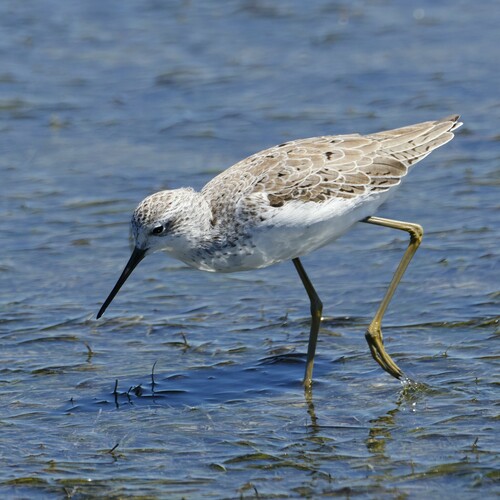 Marsh Sandpiper
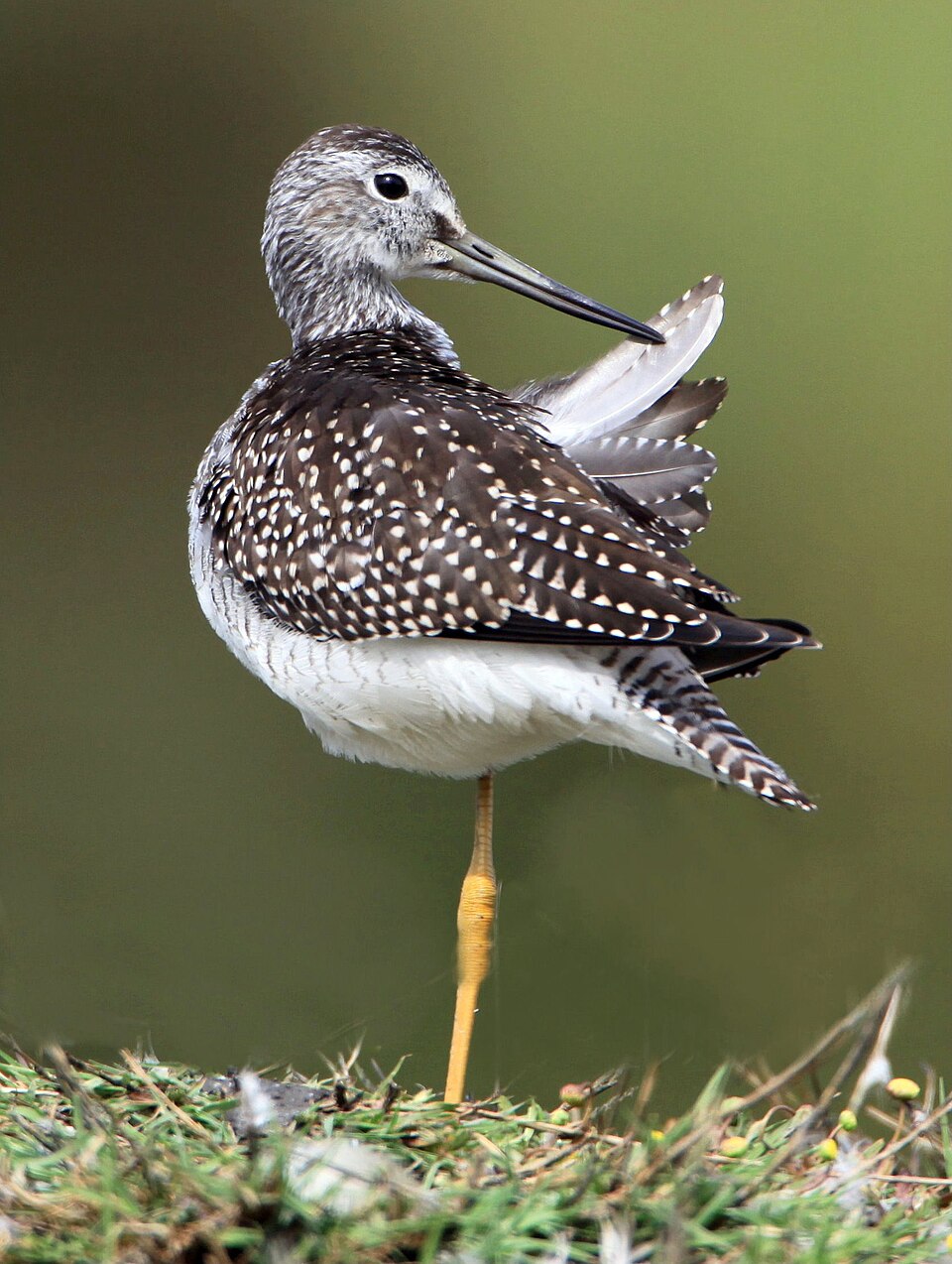 Greater Yellowlegs
In short
The most reliable field mark between Marsh Sandpiper and Greater Yellowlegs is size and structure: Marsh Sandpiper is much daintier, with a finer, needle-like bill and very long, slender yellowish legs, while Greater Yellowlegs is bulkier, with a heavier, slightly upturned bill and a much larger body. In flight, both show white up the back and a white rump, but the overall impression is of a much smaller, more delicate bird in Marsh Sandpiper. Plumage differences are subtle, especially in non-breeding birds, so focus on structure and proportions first. Vocalizations are not easily confused if heard well, but are not always available.
Identification tips
- Size is the most immediate clue: Marsh Sandpiper is much smaller and lighter than Greater Yellowlegs. Use this whenever you have a direct comparison or reference objects.
- Bill shape and size: Marsh Sandpiper has a fine, straight, needle-like bill, noticeably thinner and shorter than the head. Greater Yellowlegs has a longer, thicker, and often slightly upturned bill, longer than the head. This is reliable at all ages and seasons.
- Legs: Both species have yellowish legs, but Marsh Sandpiper's are notably longer in proportion to the body and much more slender. Greater Yellowlegs' legs are thicker and bright yellow. In poor light, leg color can be misleading, but the proportions are still useful.
- Overall structure ('jizz'): Marsh Sandpiper is dainty, slim, and elegant, with a small head and long neck. Greater Yellowlegs is robust, upright, and solid, with a larger head and thicker neck. This is especially clear when birds are feeding or alert.
- Plumage in breeding season: Marsh Sandpiper is greyish-brown above with diffuse, fine spotting on the breast and neck. Greater Yellowlegs is darker above, with much black on the shoulders and back, and has a coarse, crisp, dark breast pattern. This is most useful in spring and early summer.
- Plumage in non-breeding season: Both become paler, but Greater Yellowlegs retains more bold streaking on the neck and breast. Marsh Sandpiper is generally plainer and lighter.
- Flight pattern: Both show a white wedge up the back and a white rump in flight, so this is not a good separator. No distinctive upperwing or tail pattern differences are described for juveniles or immatures.
- Bill color: Both have dark bills, but the thickness and length are more reliable than color alone.
- Vocalizations: If you hear a loud, clear, three-syllable whistle, especially in flight, it's Greater Yellowlegs. Marsh Sandpiper is quieter and less likely to call.
- Habitat and range: In North America, Greater Yellowlegs is common; Marsh Sandpiper is extremely rare. In Eurasia and Africa, Marsh Sandpiper is expected, and Greater Yellowlegs is a vagrant.
- Feeding behavior: Greater Yellowlegs may stir water with its bill and feed more vigorously. Marsh Sandpiper is more delicate and less assertive.
- Group composition: Marsh Sandpiper often associates with other small shanks (like Wood Sandpiper), while Greater Yellowlegs is often with other yellowlegs or solitary.
- Pitfalls: Do not rely solely on leg color or rump pattern. Both can mislead. Focus on structure, bill, and size first.
- Age/sex differences: No strong age- or sex-specific field marks are described for separation. All ages and sexes can be separated by structure and bill.
- When in doubt: If the bird looks slim, fine-billed, and delicate, lean toward Marsh Sandpiper; if it looks big, robust, and thick-billed, it's likely Greater Yellowlegs.
Size
Marsh Sandpiper is significantly smaller and lighter (body mass ~72g) compared to Greater Yellowlegs (~170g). Greater Yellowlegs is not only heavier but also longer (29–40 cm vs. 22–26 cm) and has a slightly broader wingspan (60 cm vs. 55–59 cm). In the field, this translates to Marsh Sandpiper appearing slim and delicate, while Greater Yellowlegs looks robust and tall. The difference is especially obvious when the two are seen side by side, but even singly, the fine-billed, long-legged look of Marsh Sandpiper stands out against the chunkier, more solid Greater Yellowlegs.
Plumage
No age-specific upperwing or flight pattern marks are described for either species that would allow for a quick separation of juveniles or immatures in flight. Both species show a white wedge up the back and a white rump in flight, which can be misleading. Adult breeding Marsh Sandpiper is greyish-brown above with diffuse small brownish spots on the breast and neck, paler in winter; Greater Yellowlegs in breeding plumage is grey-brown above with a coarse, dark, crisp breast pattern and much black on the shoulders and back, with streaked neck and breast. In non-breeding plumage, both are paler, but Greater Yellowlegs retains a more robust streaking on the neck and breast. Leg color is a potential pitfall: both have yellow legs, but Marsh Sandpiper's are more slender and can appear yellowish rather than bright yellow. Bill color and shape are more reliable: Marsh Sandpiper's is fine, straight, and needle-like, while Greater Yellowlegs is longer, thicker, and often slightly upturned.
Behaviour
Both species forage in shallow water, often wading actively. Greater Yellowlegs may be more vigorous, sometimes stirring up water with its bill. Marsh Sandpiper tends to move with a more delicate, graceful gait, matching its finer structure. Both may be seen singly or in loose flocks, but Greater Yellowlegs often appears more assertive and upright, while Marsh Sandpiper is more dainty and less conspicuous in mixed groups.
Habitat
Marsh Sandpiper breeds in open grassy steppe and taiga wetlands from easternmost Europe to the Russian Far East, while Greater Yellowlegs breeds in central Canada and southern Alaska, wintering further south. In migration and winter, both can be found in shallow wetlands, muddy margins, and flooded fields. However, Marsh Sandpiper is rare in the Americas and is much more likely in Eurasia and Africa, while Greater Yellowlegs is a common North American migrant. Context and location are therefore important: a small, fine-billed yellowlegged shank in Eurasia is likely Marsh Sandpiper; in North America, Greater Yellowlegs is far more probable.
Voice
Greater Yellowlegs has a loud, clear, three-syllable whistle (with a lower third note) that is much harsher and more ringing than the calls of Marsh Sandpiper. Marsh Sandpiper is generally quieter and less vocal, with no mention of a distinctive, loud call in the sources. If you hear a strong, ringing call, especially in flight, Greater Yellowlegs is the likely candidate.