

Archibebe Fino vs Archibebe Patigualdo Grande
Tringa stagnatilis frente a Tringa melanoleuca
Juega un quiz con Archibebe Fino y Archibebe Patigualdo Grande
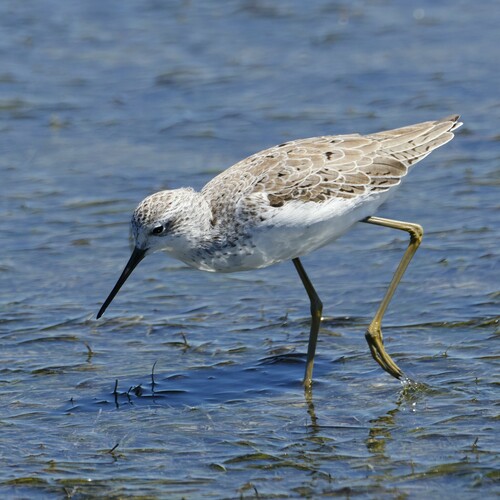 Archibebe Fino
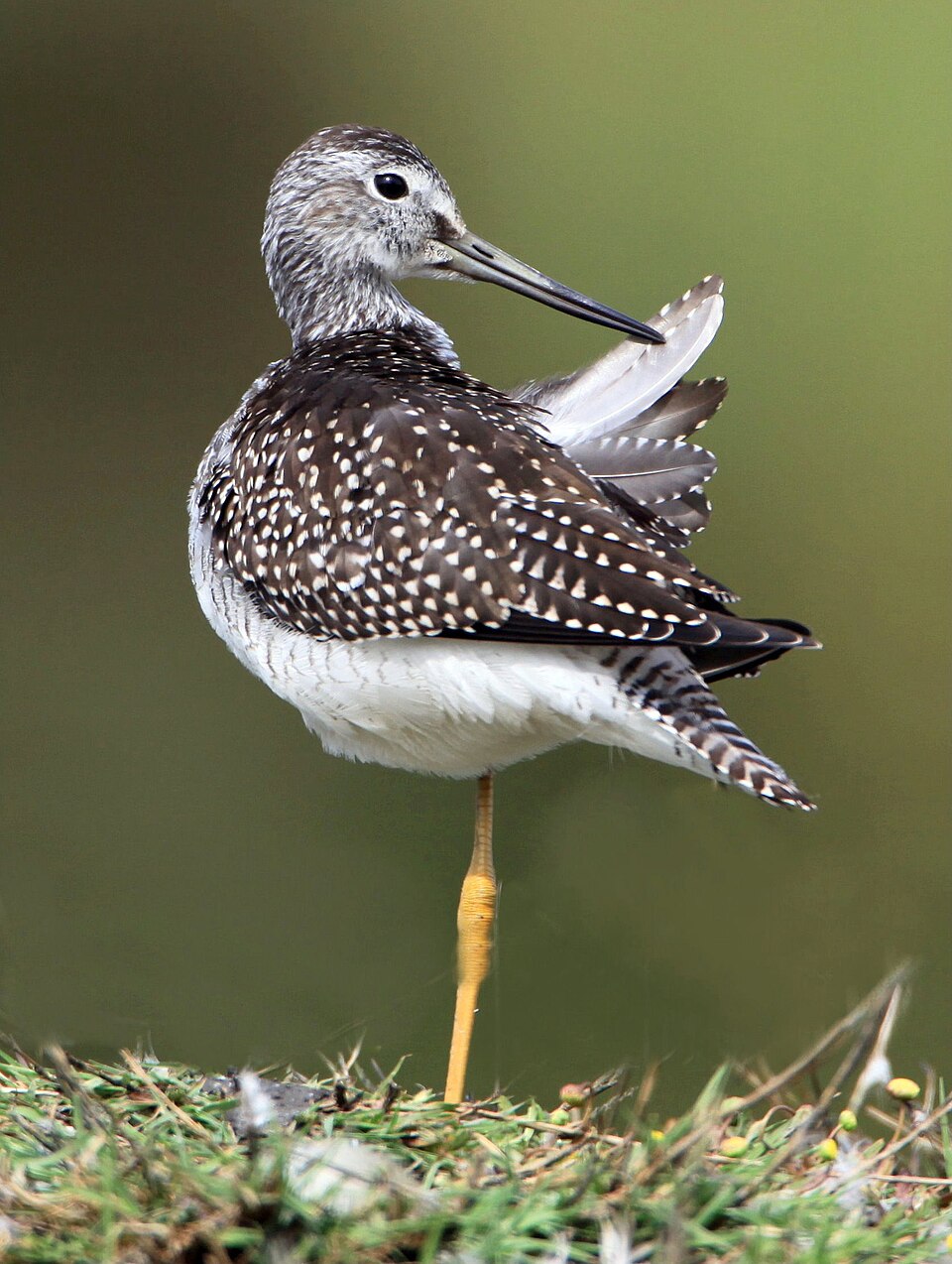 Archibebe Patigualdo Grande
En breve
La marca de campo más confiable entre el Archibebe Fino y el Archibebe Patigualdo Grande es el tamaño y la estructura: el Archibebe Fino es mucho más delicado, con un pico más fino y parecido a una aguja y patas amarillentas muy largas y delgadas, mientras que el Archibebe Patigualdo Grande es más robusto, con un pico más pesado y ligeramente curvado hacia arriba y un cuerpo mucho más grande. En vuelo, ambos muestran blanco en la espalda y un rabadilla blanca, pero la impresión general es de un ave mucho más pequeña y delicada en el Archibebe Fino. Las diferencias en el plumaje son sutiles, especialmente en aves no reproductoras, así que enfócate primero en la estructura y las proporciones. Las vocalizaciones no son fácilmente confundibles si se escuchan bien, pero no siempre están disponibles.
Consejos de identificación
- El tamaño es la pista más inmediata: El Archibebe Fino es mucho más pequeño y ligero que el Archibebe Patigualdo Grande. Usa esto siempre que tengas una comparación directa o objetos de referencia.
- Forma y tamaño del pico: El Archibebe Fino tiene un pico fino, recto y parecido a una aguja, notablemente más delgado y corto que la cabeza. El Archibebe Patigualdo Grande tiene un pico más largo, más grueso y a menudo ligeramente curvado hacia arriba, más largo que la cabeza. Esto es confiable en todas las edades y estaciones.
- Patas: Ambas especies tienen patas amarillentas, pero las del Archibebe Fino son notablemente más largas en proporción al cuerpo y mucho más delgadas. Las patas del Archibebe Patigualdo Grande son más gruesas y de un amarillo brillante. En poca luz, el color de las patas puede ser engañoso, pero las proporciones siguen siendo útiles.
- Estructura general ('jizz'): El Archibebe Fino es delicado, esbelto y elegante, con una cabeza pequeña y un cuello largo. El Archibebe Patigualdo Grande es robusto, erguido y sólido, con una cabeza más grande y un cuello más grueso. Esto es especialmente claro cuando las aves están alimentándose o alertas.
- Plumaje en la temporada de cría: El Archibebe Fino es marrón grisáceo por encima con manchas finas y difusas en el pecho y el cuello. El Archibebe Patigualdo Grande es más oscuro por encima, con mucho negro en los hombros y la espalda, y tiene un patrón de pecho oscuro, áspero y nítido. Esto es más útil en primavera y principios del verano.
- Plumaje en la temporada no reproductiva: Ambas especies se vuelven más pálidas, pero el Archibebe Patigualdo Grande retiene un veteado más audaz en el cuello y el pecho. El Archibebe Fino es generalmente más simple y más claro.
- Patrón de vuelo: Ambos muestran una cuña blanca en la espalda y un rabadilla blanca en vuelo, por lo que esto no es un buen separador. No se describen diferencias distintivas en el patrón de las alas o la cola para juveniles o inmaduros.
- Color del pico: Ambos tienen picos oscuros, pero el grosor y la longitud son más confiables que el color solo.
- Vocalizaciones: Si escuchas un silbido fuerte, claro y de tres sílabas, especialmente en vuelo, es el Archibebe Patigualdo Grande. El Archibebe Fino es más silencioso y menos propenso a llamar.
- Hábitat y distribución: En América del Norte, el Archibebe Patigualdo Grande es común; el Archibebe Fino es extremadamente raro. En Eurasia y África, se espera el Archibebe Fino, y el Archibebe Patigualdo Grande es un vagabundo.
- Comportamiento alimenticio: El Archibebe Patigualdo Grande puede agitar el agua con su pico y alimentarse de manera más vigorosa. El Archibebe Fino es más delicado y menos asertivo.
- Composición del grupo: El Archibebe Fino a menudo se asocia con otros pequeños andarríos (como el Andarríos Bastardo), mientras que el Archibebe Patigualdo Grande a menudo está con otros archibebes o es solitario.
- Trampas: No te bases únicamente en el color de las patas o el patrón de la rabadilla. Ambos pueden engañar. Enfócate primero en la estructura, el pico y el tamaño.
- Diferencias de edad/sexo: No se describen marcas de campo específicas de edad o sexo para la separación. Todas las edades y sexos pueden separarse por la estructura y el pico.
- Cuando tengas dudas: Si el ave parece esbelta, con pico fino y delicada, inclínate hacia el Archibebe Fino; si parece grande, robusta y con pico grueso, probablemente sea el Archibebe Patigualdo Grande.
Tamaño
El Archibebe Fino es significativamente más pequeño y ligero (masa corporal ~72g) en comparación con el Archibebe Patigualdo Grande (~170g). El Archibebe Patigualdo Grande no solo es más pesado, sino también más largo (29–40 cm frente a 22–26 cm) y tiene una envergadura ligeramente más amplia (60 cm frente a 55–59 cm). En el campo, esto se traduce en que el Archibebe Fino parece esbelto y delicado, mientras que el Archibebe Patigualdo Grande se ve robusto y alto. La diferencia es especialmente obvia cuando los dos se ven uno al lado del otro, pero incluso individualmente, el aspecto de pico fino y patas largas del Archibebe Fino destaca frente al más robusto y sólido Archibebe Patigualdo Grande.
Plumaje
No se describen marcas específicas de edad en las alas superiores o patrones de vuelo para ninguna de las especies que permitan una separación rápida de juveniles o inmaduros en vuelo. Ambas especies muestran una cuña blanca en la espalda y un rabadilla blanca en vuelo, lo que puede ser engañoso. El Archibebe Fino adulto en época de cría es marrón grisáceo por encima con pequeñas manchas marrones difusas en el pecho y el cuello, más pálido en invierno; el Archibebe Patigualdo Grande en plumaje de cría es marrón grisáceo por encima con un patrón de pecho oscuro, áspero y nítido y mucho negro en los hombros y la espalda, con cuello y pecho veteados. En plumaje no reproductivo, ambos son más pálidos, pero el Archibebe Patigualdo Grande retiene un veteado más robusto en el cuello y el pecho. El color de las patas es una posible trampa: ambos tienen patas amarillas, pero las del Archibebe Fino son más delgadas y pueden parecer amarillentas en lugar de amarillo brillante. El color y la forma del pico son más confiables: el del Archibebe Fino es fino, recto y parecido a una aguja, mientras que el del Archibebe Patigualdo Grande es más largo, más grueso y a menudo ligeramente curvado hacia arriba.
Comportamiento
Ambas especies forrajean en aguas poco profundas, a menudo wadeando activamente. El Archibebe Patigualdo Grande puede ser más vigoroso, a veces agitando el agua con su pico. El Archibebe Fino tiende a moverse con un andar más delicado y elegante, acorde con su estructura más fina. Ambos pueden verse individualmente o en bandadas sueltas, pero el Archibebe Patigualdo Grande a menudo parece más asertivo y erguido, mientras que el Archibebe Fino es más delicado y menos conspicuo en grupos mixtos.
Hábitat
El Archibebe Fino cría en estepas abiertas de hierba y humedales de taiga desde el este de Europa hasta el Lejano Oriente ruso, mientras que el Archibebe Patigualdo Grande cría en el centro de Canadá y el sur de Alaska, invernando más al sur. En migración e invierno, ambos se pueden encontrar en humedales poco profundos, márgenes fangosos y campos inundados. Sin embargo, el Archibebe Fino es raro en las Américas y es mucho más probable en Eurasia y África, mientras que el Archibebe Patigualdo Grande es un migrante común de América del Norte. Por lo tanto, el contexto y la ubicación son importantes: un pequeño andarrío de patas amarillas y pico fino en Eurasia es probablemente un Archibebe Fino; en América del Norte, el Archibebe Patigualdo Grande es mucho más probable.
Voz
El Archibebe Patigualdo Grande tiene un silbido fuerte, claro y de tres sílabas (con una tercera nota más baja) que es mucho más áspero y resonante que los llamados del Archibebe Fino. El Archibebe Fino es generalmente más silencioso y menos vocal, sin mención de un llamado distintivo y fuerte en las fuentes. Si escuchas un llamado fuerte y resonante, especialmente en vuelo, el Archibebe Patigualdo Grande es el candidato probable.
Archibebe Fino · Archibebe Patigualdo Grande · Mis aves difíciles