

Motmot

Marmora's Warbler vs Dartford Warbler

Curruca sarda versus Curruca undata

Play a quiz with Marmora's Warbler and Dartford Warbler
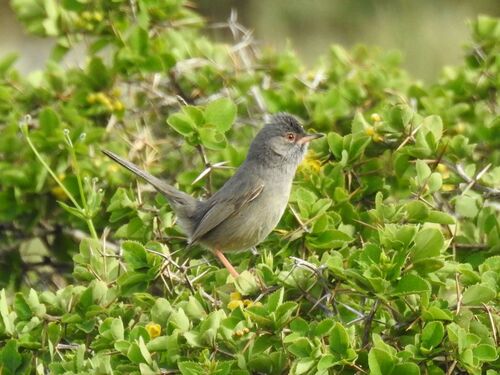
Marmora's Warbler (Curruca sarda) Marmora's Warbler
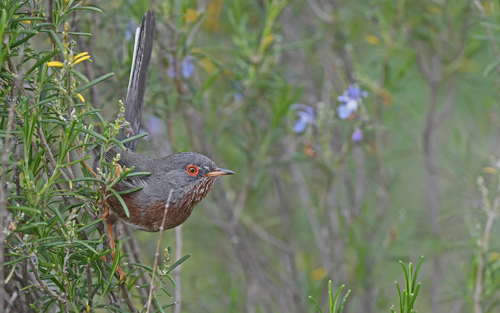
Dartford Warbler (Curruca undata) Dartford Warbler

Media

Loading…

In short

The most reliable field mark to separate Marmora's Warbler from Dartford Warbler is the color of the underparts: Marmora's is uniformly grey below, while Dartford Warbler (especially adult males) shows distinct reddish-brown underparts. Immature Marmora's and Dartford Warblers can be confused, but Marmora's has a paler throat and a dark iris, whereas even young Dartfords tend to show some reddish tones and a red eye. Both species are small, long-tailed warblers, but close attention to underpart color and iris color is key, especially in poor light or with immature birds. Structural differences are subtle, so focus on plumage and soft part coloration.

Identification tips

  1. Underpart color is the most reliable mark: Marmora's Warbler is grey below in all plumages, while Dartford Warbler (especially adult males) shows obvious reddish-brown underparts. This is the first feature to check in good light.
  2. Throat color and pattern: Marmora's has a plain, pale throat (especially in immatures), while Dartford Warbler (adults and most immatures) has a reddish throat often with white spots.
  3. Iris color: Adult Marmora's Warbler has a red iris, but immatures have a dark iris. Dartford Warbler of all ages typically shows a red eye, so a dark iris favors Marmora's, especially in young birds.
  4. Forehead and lores: Adult male Marmora's shows darker patches on the forehead and between the eye and bill, a subtle but useful mark at close range. Dartford Warbler lacks these contrasting facial patches.
  5. Leg color: Marmora's Warbler has red legs, which can help if seen well. Dartford Warbler's leg color is not specified, but is not highlighted as distinctive.
  6. Upperpart tones: Marmora's is grey above, while Dartford Warbler is grey-brown or brownish-grey above (males) or browner-grey (females/juveniles). This is subtle but can help in good light.
  7. Belly patch: Dartford Warbler often shows a dirty white patch on the center of the belly, contrasting with the reddish flanks and breast. Marmora's is more uniformly grey below.
  8. Sexual dimorphism: Dartford Warbler shows more difference between sexes, with females paler and browner than males. Marmora's is less sexually dimorphic in field marks.
  9. Juvenile confusion: Immature Marmora's and Dartford Warblers can look similar, both being grey below. Focus on the paler throat and dark iris for Marmora's, and look for any reddish wash or red eye for Dartford.
  10. Tail and structure: Both species are long-tailed and large-headed, so structure alone is not a reliable separator.
  11. Song: If heard, Marmora's fast rattle is distinctive. Dartford Warbler's song is not described here, so rely on Marmora's if present.
  12. Habitat and range: Use with caution; Marmora's is more likely on Mediterranean islands, Dartford in western Europe, but overlap and vagrancy are possible.
  13. Seasonal context: Both species are resident or only locally migratory, so time of year is less helpful than direct plumage marks.
  14. Flight views: No distinctive wing or flight pattern differences are described for either species, so rely on underpart color and iris if seen in flight.
  15. Lighting pitfalls: In poor light, reddish tones on Dartford Warbler can be missed, making it look greyer; always double-check iris and throat color if possible.

Size

Both species are very similar in size and structure, being small, long-tailed warblers with large heads. Marmora's Warbler has a recorded body mass of 10.5g [wikidata], while no direct mass is provided for Dartford Warbler, but they are in the same size class. Length is not distinctly diagnostic between the two in the field.

Plumage

Adult male Marmora's Warbler is grey both above and below, lacking any reddish or brick tones on the underparts. It shows darker patches on the forehead and between the eye and bill. The iris and legs are red. In contrast, adult male Dartford Warbler has grey-brown upperparts, but the key feature is the dull reddish-brown underparts with a dirty white belly patch and a reddish, white-spotted throat. Females and juveniles of Dartford Warbler are paler below and browner-grey above, but still typically show some reddish tones on the underparts and a red eye. Immature Marmora's Warblers are grey below with a paler throat and a dark iris, while young Dartford Warblers may be greyish below but usually have at least a hint of reddish and a red eye. No distinctive age-specific wing or flight pattern marks are described for either species.

Behaviour

Both species share similar behaviors typical of small, skulking warblers: they are often seen flitting through low shrubs or perching with their long tails held cocked. No major behavioral differences are highlighted in the notes that would reliably separate them in the field.

Habitat

Both species favor shrubby habitats, but Dartford Warbler is more widespread in western Europe and northwestern Africa, often associated with heathland and dry, open scrub. Marmora's Warbler is more localized, with a strong association to Mediterranean islands (notably Sardinia) and similar scrubby habitats. However, habitat alone is not diagnostic where ranges overlap or in migration.

Voice

Marmora's Warbler has a song described as a fast rattle. Dartford Warbler's song is not described in the provided notes, so vocalization is only a reliable separator if Marmora's distinctive rattle is heard.

Submit a better description

Use the same sections as the comparison. Your text is published immediately.

The most reliable field mark to separate Marmora's Warbler from Dartford Warbler is the color of the underparts: Marmora's is uniformly grey below, while Dartford Warbler (especially adult males) shows distinct reddish-brown underparts. Immature Marmora's and Dartford Warblers can be confused, but Marmora's has a paler throat and a dark iris, whereas even young Dartfords tend to show some reddish tones and a red eye. Both species are small, long-tailed warblers, but close attention to underpart color and iris color is key, especially in poor light or with immature birds. Structural differences are subtle, so focus on plumage and soft part coloration.

  1. Underpart color is the most reliable mark: Marmora's Warbler is grey below in all plumages, while Dartford Warbler (especially adult males) shows obvious reddish-brown underparts. This is the first feature to check in good light.
  2. Throat color and pattern: Marmora's has a plain, pale throat (especially in immatures), while Dartford Warbler (adults and most immatures) has a reddish throat often with white spots.
  3. Iris color: Adult Marmora's Warbler has a red iris, but immatures have a dark iris. Dartford Warbler of all ages typically shows a red eye, so a dark iris favors Marmora's, especially in young birds.
  4. Forehead and lores: Adult male Marmora's shows darker patches on the forehead and between the eye and bill, a subtle but useful mark at close range. Dartford Warbler lacks these contrasting facial patches.
  5. Leg color: Marmora's Warbler has red legs, which can help if seen well. Dartford Warbler's leg color is not specified, but is not highlighted as distinctive.
  6. Upperpart tones: Marmora's is grey above, while Dartford Warbler is grey-brown or brownish-grey above (males) or browner-grey (females/juveniles). This is subtle but can help in good light.
  7. Belly patch: Dartford Warbler often shows a dirty white patch on the center of the belly, contrasting with the reddish flanks and breast. Marmora's is more uniformly grey below.
  8. Sexual dimorphism: Dartford Warbler shows more difference between sexes, with females paler and browner than males. Marmora's is less sexually dimorphic in field marks.
  9. Juvenile confusion: Immature Marmora's and Dartford Warblers can look similar, both being grey below. Focus on the paler throat and dark iris for Marmora's, and look for any reddish wash or red eye for Dartford.
  10. Tail and structure: Both species are long-tailed and large-headed, so structure alone is not a reliable separator.
  11. Song: If heard, Marmora's fast rattle is distinctive. Dartford Warbler's song is not described here, so rely on Marmora's if present.
  12. Habitat and range: Use with caution; Marmora's is more likely on Mediterranean islands, Dartford in western Europe, but overlap and vagrancy are possible.
  13. Seasonal context: Both species are resident or only locally migratory, so time of year is less helpful than direct plumage marks.
  14. Flight views: No distinctive wing or flight pattern differences are described for either species, so rely on underpart color and iris if seen in flight.
  15. Lighting pitfalls: In poor light, reddish tones on Dartford Warbler can be missed, making it look greyer; always double-check iris and throat color if possible.

Both species are very similar in size and structure, being small, long-tailed warblers with large heads. Marmora's Warbler has a recorded body mass of 10.5g [wikidata], while no direct mass is provided for Dartford Warbler, but they are in the same size class. Length is not distinctly diagnostic between the two in the field.

Adult male Marmora's Warbler is grey both above and below, lacking any reddish or brick tones on the underparts. It shows darker patches on the forehead and between the eye and bill. The iris and legs are red. In contrast, adult male Dartford Warbler has grey-brown upperparts, but the key feature is the dull reddish-brown underparts with a dirty white belly patch and a reddish, white-spotted throat. Females and juveniles of Dartford Warbler are paler below and browner-grey above, but still typically show some reddish tones on the underparts and a red eye. Immature Marmora's Warblers are grey below with a paler throat and a dark iris, while young Dartford Warblers may be greyish below but usually have at least a hint of reddish and a red eye. No distinctive age-specific wing or flight pattern marks are described for either species.

Both species share similar behaviors typical of small, skulking warblers: they are often seen flitting through low shrubs or perching with their long tails held cocked. No major behavioral differences are highlighted in the notes that would reliably separate them in the field.

Both species favor shrubby habitats, but Dartford Warbler is more widespread in western Europe and northwestern Africa, often associated with heathland and dry, open scrub. Marmora's Warbler is more localized, with a strong association to Mediterranean islands (notably Sardinia) and similar scrubby habitats. However, habitat alone is not diagnostic where ranges overlap or in migration.

Marmora's Warbler has a song described as a fast rattle. Dartford Warbler's song is not described in the provided notes, so vocalization is only a reliable separator if Marmora's distinctive rattle is heard.

Discard your changes?

You have unsaved edits. If you leave now, those changes will be lost.

Marmora's Warbler · Dartford Warbler · My Tricky Birds