

toutinegra-da-sardenha vs felosa-do-mato
Curruca sarda versus Curruca undata
Jogue um quiz com toutinegra-da-sardenha e felosa-do-mato
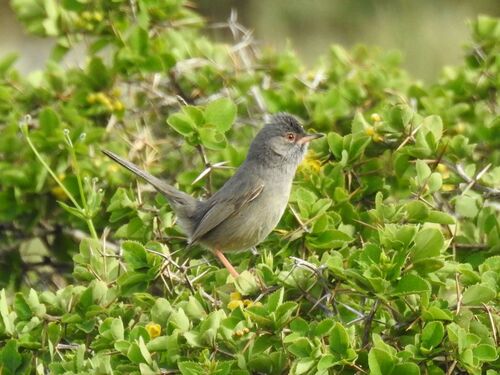 toutinegra-da-sardenha
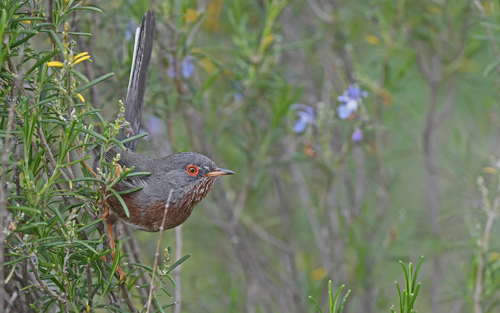 felosa-do-mato
Em resumo
A marca de campo mais confiável para separar a toutinegra-da-sardenha da felosa-do-mato é a cor das partes inferiores: a toutinegra é uniformemente cinza embaixo, enquanto a felosa-do-mato (especialmente os machos adultos) apresenta partes inferiores distintas em marrom-avermelhado. As toutinegras e felosas-do-mato imaturas podem ser confundidas, mas a toutinegra tem uma garganta mais clara e uma íris escura, enquanto até mesmo as felosas-do-mato jovens tendem a mostrar alguns tons avermelhados e um olho vermelho. Ambas as espécies são pequenas, com caudas longas, mas a atenção cuidadosa à cor das partes inferiores e à cor da íris é fundamental, especialmente em luz fraca ou com aves imaturas. As diferenças estruturais são sutis, então concentre-se na plumagem e na coloração das partes moles.
Dicas de identificação
- A cor das partes inferiores é a marca mais confiável: A toutinegra-da-sardenha é cinza embaixo em todas as plumagens, enquanto a felosa-do-mato (especialmente os machos adultos) apresenta partes inferiores marrom-avermelhadas óbvias. Esta é a primeira característica a ser verificada em boa luz.
- Cor e padrão da garganta: A toutinegra tem uma garganta simples e clara (especialmente nas imaturas), enquanto a felosa-do-mato (adultos e a maioria das imaturas) tem uma garganta avermelhada frequentemente com manchas brancas.
- Cor da íris: A toutinegra-da-sardenha adulta tem uma íris vermelha, mas as imaturas têm uma íris escura. A felosa-do-mato de todas as idades geralmente apresenta um olho vermelho, então uma íris escura favorece a toutinegra, especialmente em aves jovens.
- Testa e lore: O macho adulto da toutinegra apresenta manchas mais escuras na testa e entre o olho e o bico, uma marca sutil, mas útil em distâncias curtas. A felosa-do-mato não possui essas manchas faciais contrastantes.
- Cor das pernas: A toutinegra-da-sardenha tem pernas vermelhas, o que pode ajudar se vistas bem. A cor das pernas da felosa-do-mato não é especificada, mas não é destacada como distinta.
- Tons das partes superiores: A toutinegra é cinza acima, enquanto a felosa-do-mato é cinza-marrom ou cinza-acastanhado acima (machos) ou cinza mais escuro (fêmeas/juvenis). Isso é sutil, mas pode ajudar em boa luz.
- Mancha na barriga: A felosa-do-mato frequentemente apresenta uma mancha branca suja no centro da barriga, contrastando com os flancos e o peito avermelhados. A toutinegra é mais uniformemente cinza embaixo.
- Dimorfismo sexual: A felosa-do-mato apresenta mais diferença entre os sexos, com fêmeas mais claras e marrons do que os machos. A toutinegra é menos dimórfica sexualmente em marcas de campo.
- Confusão juvenil: As imaturas de toutinegra e felosa-do-mato podem parecer semelhantes, ambas sendo cinzas embaixo. Concentre-se na garganta mais clara e na íris escura para a toutinegra, e procure qualquer lavagem avermelhada ou olho vermelho para a felosa-do-mato.
- Cauda e estrutura: Ambas as espécies têm caudas longas e cabeças grandes, então a estrutura sozinha não é um separador confiável.
- Canto: Se ouvido, o rápido tilintar da toutinegra é distintivo. O canto da felosa-do-mato não é descrito aqui, então confie na toutinegra se presente.
- Habitat e distribuição: Use com cautela; a toutinegra é mais provável em ilhas do Mediterrâneo, a felosa-do-mato na Europa ocidental, mas sobreposição e vagância são possíveis.
- Contexto sazonal: Ambas as espécies são residentes ou apenas migratórias localmente, então a época do ano é menos útil do que marcas diretas de plumagem.
- Visões de voo: Nenhuma diferença distinta de padrão de asa ou voo é descrita para qualquer uma das espécies, então confie na cor das partes inferiores e na íris se vistas em voo.
- Armadilhas de iluminação: Em luz fraca, tons avermelhados na felosa-do-mato podem ser perdidos, fazendo-a parecer mais cinza; sempre verifique novamente a cor da íris e da garganta se possível.
Tamanho
Ambas as espécies são muito semelhantes em tamanho e estrutura, sendo pequenas, com caudas longas e cabeças grandes. A toutinegra-da-sardenha tem uma massa corporal registrada de 10,5g [wikidata], enquanto nenhuma massa direta é fornecida para a felosa-do-mato, mas elas estão na mesma classe de tamanho. O comprimento não é distintivamente diagnóstico entre as duas no campo.
Plumagem
O macho adulto da toutinegra-da-sardenha é cinza tanto em cima quanto embaixo, sem tons avermelhados ou de tijolo nas partes inferiores. Apresenta manchas mais escuras na testa e entre o olho e o bico. A íris e as pernas são vermelhas. Em contraste, o macho adulto da felosa-do-mato tem partes superiores cinza-marrom, mas a característica chave é as partes inferiores em marrom-avermelhado opaco com uma mancha branca suja na barriga e uma garganta avermelhada com manchas brancas. As fêmeas e juvenis da felosa-do-mato são mais claras embaixo e cinza-acastanhadas acima, mas ainda mostram tipicamente alguns tons avermelhados nas partes inferiores e um olho vermelho. As imaturas de toutinegra são cinzas embaixo com uma garganta mais clara e uma íris escura, enquanto as jovens felosas-do-mato podem ser cinzentas embaixo, mas geralmente têm pelo menos uma dica de avermelhado e um olho vermelho. Nenhuma marca de padrão de asa ou voo específica para idade é descrita para qualquer uma das espécies.
Comportamento
Ambas as espécies compartilham comportamentos semelhantes típicos de pequenas felosas furtivas: elas são frequentemente vistas voando entre arbustos baixos ou empoleirando-se com suas longas caudas levantadas. Nenhuma diferença comportamental significativa é destacada nas notas que separariam de forma confiável no campo.
Habitat
Ambas as espécies preferem habitats arbustivos, mas a felosa-do-mato é mais disseminada na Europa ocidental e no noroeste da África, frequentemente associada a áreas de urze e matagal seco e aberto. A toutinegra-da-sardenha é mais localizada, com uma forte associação a ilhas do Mediterrâneo (notavelmente a Sardenha) e habitats arbustivos semelhantes. No entanto, o habitat sozinho não é diagnóstico onde as distribuições se sobrepõem ou na migração.
Voz
A toutinegra-da-sardenha tem um canto descrito como um rápido tilintar. O canto da felosa-do-mato não é descrito nas notas fornecidas, então a vocalização é apenas um separador confiável se o distinto tilintar da toutinegra for ouvido.
toutinegra-da-sardenha · felosa-do-mato · Minhas aves difíceis