

Manx Shearwater vs Yelkouan Shearwater
Puffinus puffinus versus Puffinus yelkouan
Play a quiz with Manx Shearwater and Yelkouan Shearwater
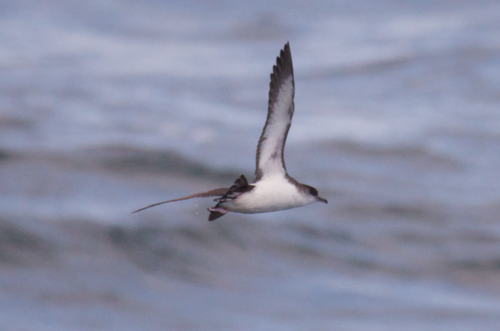 Manx Shearwater
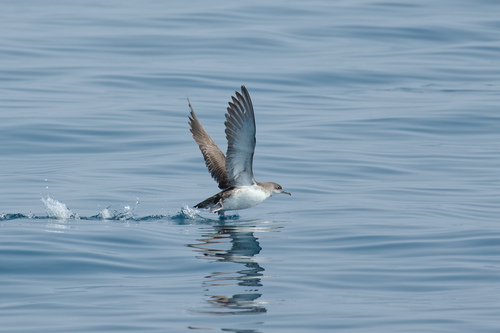 Yelkouan Shearwater
In short
Manx Shearwater and Yelkouan Shearwater are extremely similar in the field, especially in flight, with both showing a classic black-and-white shearwater pattern and 'shearing' flight style. The most reliable difference is subtle: Manx is generally blacker above and whiter below, while Yelkouan is more dark brown above and has duskier, less clean white underparts. Size is not a strong field mark, but Manx is slightly heavier and longer-winged. Separation is extremely challenging outside of range, and even experienced observers may struggle without close or prolonged views.
Identification tips
- Geographic context is key: Manx Shearwater is expected in the North Atlantic and adjacent waters, while Yelkouan Shearwater is a Mediterranean species. If you are well within the range of one species, that is a strong clue, but vagrancy is possible.
- Upperparts color: Manx Shearwater is typically blacker above, while Yelkouan Shearwater is more dark brown. This is subtle and can be affected by light, molt, or wear; use with caution.
- Underparts contrast: Manx usually has cleaner, brighter white underparts, especially on the belly and underwings. Yelkouan tends to have duskier, less crisp white below, but this is a gradient and not always obvious.
- Facial contrast: Both species have a dark cap and white face, but Manx may show a slightly more contrasting division between the dark crown and white cheeks. This is not always reliable.
- Flank and undertail: Manx tends to have cleaner white flanks and undertail coverts, while Yelkouan may show a duskier wash in these areas. This is subtle and often lost at distance.
- Flight style: Both species share the same 'shearing' flight, with stiff wings and low, gliding passes over the water. Do not use flight style alone to separate them.
- Bill and structure: No reliable differences in bill size, shape, or overall structure are noted between these two species in the sources provided.
- Size: Manx is slightly larger and heavier, but this is rarely apparent unless both species are seen together.
- Juvenile/immature plumage: No specific age-related wing or upperwing pattern differences are described for either species; young birds look similar to adults in the field.
- Seasonal context: Manx is absent from its breeding colonies from July to March, when it migrates to the South Atlantic. Yelkouan remains in the Mediterranean year-round. Out-of-season records should be scrutinized carefully.
- Voice: No diagnostic vocal differences are described in the provided sources for field separation.
- Pitfalls: Lighting, distance, and sea conditions can all affect the apparent color and contrast of these birds. Be cautious about over-interpreting subtle differences in darkness or whiteness.
- When in doubt: If you are outside the core range of either species and cannot see clear, diagnostic marks, it is often best to leave the bird unidentified to species level.
- Comparison with Balearic Shearwater: Both Manx and Yelkouan are more contrasted than Balearic Shearwater, which is browner above and dirtier white below, but this does not help separate Manx from Yelkouan.
- Expert consensus: Even experienced observers may struggle to separate these species with certainty outside of range or without close, prolonged views. Photographs may not always resolve the identification.
Size
Manx Shearwater is slightly larger and heavier (average body mass 521 g) than Yelkouan Shearwater, which is a bit shorter in both length (30–35 cm vs. 30–38 cm) and wingspan (70–84 cm vs. 76–89 cm). In practice, this size difference is subtle and rarely diagnostic at sea, especially when seen singly or at a distance.
Plumage
Both species show a striking contrast between dark upperparts and white underparts in all plumages, with a classic 'flying cross' appearance. Manx Shearwater is typically blacker above and cleaner white below, while Yelkouan Shearwater is more dark brown above and has duskier, less sharply defined white underparts. No specific age-related upperwing patterns (such as triangles, W-marks, or contrasting panels) are described for either species, so juveniles and adults are similar in this respect. The difference in tone (black vs. brown) is subtle and can be affected by light conditions, wear, and individual variation, making it unreliable in poor light or at long range.
Behaviour
Both species exhibit the classic 'shearing' flight of their genus, gliding low over the sea on stiff wings with only occasional wingbeats, and often appearing to almost touch the water with their wingtips. Both can look like a flying cross when seen from above or below. There are no described differences in flight style, posture, or feeding behavior that are reliably diagnostic between these two species.
Habitat
Manx Shearwater breeds in the North Atlantic (notably the UK, Ireland, Iceland, and nearby islands) and migrates to the South Atlantic for the nonbreeding season. Yelkouan Shearwater is a Mediterranean specialist, breeding and foraging almost exclusively in that region. Thus, the most reliable context clue is location: Manx is expected in the Atlantic, Yelkouan in the Mediterranean. However, vagrants do occur, and out-of-range individuals are notoriously difficult to separate.