

Manx Shearwater vs Sargasso Shearwater
Puffinus puffinus versus Puffinus lherminieri
Play a quiz with Manx Shearwater and Sargasso Shearwater
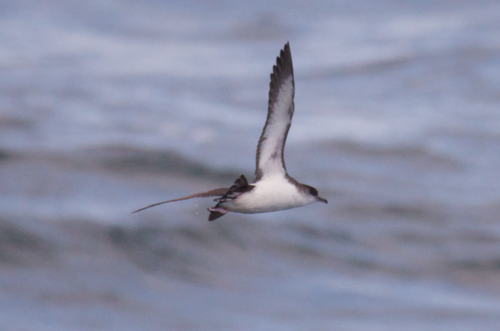 Manx Shearwater
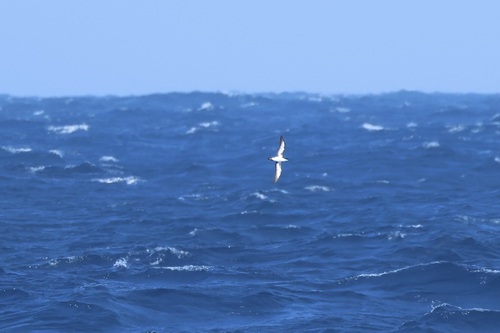 Sargasso Shearwater
In short
The most reliable field mark between Manx Shearwater and Sargasso Shearwater is size: Manx is distinctly larger and heavier, with a broader wingspan and more robust build. In flight, both show classic shearwater black-above, white-below contrast, but Sargasso Shearwater is smaller, more compact, and has darker undertail coverts (vs. Manx’s white undertail coverts). Bill length is also a key difference: Manx has a noticeably longer bill. Both species can look similar at a distance, especially in poor light or when seen from below, but careful attention to size, undertail pattern, and bill structure will usually separate them.
Identification tips
- Size is the most consistent field mark: Manx Shearwater is nearly twice as heavy as Sargasso, with a longer wingspan and bulkier build. Use this when birds are seen together or with other species for scale.
- Undertail coverts: Manx Shearwater always shows white undertail coverts, visible when banking or from behind. Sargasso Shearwater has blackish-brown undertail coverts, making the rear end look darker in flight and at rest.
- Bill length: Manx Shearwater has a noticeably longer bill than Sargasso. This can be seen well on perched or close birds, and is a subtle but reliable mark in good views.
- Wingshape and flight jizz: Manx appears broader-winged and more cross-shaped in flight, with a steadier, more direct shearing action. Sargasso is more compact, with quicker, lighter wingbeats and a more agile, buoyant flight.
- Underwing pattern: Sargasso can show more dark on the underwing, especially towards the tips, but this is variable and not always reliable at sea. Manx’s underwing is clean white with a sharp contrast to the blackish upperwing.
- Face pattern: Both have white below the eye, but Sargasso may show a slightly more extensive white face. This is subtle and not always apparent in field conditions.
- Feet color: Sargasso has dull pink feet with a black wash and black toenails, but this is rarely visible at sea.
- Plumage by age: Both species lack distinct juvenile or immature plumages in the field; the main marks (undertail, size, bill) apply to all ages.
- Habitat and range: If seen in the Caribbean or tropical western Atlantic, Sargasso is much more likely. In the North Atlantic, especially near the UK and Ireland, Manx is the default. However, both can occur as vagrants, so always check field marks.
- Context of flock: If mixed with larger shearwaters (e.g., Great Shearwater), Manx will appear intermediate in size, Sargasso quite small.
- Perched posture: Manx looks longer-bodied and heavier when sitting, Sargasso more compact and short-necked.
- Voice: Not useful at sea; both are mostly silent away from colonies.
- Pitfalls: At a distance, both can look similar due to the shared black-above, white-below pattern. Do not rely on general impression alone—focus on undertail, size, and bill structure.
- Sex: Males and females are alike in both species; sex is not a field mark.
- Season: Both species are migratory and can overlap in the western Atlantic, so do not rely solely on season—always check structural and plumage marks.
Size
Manx Shearwater is significantly larger, weighing about 521 g and measuring 30–38 cm in length with a 76–89 cm wingspan. Sargasso Shearwater is much lighter (typically 150–230 g), shorter (30–33 cm), and has a smaller wingspan (64–72 cm). In direct comparison, Manx looks bulkier and longer-winged, while Sargasso appears more delicate and compact. This size gap is often the easiest clue in mixed flocks or when birds are seen together.
Plumage
Both species share the classic shearwater pattern: blackish-brown above and white below. However, Sargasso Shearwater has blackish-brown undertail coverts and a darker vent area, while Manx Shearwater’s undertail coverts are white—this is a key mark in all plumages, especially visible when birds bank or when seen from behind. Sargasso’s underwing can show more dark, especially towards the distal remiges, but this is variable and not always reliable at sea. Both species have white on the head below the eye, but Sargasso may show a slightly more extensive white face. Immature Sargasso Shearwaters do not have a distinct plumage from adults, so the undertail and size marks apply to all ages. Juvenile Manx Shearwaters also resemble adults, so age-specific flight marks are not a major factor here.
Behaviour
Both species exhibit the typical 'shearing' flight style of their genus, flying low over the water with stiff, straight wings and minimal wingbeats. Manx Shearwater often appears more powerful and steady, with a broader, more cross-shaped silhouette. Sargasso Shearwater is more buoyant and agile, with quicker changes in direction and a lighter, more fluttery jizz. When perched, Manx appears longer-bodied and heavier, while Sargasso is more compact and short-necked. Both species are marine and rarely seen on land except at breeding colonies.
Habitat
Manx Shearwater breeds in the North Atlantic, especially on islands off the UK, Ireland, and the North Atlantic coasts, and winters in the South Atlantic. Sargasso Shearwater breeds primarily in the Caribbean and Lucayan Archipelago, ranging throughout the western Atlantic and Sargasso Sea outside the breeding season. While their ranges can overlap in the western Atlantic during migration, Manx is much more likely in cold temperate waters, while Sargasso is the default small shearwater in tropical and subtropical western Atlantic waters. Context of location and season can help, but is not always diagnostic due to overlap.
Voice
Both species are most vocal at night in breeding colonies and are generally silent at sea. Sargasso Shearwater has twittering and mewing calls, but these are rarely heard by birders at sea. Manx Shearwater also calls at colonies, but voice is not a practical field mark for separating these two in most birding situations.