

Louisiana Waterthrush vs Northern Waterthrush
Parkesia motacilla versus Parkesia noveboracensis
Play a quiz with Louisiana Waterthrush and Northern Waterthrush
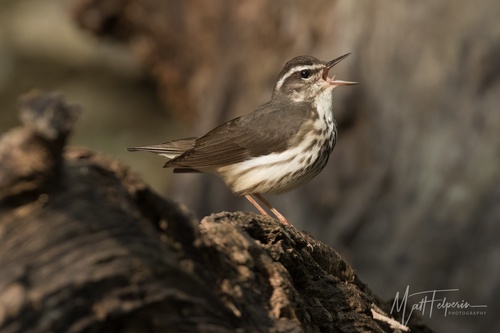 Louisiana Waterthrush
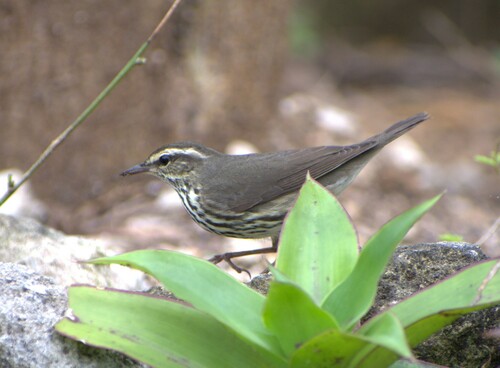 Northern Waterthrush
In short
The most reliable field mark to separate Louisiana Waterthrush from Northern Waterthrush is the color of the flanks and undertail: Louisiana shows obvious buff in these areas, while Northern is clean white. Also, Louisiana has a bold, long, and flared white supercilium (eyebrow) and bright pink legs, whereas Northern’s supercilium is shorter, narrower, and the legs are duller. Throat streaking is key: Louisiana’s throat is mostly unstreaked and white, while Northern’s is streaked. Both species are brown above and heavily streaked below, but these details, along with subtle differences in size and habitat, help clinch identification. Immatures of both species have buffier underparts, so extra care is needed in late summer and fall.
Identification tips
- Flank and undertail color: Look for buffy flanks and undertail on Louisiana Waterthrush (all ages, but especially adults); Northern is white in these areas. In immatures, this mark is less reliable but still useful.
- Supercilium (eyebrow): Louisiana’s is broad, bright white, and flares behind the eye; Northern’s is shorter, narrower, and less flared. This is visible in all plumages, but best on adults.
- Leg color: Louisiana has bright pink legs, while Northern’s are duller pink or brownish. This can be subtle in poor light or muddy birds.
- Throat streaking: Louisiana’s throat is mostly white and unstreaked; Northern’s is streaked. This is a strong mark in adults, less so in juveniles.
- Bill size and shape: Louisiana’s bill is longer and heavier, giving a slightly larger-headed look; Northern’s is shorter and finer. This is subtle and best used with other marks.
- Size and structure: Louisiana is larger and bulkier overall, with a longer body and slightly longer tail. Use with caution due to overlap.
- Back color: Both are plain brown above, not a reliable separator.
- Underpart streaking: Both have bold streaks below, but Louisiana’s streaks are often more sharply defined on a whiter background; Northern’s can look more smudged on a buffier or grayish background, especially in juveniles.
- Habitat preference: Louisiana is almost always near running streams; Northern prefers stagnant or slow water, bogs, and denser cover. Context helps, but is not foolproof during migration.
- Behavior: Both walk and bob their tails, but Louisiana is more likely to be seen teetering on rocks in a stream, while Northern is often on muddy banks, in leaf litter, or among wet thickets.
- Song: Louisiana’s song starts with descending notes and ends with a warble; Northern’s is more monotone and accelerating. Use if singing.
- Call: Louisiana gives a sharp 'chink'; Northern a buzzy 'zzip' or rising 'spwik'.
- Juvenile/immature confusion: Both species’ young have buffier underparts, making flank color less reliable. In these cases, focus on supercilium shape, throat streaking, and leg color.
- Supercilium vs. eyeline: Louisiana’s supercilium is not only broader but also stands out more due to a less distinct dark eyeline; Northern’s darker eyeline can make the supercilium look narrower.
- Seasonal context: In late summer and fall, when juveniles predominate, expect more buff below and less contrast overall. Use a combination of marks for best results.
Size
Louisiana Waterthrush is distinctly larger and bulkier, averaging 20.6 g compared to Northern's 16.2 g. Louisiana measures 14–17 cm in length and 21–25.4 cm in wingspan, while Northern is smaller at 12–15 cm long and 21–24 cm wingspan. Louisiana’s bill is also slightly longer and heavier (1.2–1.5 cm vs. 1.1–1.2 cm). In the field, Louisiana can look longer-bodied and bigger-headed, but overlap means size alone is not always reliable.
Plumage
- Juvenile/immature birds: Both species have buffier underparts than adults, making flank and undertail color less reliable in late summer/fall. However, Louisiana still tends to show more extensive buff on the flanks and undertail, while Northern remains paler and more evenly colored below.
- Adults: Louisiana has a plain brown back, white underparts with bold black streaks, and strong buff on the flanks and undertail. The supercilium is broad, white, and flares behind the eye. Legs are bright pink. Northern is also brown above and streaked below, but the flanks and undertail are white, the supercilium is shorter and narrower, and the legs are duller. Northern’s throat is streaked, while Louisiana’s is mostly clear. Both have a white supercilium, but Louisiana’s is more prominent and contrasts with a less distinct eyeline.
Behaviour
Both species walk (not hop) and bob their tails while foraging along water. Louisiana is more likely to be seen in or right next to fast-flowing streams, often teetering on rocks or logs. Northern is more terrestrial, often foraging in swampy, stagnant water or wet forest floor. Both may forage in leaf litter, but Louisiana is more closely tied to running water.
Habitat
Louisiana Waterthrush breeds along clear, fast-flowing streams in mature deciduous or mixed forest, rarely straying far from running water. Northern Waterthrush prefers bogs, swamps, and stagnant or slow-moving water, and is more likely to be found in dense, wet woods or thickets. During migration and winter, both can appear in a range of wet habitats, but Louisiana still favors open, running water while Northern is more flexible and often found in denser, wetter, or more terrestrial settings.
Voice
Louisiana Waterthrush’s song is a musical series of descending notes followed by a warble, with the pitch dropping at the start (like a stream flowing downhill). Northern Waterthrush’s song is a series of emphatic, clear chirping notes that generally fall in pitch and accelerate, but with less variation and no strong descending opening. Calls differ: Louisiana gives a hard 'chink', while Northern gives a loud, rising 'spwik' or buzzy 'zzip'. Voice can be helpful, but beware of individual variation.
Louisiana Waterthrush · Northern Waterthrush · My Tricky Birds