

Motmot

Long-billed Gnatwren vs White-browed Gnatcatcher

Ramphocaenus melanurus versus Polioptila bilineata

Play a quiz with Long-billed Gnatwren and White-browed Gnatcatcher
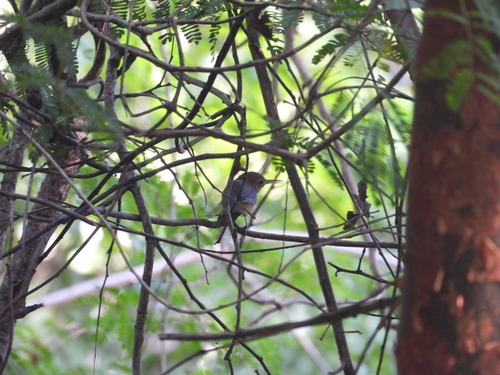
Long-billed Gnatwren (Ramphocaenus melanurus) Long-billed Gnatwren
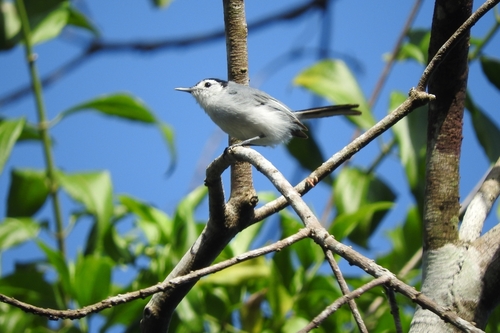
White-browed Gnatcatcher (Polioptila bilineata) White-browed Gnatcatcher

Media

Loading…

In short

The most reliable field mark separating Long-billed Gnatwren from White-browed Gnatcatcher is the gnatwren’s distinctive structure: a long, thin bill and a short, cocked, black-and-white tail, often wagged. In contrast, White-browed Gnatcatcher has a more typical gnatcatcher shape with a proportionally shorter, finer bill and longer tail, and lacks the gnatwren’s unique tail pattern. Adult Long-billed Gnatwrens show rufous on the head sides and buff underparts, while White-browed Gnatcatchers have a prominent white brow and lack rufous tones. These differences are visible both perched and in active foraging, but structure and tail pattern are most reliable at a glance.

Identification tips

  1. Bill shape and length: Long-billed Gnatwren has a noticeably long, thin bill, much longer than the head, while White-browed Gnatcatcher’s bill is shorter and finer. This is visible in all ages and sexes.
  2. Tail structure and pattern: The gnatwren’s tail is short, cocked, and black with white tips to all but the central feathers, often wagged or flicked. Gnatcatcher’s tail is longer, slimmer, and lacks the bold black-and-white pattern; instead, it is mostly dark with white outer edges. This is diagnostic in all ages.
  3. Head pattern: Adult gnatwren shows rufous on the sides of the head, especially in some subspecies, while White-browed Gnatcatcher has a clear white brow (supercilium) and no rufous. The white brow is a key mark for the gnatcatcher.
  4. Underparts: Gnatwren’s throat is white, grading to buff on the belly and flanks, sometimes with more buff in certain subspecies. Gnatcatcher has cleaner, whiter underparts with little or no buff.
  5. Upperparts: Gnatwren is grey-brown above; gnatcatcher is more uniform grey or bluish-grey, lacking the brownish tones.
  6. Behavior: Gnatwren creeps low in dense tangles, moving mouse-like and skulking. Gnatcatcher is more active, foraging higher in trees and moving quickly through open foliage.
  7. Tail movement: Gnatwren frequently cocks and wags its tail, making the black-and-white pattern obvious. Gnatcatcher flicks its tail but does not cock it as sharply.
  8. Habitat: Gnatwren is almost always in dense, low undergrowth; gnatcatcher is more often in open woodland, forest edge, and higher in trees.
  9. Voice: Gnatwren gives a rapid, trilled drdrdrdrdrdrdrdrdrdr call; gnatcatcher’s voice is higher-pitched and less trilled (details not in notes, but typical for the group).
  10. Jizz: Gnatwren looks more attenuated and less balanced due to its long bill and short tail; gnatcatcher is more evenly proportioned.
  11. Subspecies variation: Some gnatwren subspecies (e.g., R. m. trinitatis) are paler below with more buff, but always show the long bill and tail pattern.
  12. Group association: Gnatcatchers are more likely to be seen in pairs or small groups; gnatwren is often solitary or in mixed flocks but stays low and hidden.
  13. Perched vs. in flight: The gnatwren’s cocked tail and long bill are visible both perched and moving; gnatcatcher’s longer tail and white brow show best when perched or foraging in open foliage.
  14. Pitfalls: In poor light, the gnatwren’s rufous head sides may be hard to see, but the bill and tail pattern remain reliable. Gnatcatchers can appear browner in some lights, but never show the gnatwren’s tail pattern or structure.
  15. When marks fail: If only a silhouette is seen, focus on tail length and carriage: short and cocked (gnatwren) vs. long and straight (gnatcatcher).

Size

Long-billed Gnatwren is a very small bird, weighing about 10 grams [wikidata], similar to the White-browed Gnatcatcher, which is also a tiny bird (exact mass not given, but typical for Polioptila). In the field, both species appear small and active, but the gnatwren’s long bill and short tail make it look more attenuated and less balanced than the gnatcatcher’s more even proportions.

Plumage

Adult Long-billed Gnatwrens have grey-brown upperparts, rufous sides to the head, a white throat fading to buff underparts, and a black tail with white tips to all but the central feathers. The tail is frequently cocked and wagged, making the black-and-white pattern obvious. Subspecies variation exists, with some (e.g., R. m. trinitatis) showing paler underparts and buffier flanks. In contrast, White-browed Gnatcatcher adults show a clear white supercilium (brow), lack rufous on the face, and have more uniform grey or bluish-grey upperparts and whiter underparts. Their tail is longer, slimmer, and lacks the bold black-and-white pattern of the gnatwren, instead being mostly dark with white outer edges. Juvenile and immature plumages are not described in detail for either species in the notes, but the gnatwren’s tail pattern is present in all ages.

Behaviour

Long-billed Gnatwren is often seen creeping through dense undergrowth or tangles, moving with a mouse-like, skulking motion, and frequently flicking or wagging its cocked tail. It tends to stay low and is less likely to sally out for insects. White-browed Gnatcatcher is more active in open foliage, flitting about higher in trees, often flicking its tail but not cocking it as sharply. Gnatcatchers are more likely to be seen in pairs or small groups, actively foraging in the mid to upper canopy.

Habitat

Long-billed Gnatwren is found in dense, tangled undergrowth in humid forests, forest edges, and thickets, from southeast Mexico to Amazonia. It prefers lower strata and is often hard to spot except for its movement. White-browed Gnatcatcher occupies a broader range of wooded habitats, including more open forests and edges, and is more likely to be seen in the mid to upper levels of trees. Overlap is possible at forest edges, but the gnatwren is more strictly tied to dense, low vegetation.

Voice

Long-billed Gnatwren gives a distinctive trilled call, described as a rapid drdrdrdrdrdrdrdrdrdr. White-browed Gnatcatcher’s voice is not described in the notes, but gnatcatchers typically give thin, high-pitched calls and short, buzzy songs. The gnatwren’s rapid trill is a useful clue if heard.

Submit a better description

Use the same sections as the comparison. Your text is published immediately.

The most reliable field mark separating Long-billed Gnatwren from White-browed Gnatcatcher is the gnatwren’s distinctive structure: a long, thin bill and a short, cocked, black-and-white tail, often wagged. In contrast, White-browed Gnatcatcher has a more typical gnatcatcher shape with a proportionally shorter, finer bill and longer tail, and lacks the gnatwren’s unique tail pattern. Adult Long-billed Gnatwrens show rufous on the head sides and buff underparts, while White-browed Gnatcatchers have a prominent white brow and lack rufous tones. These differences are visible both perched and in active foraging, but structure and tail pattern are most reliable at a glance.

  1. Bill shape and length: Long-billed Gnatwren has a noticeably long, thin bill, much longer than the head, while White-browed Gnatcatcher’s bill is shorter and finer. This is visible in all ages and sexes.
  2. Tail structure and pattern: The gnatwren’s tail is short, cocked, and black with white tips to all but the central feathers, often wagged or flicked. Gnatcatcher’s tail is longer, slimmer, and lacks the bold black-and-white pattern; instead, it is mostly dark with white outer edges. This is diagnostic in all ages.
  3. Head pattern: Adult gnatwren shows rufous on the sides of the head, especially in some subspecies, while White-browed Gnatcatcher has a clear white brow (supercilium) and no rufous. The white brow is a key mark for the gnatcatcher.
  4. Underparts: Gnatwren’s throat is white, grading to buff on the belly and flanks, sometimes with more buff in certain subspecies. Gnatcatcher has cleaner, whiter underparts with little or no buff.
  5. Upperparts: Gnatwren is grey-brown above; gnatcatcher is more uniform grey or bluish-grey, lacking the brownish tones.
  6. Behavior: Gnatwren creeps low in dense tangles, moving mouse-like and skulking. Gnatcatcher is more active, foraging higher in trees and moving quickly through open foliage.
  7. Tail movement: Gnatwren frequently cocks and wags its tail, making the black-and-white pattern obvious. Gnatcatcher flicks its tail but does not cock it as sharply.
  8. Habitat: Gnatwren is almost always in dense, low undergrowth; gnatcatcher is more often in open woodland, forest edge, and higher in trees.
  9. Voice: Gnatwren gives a rapid, trilled drdrdrdrdrdrdrdrdrdr call; gnatcatcher’s voice is higher-pitched and less trilled (details not in notes, but typical for the group).
  10. Jizz: Gnatwren looks more attenuated and less balanced due to its long bill and short tail; gnatcatcher is more evenly proportioned.
  11. Subspecies variation: Some gnatwren subspecies (e.g., R. m. trinitatis) are paler below with more buff, but always show the long bill and tail pattern.
  12. Group association: Gnatcatchers are more likely to be seen in pairs or small groups; gnatwren is often solitary or in mixed flocks but stays low and hidden.
  13. Perched vs. in flight: The gnatwren’s cocked tail and long bill are visible both perched and moving; gnatcatcher’s longer tail and white brow show best when perched or foraging in open foliage.
  14. Pitfalls: In poor light, the gnatwren’s rufous head sides may be hard to see, but the bill and tail pattern remain reliable. Gnatcatchers can appear browner in some lights, but never show the gnatwren’s tail pattern or structure.
  15. When marks fail: If only a silhouette is seen, focus on tail length and carriage: short and cocked (gnatwren) vs. long and straight (gnatcatcher).

Long-billed Gnatwren is a very small bird, weighing about 10 grams [wikidata], similar to the White-browed Gnatcatcher, which is also a tiny bird (exact mass not given, but typical for Polioptila). In the field, both species appear small and active, but the gnatwren’s long bill and short tail make it look more attenuated and less balanced than the gnatcatcher’s more even proportions.

Adult Long-billed Gnatwrens have grey-brown upperparts, rufous sides to the head, a white throat fading to buff underparts, and a black tail with white tips to all but the central feathers. The tail is frequently cocked and wagged, making the black-and-white pattern obvious. Subspecies variation exists, with some (e.g., R. m. trinitatis) showing paler underparts and buffier flanks. In contrast, White-browed Gnatcatcher adults show a clear white supercilium (brow), lack rufous on the face, and have more uniform grey or bluish-grey upperparts and whiter underparts. Their tail is longer, slimmer, and lacks the bold black-and-white pattern of the gnatwren, instead being mostly dark with white outer edges. Juvenile and immature plumages are not described in detail for either species in the notes, but the gnatwren’s tail pattern is present in all ages.

Long-billed Gnatwren is often seen creeping through dense undergrowth or tangles, moving with a mouse-like, skulking motion, and frequently flicking or wagging its cocked tail. It tends to stay low and is less likely to sally out for insects. White-browed Gnatcatcher is more active in open foliage, flitting about higher in trees, often flicking its tail but not cocking it as sharply. Gnatcatchers are more likely to be seen in pairs or small groups, actively foraging in the mid to upper canopy.

Long-billed Gnatwren is found in dense, tangled undergrowth in humid forests, forest edges, and thickets, from southeast Mexico to Amazonia. It prefers lower strata and is often hard to spot except for its movement. White-browed Gnatcatcher occupies a broader range of wooded habitats, including more open forests and edges, and is more likely to be seen in the mid to upper levels of trees. Overlap is possible at forest edges, but the gnatwren is more strictly tied to dense, low vegetation.

Long-billed Gnatwren gives a distinctive trilled call, described as a rapid drdrdrdrdrdrdrdrdrdr. White-browed Gnatcatcher’s voice is not described in the notes, but gnatcatchers typically give thin, high-pitched calls and short, buzzy songs. The gnatwren’s rapid trill is a useful clue if heard.

Discard your changes?

You have unsaved edits. If you leave now, those changes will be lost.

Long-billed Gnatwren · White-browed Gnatcatcher · My Tricky Birds