

Little Tern vs Gull-billed Tern
Sternula albifrons versus Gelochelidon nilotica
Play a quiz with Little Tern and Gull-billed Tern
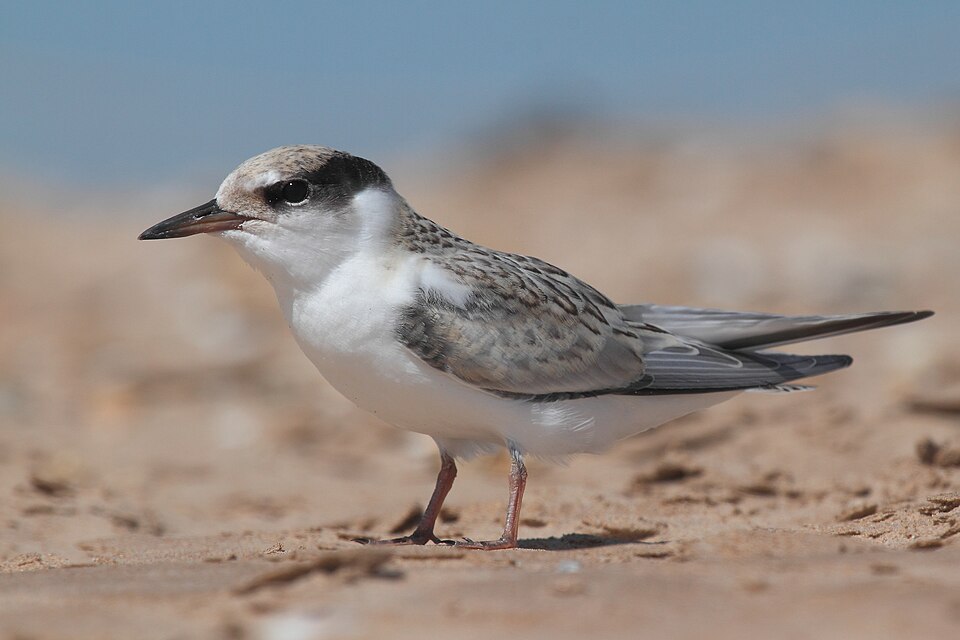 Little Tern
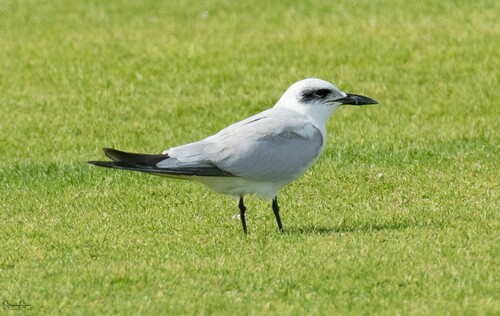 Gull-billed Tern
In short
The most reliable field mark to separate Little Tern from Gull-billed Tern is overall size and bill structure: Little Tern is much smaller, with a slender, pointed yellow bill (black-tipped in breeding), while Gull-billed Tern is robust, with a thick, short, black, gull-like bill. In flight, Little Tern appears delicate and agile, whereas Gull-billed Tern is broad-winged and powerful. Immature and winter birds can be tricky, but bill color and shape, along with relative size and jizz, remain strong clues. Both species show white foreheads in non-breeding plumage, so focus on structure and proportions for a confident ID.
Identification tips
- Size: Little Tern is tiny, about one-third the mass of Gull-billed Tern. If you see a very small tern, especially among other terns or gulls, it's likely Little Tern. Gull-billed Tern is robust and stands out as large for a tern.
- Bill shape and color: Little Tern has a thin, pointed bill (yellow with black tip in breeding, all black in winter). Gull-billed Tern has a short, thick, all-black bill year-round, reminiscent of a small gull. This is the single best mark at any age or season.
- Leg color: Little Tern has yellow legs in breeding plumage, duller in winter. Gull-billed Tern's legs are always black. Leg color can be hard to see at distance, but is useful at close range.
- Head pattern (breeding): Both have black caps, but Little Tern's is offset by a white forehead, while Gull-billed Tern's is more extensive and the bill is much thicker.
- Head pattern (non-breeding): Both lose the full cap, but Gull-billed Tern shows a dark eye-stripe or mask, while Little Tern's head is more uniformly white with no strong mask.
- Flight style: Little Tern is nimble, with rapid wingbeats and frequent plunge-diving. Gull-billed Tern is steadier, with broader wings and a more direct, powerful flight. It rarely plunge-dives.
- Perched jizz: Little Tern appears dainty, with a fine bill and short legs. Gull-billed Tern stands tall, with long legs and a hefty body.
- Habitat: Little Tern is almost always found over water, especially sandy or gravelly shores. Gull-billed Tern is more likely to be seen over fields, marshes, or even roads, sometimes far from water.
- Juvenile confusion: Juvenile Gull-billed Tern has a faint mask but otherwise looks like a winter adult; Little Tern juveniles are not described in detail here, but do not show a strong mask. Bill shape remains a key separator in young birds.
- Voice: Listen for calls: Little Tern gives high, squeaky notes; Gull-billed Tern gives a deep, harsh 'ker-wik.'
- Feeding behavior: Little Tern plunge-dives for fish; Gull-billed Tern hawks insects in flight or picks prey from the ground, rarely diving.
- Mixed flocks: If you see both species together, the size and bill contrast is striking. In single-species flocks, use structure and feeding behavior as primary clues.
- Seasonal changes: In winter, bill color and head pattern shift, but bill thickness and overall size remain reliable. Leg color is less useful in non-breeding plumage.
- Common pitfalls: Do not rely solely on head pattern in winter, as both species show more white. Always check bill shape and size.
- When in doubt: If the tern looks chunky, with a short, thick bill and long legs, and is foraging over fields, it's a Gull-billed Tern. If it's tiny, sharp-billed, and diving for fish, it's a Little Tern.
Size
Little Tern is dramatically smaller: body mass around 57 g, length 21–25 cm, wingspan 41–47 cm [wikidata, wikipedia]. Gull-billed Tern is much heavier (adult mass 150–292 g), longer (33–42 cm), and with a much broader wingspan (76–91 cm) [wikipedia]. The size gap is obvious in direct comparison or mixed flocks, but can be underestimated at distance or with lone birds. Little Tern is one of the smallest terns; Gull-billed Tern is among the largest, with a bulkier, more gull-like build.
Plumage
-
Juvenile/immature plumage: No detailed upperwing pattern differences are described for these species in the sources, so focus shifts to bill and structure for young birds. Both species lose the full black cap in winter, showing more white on the forehead. Juvenile Gull-billed Terns have a faint dark mask but otherwise resemble winter adults; Little Tern juveniles are not described in detail here, but do not show a strong mask.
-
Adult breeding plumage: Little Tern has a white forehead, black crown, yellow bill with black tip, and yellow legs. Gull-billed Tern has a full black cap, but with a thick, all-black bill and black legs. Upperparts are grey in both, but Little Tern is paler and more delicate.
-
Adult non-breeding (winter): Both species lose the full black cap, gaining a white forehead. Little Tern's bill becomes black and legs duller. Gull-billed Tern loses the cap entirely, showing a dark patch through the eye (mask), and retains the thick black bill and black legs. The mask is a key difference: Little Tern does not show a strong eye-stripe.
-
In all plumages: Bill color and thickness are the most reliable plumage-linked marks: Little Tern always has a slender bill (yellow in breeding, black in winter), while Gull-billed Tern's bill is thick, short, and black year-round.
Behaviour
Little Tern is agile, buoyant, and quick in flight, often seen plunge-diving for fish in shallow water. It forages over water almost exclusively. Gull-billed Tern is more powerful and direct, with broader wings and a heavier jizz, often flying over fields and marshes, and rarely plunge-diving. Instead, it hawks insects in flight or picks prey from the ground, sometimes away from water. Perched, Little Tern looks dainty and short-legged, while Gull-billed Tern stands tall, with long legs and a robust stance.
Habitat
Both species can occur on coasts and inland waters, but Little Tern is more strictly tied to sandy beaches, gravel bars, and river mouths, often in small colonies. Gull-billed Tern is more flexible, breeding on lakes, marshes, coasts, and even levees, and is more likely to be seen foraging over fields or away from water. In North America, Gull-billed Tern is mostly coastal, but in Eurasia it uses freshwater habitats as well. Context can help: a tern hawking insects over farmland is almost certainly Gull-billed.
Voice
Gull-billed Tern has a distinctive, harsh 'ker-wik' call, which is deeper and more gull-like than the high-pitched, sharp calls of Little Tern. Little Tern's calls are more typical of small terns: quick, high, and squeaky. If you hear a deep, grating call, suspect Gull-billed Tern.