

Little Rush Warbler vs Simple Greenbul
Bradypterus baboecala versus Chlorocichla simplex
Play a quiz with Little Rush Warbler and Simple Greenbul
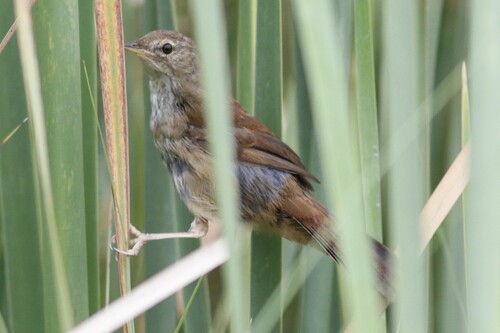 Little Rush Warbler
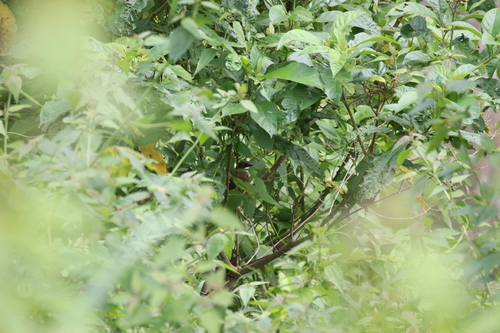 Simple Greenbul
In short
The most reliable way to separate Little Rush Warbler from Simple Greenbul is by overall structure and habitat: the warbler is a small, slender skulker of dense reeds and marshes, while the greenbul is a larger, bulkier bird of forest and woodland edges. Little Rush Warbler is plain and brownish, with a thin bill and short wings, often seen creeping low in wet vegetation. Simple Greenbul is olive-green above, pale below, with a stouter bill and a more upright, active demeanor in drier, wooded habitats. If you see a bird in a marsh or reedbed, it's almost certainly the warbler; in forest or shrubby woodland, it's likely the greenbul.
Identification tips
- Habitat is often decisive: Little Rush Warbler is restricted to dense, wet habitats like reedbeds and marshes, while Simple Greenbul is found in forests, woodland edges, and shrubland. If you see the bird in a marsh, it's almost certainly the warbler.
- Overall size and shape: The warbler is smaller, slimmer, and more delicate, with a thin, pointed bill. The greenbul is larger, bulkier, and has a noticeably thicker bill.
- Bill shape: Little Rush Warbler has a fine, pointed bill suited to picking insects from reeds. Simple Greenbul's bill is stouter and more conical, reflecting its broader diet.
- Plumage color: The warbler is plain brown or rufous above and pale below, with little contrast. The greenbul is olive-green above and paler below, often with a yellowish or whitish belly and a brighter face.
- Tail and wing structure: The warbler has a relatively short tail and wings, giving it a compact look, while the greenbul has a longer tail and a more substantial body.
- Behavior: Little Rush Warbler is secretive, creeping low in dense vegetation, rarely flying far or perching in the open. Simple Greenbul is more active and visible, foraging in the mid-story or canopy, often in pairs or small groups.
- Perched posture: The warbler often appears hunched and low to the ground, while the greenbul sits more upright and alert.
- Flight style: The warbler makes short, weak flights within reeds; the greenbul flies more strongly and may move between trees or bushes.
- Voice (when known): If you hear a distinctive song or call, use it, but no details are provided here.
- Juvenile/immature confusion: No specific juvenile or immature plumage marks are described for either species, so rely on structure and habitat.
- Context clues: If you are birding in a wetland or marsh, expect Little Rush Warbler; in forest or woodland, expect Simple Greenbul.
- Pitfalls: In poor light, the greenbul's olive tones may appear duller, but the larger size and thicker bill still separate it from the warbler.
- Sex/season: No sexual or seasonal plumage differences are noted for either species, so these marks apply year-round.
- Group behavior: Greenbuls may be seen in small flocks or mixed-species parties; warblers are usually solitary or in pairs.
- When in doubt: Prioritize habitat and overall structure, as plumage alone can be misleading in poor conditions.
Size
Little Rush Warbler is noticeably smaller and slimmer than Simple Greenbul. The warbler has a delicate, thin bill and a compact body, while the greenbul is larger, with a heavier, more robust build and a thicker bill. In direct comparison, the greenbul appears bulkier and longer-tailed, reflecting its different foraging style and habitat.
Plumage
No detailed age-specific or wing pattern marks are given for either species, but overall coloration is distinct. Little Rush Warbler is uniformly brownish or rufous above and paler below, lacking strong contrast or bright colors. Its plumage is plain, helping it blend into reeds and marsh vegetation. Simple Greenbul, in contrast, is olive-green above with a paler, often yellowish or whitish belly, and may show a slightly brighter face or throat. The greenbul's plumage is more contrasting and colorful, especially when seen in good light. Juvenile and immature plumages are not described for either species, so rely on general coloration and structure.
Behaviour
Little Rush Warbler is secretive and tends to stay low in dense, wet vegetation, creeping or hopping through reeds and sedges. It is rarely seen in the open and often detected by movement or song. Simple Greenbul is more active and conspicuous, foraging in small groups or pairs in the mid-story or canopy of forests and woodlands, sometimes sallying for insects or fruit. The greenbul is more likely to be seen out in the open, perched or moving through foliage.
Habitat
Habitat is a key separator: Little Rush Warbler is almost always found in marshes, reedbeds, or wet grasslands, closely tied to water and dense emergent vegetation. Simple Greenbul prefers subtropical or tropical dry forests, moist lowland forests, and shrubland, and is widespread in African rainforest regions. If the bird is in a wetland or reedbed, it is almost certainly the warbler; if in forest or woodland, it's the greenbul.