

Little Rush Warbler vs Simple Greenbul
Bradypterus baboecala contro Chlorocichla simplex
Fai un quiz con Little Rush Warbler e Simple Greenbul
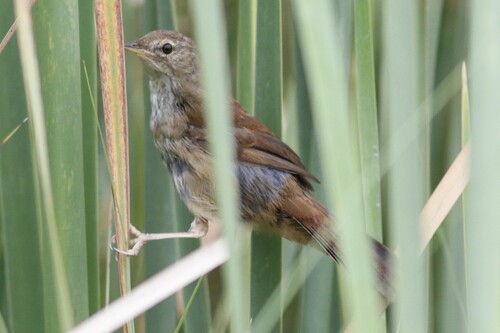 Little Rush Warbler
 Simple Greenbul
In breve
Il modo più affidabile per separare il Little Rush Warbler dal Simple Greenbul è attraverso la struttura generale e l'habitat: il warbler è un piccolo e snello furtivo di canneti e paludi densi, mentre il greenbul è un uccello più grande e massiccio dei bordi di foreste e boschi. Il Little Rush Warbler è semplice e marrone, con un becco sottile e ali corte, spesso visto strisciare basso nella vegetazione umida. Il Simple Greenbul è verde oliva sopra, pallido sotto, con un becco più robusto e un comportamento più eretto e attivo in habitat boschivi più secchi. Se vedi un uccello in una palude o in un canneto, è quasi certamente il warbler; in foresta o bosco cespuglioso, è probabile che sia il greenbul.
Consigli di identificazione
- L'habitat è spesso decisivo: il Little Rush Warbler è limitato a habitat densi e umidi come i canneti e le paludi, mentre il Simple Greenbul si trova in foreste, bordi di boschi e cespugli. Se vedi l'uccello in una palude, è quasi certamente il warbler.
- Dimensioni e forma complessive: il warbler è più piccolo, più snello e più delicato, con un becco sottile e appuntito. Il greenbul è più grande, massiccio e ha un becco visibilmente più spesso.
- Forma del becco: il Little Rush Warbler ha un becco fine e appuntito adatto a prendere insetti dai canneti. Il becco del Simple Greenbul è più robusto e conico, riflettendo la sua dieta più ampia.
- Colore del piumaggio: il warbler è marrone uniforme o rufous sopra e pallido sotto, con poco contrasto. Il greenbul è verde oliva sopra e più pallido sotto, spesso con un ventre giallastro o biancastro e un viso più luminoso.
- Struttura della coda e delle ali: il warbler ha una coda e ali relativamente corte, dando un aspetto compatto, mentre il greenbul ha una coda più lunga e un corpo più sostanziale.
- Comportamento: il Little Rush Warbler è segreto, strisciando basso nella vegetazione densa, raramente volando lontano o posandosi in aperto. Il Simple Greenbul è più attivo e visibile, cercando cibo nella parte centrale o nella chioma, spesso in coppie o piccoli gruppi.
- Postura in perching: il warbler appare spesso curvo e basso a terra, mentre il greenbul si siede più eretto e all'erta.
- Stile di volo: il warbler compie voli brevi e deboli all'interno dei canneti; il greenbul vola più forte e può muoversi tra alberi o cespugli.
- Voce (quando nota): se senti un canto o un richiamo distintivo, usalo, ma qui non sono forniti dettagli.
- Confusione giovanile/immatura: non sono descritti segni specifici di piumaggio giovanile o immaturo per nessuna delle due specie, quindi fai affidamento sulla struttura e sull'habitat.
- Indizi contestuali: se stai osservando uccelli in un'area umida o in una palude, aspettati il Little Rush Warbler; in foresta o bosco, aspettati il Simple Greenbul.
- Insidie: in scarsa illuminazione, i toni oliva del greenbul possono apparire più opachi, ma la dimensione più grande e il becco più spesso lo separano ancora dal warbler.
- Sesso/stagione: non sono notate differenze di piumaggio sessuale o stagionale per nessuna delle due specie, quindi questi segni si applicano tutto l'anno.
- Comportamento di gruppo: i greenbul possono essere visti in piccoli stormi o gruppi misti; i warbler sono solitamente solitari o in coppie.
- Quando hai dubbi: dai priorità all'habitat e alla struttura generale, poiché il piumaggio da solo può essere fuorviante in condizioni scarse.
Taglia
Il Little Rush Warbler è visibilmente più piccolo e snello rispetto al Simple Greenbul. Il warbler ha un becco delicato e sottile e un corpo compatto, mentre il greenbul è più grande, con una costruzione più pesante e robusta e un becco più spesso. In un confronto diretto, il greenbul appare più massiccio e con una coda più lunga, riflettendo il suo diverso stile di foraggiamento e habitat.
Piumaggio
Non sono forniti segni specifici di età o di pattern delle ali per nessuna delle due specie, ma la colorazione generale è distinta. Il Little Rush Warbler è uniformemente marrone o rufous sopra e più pallido sotto, privo di forte contrasto o colori brillanti. Il suo piumaggio è semplice, aiutandolo a mimetizzarsi tra i canneti e la vegetazione palustre. Il Simple Greenbul, al contrario, è verde oliva sopra con un ventre più pallido, spesso giallastro o biancastro, e può mostrare un viso o una gola leggermente più luminosa. Il piumaggio del greenbul è più contrastante e colorato, specialmente quando visto in buona luce. Non sono descritti piumaggi giovanili e immaturi per nessuna delle due specie, quindi fai affidamento sulla colorazione generale e sulla struttura.
Comportamento
Il Little Rush Warbler è segreto e tende a rimanere basso nella vegetazione densa e umida, strisciando o saltellando tra canneti e giunchi. È raramente visto in aperto e spesso rilevato dal movimento o dal canto. Il Simple Greenbul è più attivo e appariscente, cercando cibo in piccoli gruppi o coppie nella parte centrale o nella chioma delle foreste e dei boschi, a volte lanciandosi per insetti o frutta. Il greenbul è più probabile che venga visto in aperto, posato o muovendosi attraverso il fogliame.
Habitat
L'habitat è un separatore chiave: il Little Rush Warbler si trova quasi sempre in paludi, canneti o prati umidi, strettamente legato all'acqua e alla vegetazione emergente densa. Il Simple Greenbul preferisce foreste secche subtropicali o tropicali, foreste umide di pianura e cespugli, ed è diffuso nelle regioni della foresta pluviale africana. Se l'uccello si trova in un'area umida o in un canneto, è quasi certamente il warbler; se si trova in foresta o bosco, è il greenbul.
Little Rush Warbler · Simple Greenbul · I miei uccelli difficili