

Little Gull vs Common Gull
Hydrocoloeus minutus versus Larus canus
Play a quiz with Little Gull and Common Gull
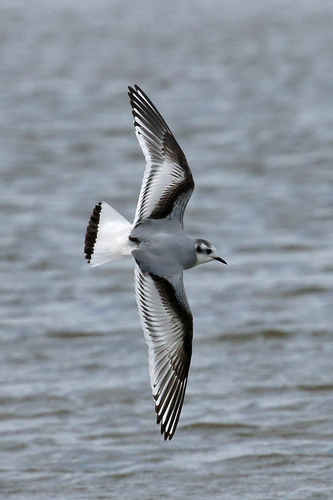 Little Gull
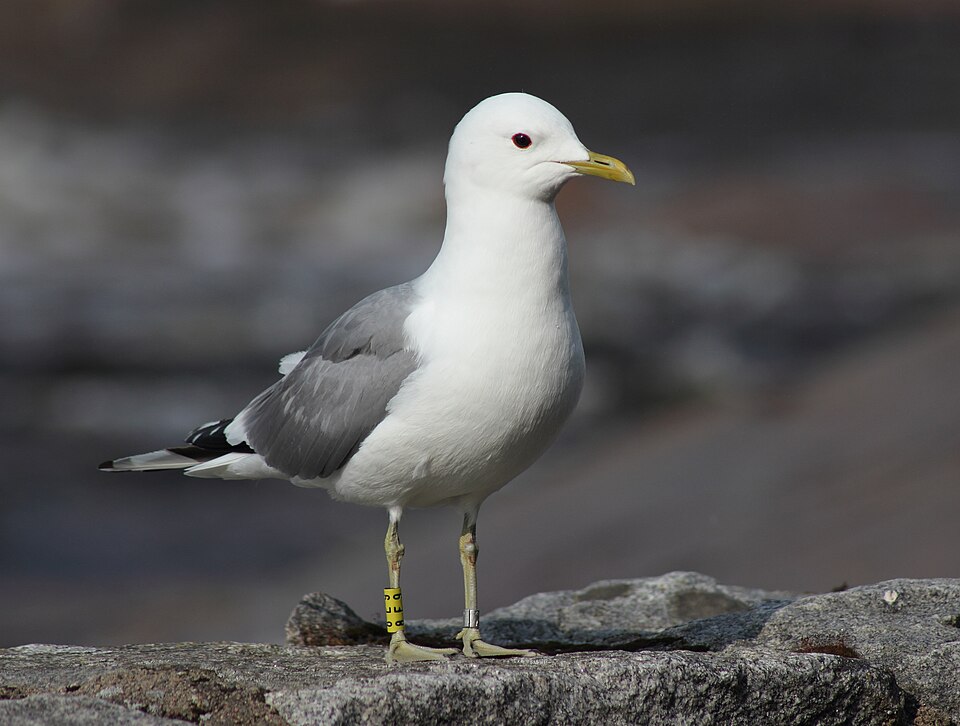 Common Gull
In short
The most reliable field mark between Little Gull and Common Gull is size: Little Gull is dramatically smaller, but for many birders, the clincher is the distinctive wing pattern of immatures—Little Gull juveniles and first-winters show a bold dark 'W' across the upperwings in flight, which Common Gull never shows. Adults are also separated by structure and plumage: Little Gull is dainty, with a short bill and rounded wings, while Common Gull is much larger, with a longer, more tapered bill and broader wings. In all plumages, Little Gull has a unique dark underwing, especially striking in flight, while Common Gull shows classic pale underwings and black wingtips. Leg and bill color can help in adults, especially in breeding season, but beware non-breeding birds and immatures where these marks are duller.
Identification tips
- Size is the first check: Little Gull is dramatically smaller than Common Gull—if you see a gull that looks dainty, almost tern-like, especially among other gulls, suspect Little Gull.
- Juvenile/first-winter wing pattern: In flight, juvenile and first-winter Little Gulls show a bold, dark 'W' across the upperwings; Common Gull immatures never show this, instead having a more uniform, scaly upperwing.
- Underwing color: Little Gull of all ages has very dark grey underwings, especially striking in flight; Common Gull has pale underwings with black wingtips.
- Bill structure: Little Gull has a short, fine bill (dark red in breeding adults, black in non-breeding); Common Gull's bill is longer, more tapered, greenish-yellow in breeding adults, sometimes with a blackish band in winter.
- Leg color: Little Gull adults have bright red legs in breeding season, duller red in winter; Common Gull has yellow legs in breeding season, duller in winter, and pinkish in juveniles.
- Head pattern (breeding): Little Gull adults have a full black hood; Common Gull adults have a plain white head.
- Head pattern (non-breeding): Little Gull shows a black cap and ear spot; Common Gull has a streaked grey head.
- Upperwing pattern (adults): Little Gull adults have pale grey upperwings with white primaries; Common Gull adults have grey upperwings with black wingtips and white 'mirrors' on the outer primaries.
- Jizz in flight: Little Gull is buoyant, agile, and tern-like; Common Gull is more direct and gull-like, with broader wings.
- Perched posture: Little Gull appears compact and short-legged; Common Gull stands taller and more upright.
- Habitat context: Little Gull is more likely on small inland lakes and marshes in breeding season, and in small flocks; Common Gull is widespread, often in large flocks, and common in open country and coasts.
- Maturity timing: Little Gull reaches adult-like plumage by second year; Common Gull takes three years (up to four in Kamchatka) to reach full adult plumage.
- Rosy flush: In spring, Little Gull adults may show a rosy flush on the underparts, never seen on Common Gull.
- Voice: If heard, Common Gull's high-pitched 'laughing' call is distinctive; Little Gull is much quieter.
- Pitfalls: Non-breeding and immature birds can be confusing—focus on size, underwing color, and (for young birds) the presence or absence of the dark 'W' on the upperwing.
Size
Little Gull is by far the smallest gull in the world, weighing about 98 g, with a length of 24–28 cm and a wingspan of 62–69 cm. Common Gull is much larger (body mass ~386.5 g), with a length of 40–46 cm and a wingspan of 100–115 cm. In the field, even at a distance, Little Gull appears noticeably petite and delicate compared to the medium-sized, chunkier Common Gull. If seen together, the size difference is unmistakable, but even singly, Little Gull's small, tern-like jizz stands out.
Plumage
- Juvenile/First-winter: Little Gull juveniles and first-winters show a bold, dark 'W' pattern across the upperwings in flight, with white underwings. Common Gull juveniles have scaly black-brown upperparts and a neat, but not bold, wing pattern; they never show a 'W' or such strong contrast. By first winter, Common Gull shows white head and belly with fine streaks and greyish saddle, but still lacks the Little Gull's distinctive wing pattern.
- Adults (Breeding): Little Gull adults have a black hood, dark red bill, and bright red legs, sometimes with a rosy flush below. Common Gull adults have a pale grey back, white underparts, yellow legs, and a greenish-yellow, unmarked bill. Both have black wingtips, but Little Gull's wings are paler above and uniquely dark below.
- Adults (Non-breeding): Little Gull adults lose the full hood, retaining a black cap and ear spot, with a black bill and duller red legs. Common Gull adults have a streaked grey head, duller yellow legs, and may show a faint blackish bill band. Little Gull always keeps the dark underwing, while Common Gull's underwing remains pale.
- Second year: Little Gull second-years are nearly adult-like but may retain some black in the primaries. Common Gull immatures take up to three years to reach full adult plumage, with gradual changes in leg color and upperpart pattern.
Behaviour
Little Gull is agile and buoyant, often feeding by picking insects from the water surface or catching them on the wing, sometimes reminiscent of a tern. It is more likely to be seen over freshwater or in small, loose flocks. Common Gull is more robust, with typical gull flight and feeding behavior, often foraging on land or at sea, and is less aerially agile than Little Gull. When perched, Little Gull appears dainty and short-legged, while Common Gull stands taller and more upright.
Habitat
Little Gull breeds on freshwater lakes and marshes, and is more likely to be found inland during breeding season, moving to sea in winter. Common Gull breeds in a wide range of cool temperate habitats, often near water but also in open country, and winters along coasts, estuaries, and sometimes inland. In Europe, Common Gull is far more widespread and abundant, especially in winter, while Little Gull is usually local and often in smaller numbers.
Voice
Common Gull gives a high-pitched, 'laughing' cry, typical of medium-sized gulls. Little Gull is generally quieter and less vocal; its calls are not as distinctive or loud as Common Gull, and are unlikely to be a primary field mark for separation.