

Little Grebe vs Black-necked Grebe
Tachybaptus ruficollis versus Podiceps nigricollis
Play a quiz with Little Grebe and Black-necked Grebe
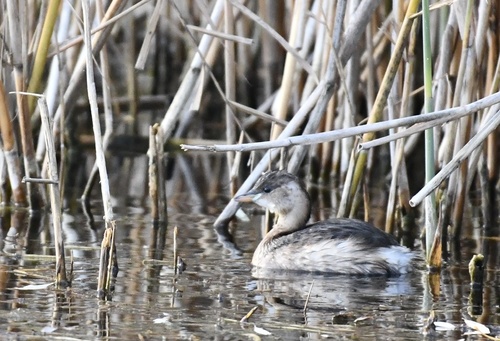 Little Grebe
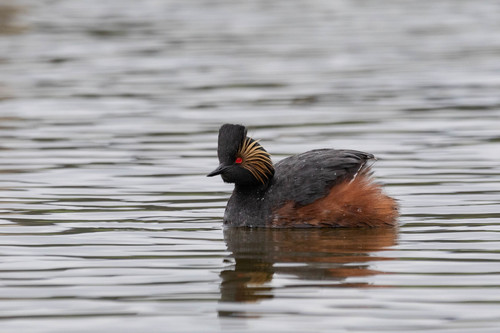 Black-necked Grebe
In short
The most reliable field mark between Little Grebe and Black-necked Grebe is the presence of a bold white wing patch in flight on Black-necked Grebe of all ages, which is absent or much reduced in Little Grebe (except some tropical subspecies). At rest, Little Grebe shows a compact, round-bodied shape with a short, pointed bill and, in breeding plumage, a rich rufous neck and cheeks, while Black-necked Grebe is longer-bodied with a thinner, slightly upturned bill and, in breeding, has striking ochre feather fans behind the eye. In non-breeding and juvenile plumages, both can appear drab, but Little Grebe is smaller, with a buffier tone and a 'powder puff' rear, while Black-necked Grebe retains a darker cap and white ovals behind the ear-coverts. Juvenile Little Grebe has a yellow bill with a black tip and streaked face, while juvenile Black-necked Grebe is browner with pale lores and a tawny tinge to the neck.
Identification tips
- White wing patch in flight: Black-necked Grebe of all ages shows a bold white patch on the upperwing (secondaries and inner primaries) in flight, often visible at rest; Little Grebe lacks this except in some tropical subspecies. This is the most reliable separator, especially for immatures and in flight.
- Bill shape: Little Grebe has a short, pointed bill; Black-necked Grebe's bill is longer, thinner, and slightly upturned, often giving a more delicate profile.
- Body shape and jizz: Little Grebe is compact, round-bodied, and often appears 'fluffy' or 'powder puff' at the rear, especially in winter. Black-necked Grebe is longer-bodied and sleeker.
- Breeding plumage (adult): Little Grebe shows rich rufous on neck, cheeks, and flanks with a bright yellow gape; Black-necked Grebe has a black head, neck, and upperparts with a striking ochre fan of feathers behind the eye and a bright red eye.
- Non-breeding/juvenile plumage: Both become drabber, but Little Grebe is buffy with a darker cap and lacks strong facial contrast; Black-necked Grebe retains a dark cap, white ovals behind the ear-coverts, and a greyish or brownish neck with variable white.
- Juvenile bill and face: Juvenile Little Grebe has a yellow bill with a black tip and black-and-white streaks on the cheeks and neck sides; as it ages, the bill darkens. Juvenile Black-necked Grebe is browner, with pale lores, whitish marks behind the eye, and a buffy or tawny tinge to the neck.
- Eye color: Black-necked Grebe has a vivid bright red eye with a narrow yellow inner ring and colored orbital ring; Little Grebe's eye color varies by subspecies but is never as strikingly red.
- Flank color (breeding): Little Grebe's flanks are rufous in breeding; Black-necked Grebe's are tawny rufous to maroon-chestnut with blackish flecks.
- Rear shape: Little Grebe's rear end is often puffed and rounded, especially in winter; Black-necked Grebe's rear is less pronounced.
- Voice: If you hear a trilled, horse-like whinny, it's Little Grebe; Black-necked Grebe's calls are not described here.
- Size: Black-necked Grebe is larger and heavier; Little Grebe is noticeably smaller and more compact, but beware of lone birds or distant views.
- Habitat: Little Grebe is more often on small, vegetated ponds; Black-necked Grebe prefers larger, open waters, but this is not a reliable separator where both are present.
- Subspecies variation: Some tropical Little Grebe subspecies show more white on the wing; check local guides if in tropical regions, as this can reduce the reliability of the wing patch mark.
- At rest: White wing patch of Black-necked Grebe may be visible even when perched, especially if the wing is slightly open; Little Grebe's wing is plain.
- Mixed flocks: If you see both together, size, jizz, and wing pattern will stand out; otherwise, rely on the combination of wing patch, bill shape, and plumage details for best separation.
Size
Black-necked Grebe is distinctly larger, measuring 28–34 cm in length with a wingspan of 52–60 cm and weighing 215–450 g [wikipedia], while Little Grebe is notably smaller and more compact [wikipedia]. The difference is often apparent when seen together, but size alone can be misleading at distance or without direct comparison.
Plumage
-
Juvenile/immature in flight: Black-necked Grebe of all ages shows a prominent white patch on the upperwing (formed by secondaries and inner primaries), visible in flight and often at rest; Little Grebe lacks this in most subspecies, with only some tropical forms showing extensive white. Juvenile Little Grebe has a yellow bill with a black tip and black-and-white streaks on the cheeks and neck sides; as it ages, the bill darkens. Juvenile Black-necked Grebe is similar to non-breeding adult but browner, with pale lores, whitish marks behind the eye, and a buffy or tawny tinge to the sides of the head and neck.
-
Adult breeding: Little Grebe is dark above with rich rufous neck, cheeks, and flanks, and a bright yellow gape. Black-necked Grebe is black to blackish-brown on head, neck, and upperparts, with a vivid ochre fan of feathers behind the eye and bright red eye.
-
Adult non-breeding: Little Grebe becomes buffy with a darker back and cap, losing the rufous; Black-necked Grebe is greyish-black above with a dark cap extending below the eye, white ovals behind the ear-coverts, and a grey to brownish-grey neck with variable white. Both can appear drab, but Black-necked Grebe keeps a darker cap and more contrast on the face.
Behaviour
Both species are diving water birds, often seen swimming low in the water and diving frequently. Little Grebe has a more compact, rounded jizz and often appears 'powder puff' at the rear, especially in winter. Black-necked Grebe tends to look longer-bodied and sleeker, with a thinner, slightly upturned bill. In flight, Black-necked Grebe's white wing patch is obvious, while Little Grebe's wings are plain or only faintly marked in most regions. Both are wary and quick to dive when disturbed.
Habitat
Both species inhabit freshwater lakes, ponds, and marshes. Little Grebe is more likely to be found on small ponds and slow-moving waters, sometimes in more vegetated or sheltered habitats. Black-necked Grebe is often found on larger, open water bodies, especially during migration and winter, but there is considerable overlap, so habitat is not a reliable separator where both occur.
Voice
Little Grebe gives a trilled, repeated 'weet-weet-weet' or 'wee-wee-wee' call, reminiscent of a horse whinnying [wikipedia]. No distinctive vocalization is described for Black-necked Grebe in these notes, so voice is only useful for confirming Little Grebe.