

Motmot

Little Egret vs Western Reef-Heron

Egretta garzetta versus Egretta gularis

Play a quiz with Little Egret and Western Reef-Heron

Little Egret (Egretta garzetta) Little Egret
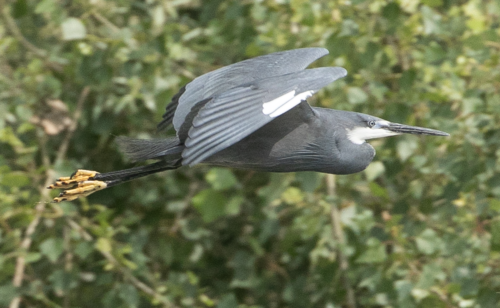
Western Reef-Heron (Egretta gularis) Western Reef-Heron

Media

Loading…

In short

The most reliable field mark between Little Egret and Western Reef-Heron is the leg and bill coloration: Little Egret shows black legs with bright yellow feet (except in some subspecies), and a slender black bill, while Western Reef-Heron (especially in the white morph) has a heavier, often yellower bill and more yellow extending up thicker legs. The dark (slaty-grey) morph of Western Reef-Heron is rarely matched by Little Egret, whose dark morph is extremely uncommon; most dark birds are Western Reef-Heron. Juvenile Little Egrets can show duller legs and feet, but the overall structure and bill color remain useful. Both species can be very similar in white morph, so careful attention to structure and bare part color is essential.

Identification tips

  1. Leg and foot color: Little Egret (adult, western races) has black legs with bright yellow feet; Western Reef-Heron (white morph) has yellow extending further up thicker legs and sometimes less contrast between leg and foot. Juvenile Little Egrets have greenish-black legs and duller yellow feet, but still show more contrast than most Western Reef-Herons.
  2. Bill shape and color: Little Egret has a slender, entirely black bill; Western Reef-Heron's bill is heavier, often with yellowish tones, especially at the base. This is most obvious in the white morph.
  3. Dark morph: A slaty-grey or blackish bird with a white throat in this group is almost always Western Reef-Heron. Dark morph Little Egret is extremely rare; nearly all dark birds are Western Reef-Heron.
  4. Nape plumes (breeding): Both species grow long nape plumes in breeding season, but Little Egret's are longer (up to 150mm), finer, and more pointed. Western Reef-Heron's are present but less striking.
  5. Scapular feathers (breeding): Little Egret has very long, loose scapular plumes (up to 200mm) in breeding season; Western Reef-Heron's are less elongated.
  6. Facial skin and lores: In Little Egret, the lores are black, sometimes turning red in courtship; Western Reef-Heron's facial skin can be more yellowish, and legs/facial skin can flush reddish in breeding.
  7. Foot color in subspecies: Note that the nigripes subspecies of Little Egret has blackish feet and yellow skin between bill and eye, potentially confusing with Western Reef-Heron; check bill and structure carefully.
  8. Structure: Little Egret is more slender overall, with a finer bill and thinner legs; Western Reef-Heron appears bulkier, with a heavier bill and thicker legs.
  9. Foraging behavior: Western Reef-Heron often shades the water with its wings while hunting; Little Egret may run with wings raised but is less likely to shade prey this way.
  10. Juvenile plumage: Juvenile Little Egrets may show some greyish or brownish feathers, but not the full dark morph of Western Reef-Heron. Both juveniles can be confusing; focus on bill and leg color.
  11. Habitat: Away from the coast, Little Egret is far more likely. Western Reef-Heron is strongly coastal and rarely found inland.
  12. Dominance at feeding sites: Where both species occur, Little Egret may be more dominant and aggressive at feeding sites.
  13. Intermediate morphs: Western Reef-Heron can show intermediate grey-and-white plumage, especially in younger birds; Little Egret rarely shows such variation.
  14. Voice: Not a reliable separator in the field; both are quiet, but Western Reef-Heron may give a low 'kwok' or grating call when disturbed.
  15. Seasonal changes: In breeding season, both species show more elaborate plumes and some changes in bare part color; check multiple features, as overlap increases.

Size

Both species are similar in size, with Little Egret averaging around 532g in body mass [wikidata]. Length and wingspan overlap, with Little Egret at 55–65 cm length and 88–106 cm wingspan [wikipedia]. Western Reef-Heron is described as medium-sized, and no significant size difference is noted in the sources; thus, size is not a reliable separator in the field.

Plumage

Juvenile and immature plumages are not described as highly distinctive between the two species, but some differences exist. Little Egret juveniles resemble non-breeding adults but with greenish-black legs and duller yellow feet, and may show some greyish or brownish feathers. Western Reef-Heron juveniles can show intermediate grey-and-white plumage, but the most striking difference is the presence of a dark morph (slaty-grey with a white throat), which is almost never seen in Little Egret—nearly all dark birds are Western Reef-Heron. In white morphs, both species are very similar, but Western Reef-Heron tends to have a heavier, yellower bill and more yellow on the legs. In breeding season, both can show nape plumes, but Little Egret's are longer and finer. Subtle differences in scapular feather length and texture exist but are hard to judge at a distance.

Behaviour

Both species hunt actively in shallow water, often running or stirring the water with their feet. Western Reef-Heron is noted for being especially active, sometimes flicking or shading the water with its wings while foraging. Little Egret also uses a variety of foraging strategies, including running with raised wings, but is not specifically noted for wing-shading behavior. Both species will take advantage of disturbed prey, but Little Egret is described as more dominant at feeding sites where both occur.

Habitat

Little Egret is more generalist, found in a variety of wetland habitats including inland waters and sometimes on land. Western Reef-Heron is strongly coastal, favoring tidal flats, estuaries, and shorelines. If seen far from the coast, Little Egret is much more likely. Both species can overlap in coastal areas, especially where vagrants occur.

Voice

Both species are generally quiet. Western Reef-Heron is noted to give a low 'kwok' or grating call when disturbed or near the nest. No distinctive vocal differences are described for Little Egret in the sources, and voice is not a practical field separator.

Submit a better description

Use the same sections as the comparison. Your text is published immediately.

The most reliable field mark between Little Egret and Western Reef-Heron is the leg and bill coloration: Little Egret shows black legs with bright yellow feet (except in some subspecies), and a slender black bill, while Western Reef-Heron (especially in the white morph) has a heavier, often yellower bill and more yellow extending up thicker legs. The dark (slaty-grey) morph of Western Reef-Heron is rarely matched by Little Egret, whose dark morph is extremely uncommon; most dark birds are Western Reef-Heron. Juvenile Little Egrets can show duller legs and feet, but the overall structure and bill color remain useful. Both species can be very similar in white morph, so careful attention to structure and bare part color is essential.

  1. Leg and foot color: Little Egret (adult, western races) has black legs with bright yellow feet; Western Reef-Heron (white morph) has yellow extending further up thicker legs and sometimes less contrast between leg and foot. Juvenile Little Egrets have greenish-black legs and duller yellow feet, but still show more contrast than most Western Reef-Herons.
  2. Bill shape and color: Little Egret has a slender, entirely black bill; Western Reef-Heron's bill is heavier, often with yellowish tones, especially at the base. This is most obvious in the white morph.
  3. Dark morph: A slaty-grey or blackish bird with a white throat in this group is almost always Western Reef-Heron. Dark morph Little Egret is extremely rare; nearly all dark birds are Western Reef-Heron.
  4. Nape plumes (breeding): Both species grow long nape plumes in breeding season, but Little Egret's are longer (up to 150mm), finer, and more pointed. Western Reef-Heron's are present but less striking.
  5. Scapular feathers (breeding): Little Egret has very long, loose scapular plumes (up to 200mm) in breeding season; Western Reef-Heron's are less elongated.
  6. Facial skin and lores: In Little Egret, the lores are black, sometimes turning red in courtship; Western Reef-Heron's facial skin can be more yellowish, and legs/facial skin can flush reddish in breeding.
  7. Foot color in subspecies: Note that the nigripes subspecies of Little Egret has blackish feet and yellow skin between bill and eye, potentially confusing with Western Reef-Heron; check bill and structure carefully.
  8. Structure: Little Egret is more slender overall, with a finer bill and thinner legs; Western Reef-Heron appears bulkier, with a heavier bill and thicker legs.
  9. Foraging behavior: Western Reef-Heron often shades the water with its wings while hunting; Little Egret may run with wings raised but is less likely to shade prey this way.
  10. Juvenile plumage: Juvenile Little Egrets may show some greyish or brownish feathers, but not the full dark morph of Western Reef-Heron. Both juveniles can be confusing; focus on bill and leg color.
  11. Habitat: Away from the coast, Little Egret is far more likely. Western Reef-Heron is strongly coastal and rarely found inland.
  12. Dominance at feeding sites: Where both species occur, Little Egret may be more dominant and aggressive at feeding sites.
  13. Intermediate morphs: Western Reef-Heron can show intermediate grey-and-white plumage, especially in younger birds; Little Egret rarely shows such variation.
  14. Voice: Not a reliable separator in the field; both are quiet, but Western Reef-Heron may give a low 'kwok' or grating call when disturbed.
  15. Seasonal changes: In breeding season, both species show more elaborate plumes and some changes in bare part color; check multiple features, as overlap increases.

Both species are similar in size, with Little Egret averaging around 532g in body mass [wikidata]. Length and wingspan overlap, with Little Egret at 55–65 cm length and 88–106 cm wingspan [wikipedia]. Western Reef-Heron is described as medium-sized, and no significant size difference is noted in the sources; thus, size is not a reliable separator in the field.

Juvenile and immature plumages are not described as highly distinctive between the two species, but some differences exist. Little Egret juveniles resemble non-breeding adults but with greenish-black legs and duller yellow feet, and may show some greyish or brownish feathers. Western Reef-Heron juveniles can show intermediate grey-and-white plumage, but the most striking difference is the presence of a dark morph (slaty-grey with a white throat), which is almost never seen in Little Egret—nearly all dark birds are Western Reef-Heron. In white morphs, both species are very similar, but Western Reef-Heron tends to have a heavier, yellower bill and more yellow on the legs. In breeding season, both can show nape plumes, but Little Egret's are longer and finer. Subtle differences in scapular feather length and texture exist but are hard to judge at a distance.

Both species hunt actively in shallow water, often running or stirring the water with their feet. Western Reef-Heron is noted for being especially active, sometimes flicking or shading the water with its wings while foraging. Little Egret also uses a variety of foraging strategies, including running with raised wings, but is not specifically noted for wing-shading behavior. Both species will take advantage of disturbed prey, but Little Egret is described as more dominant at feeding sites where both occur.

Little Egret is more generalist, found in a variety of wetland habitats including inland waters and sometimes on land. Western Reef-Heron is strongly coastal, favoring tidal flats, estuaries, and shorelines. If seen far from the coast, Little Egret is much more likely. Both species can overlap in coastal areas, especially where vagrants occur.

Both species are generally quiet. Western Reef-Heron is noted to give a low 'kwok' or grating call when disturbed or near the nest. No distinctive vocal differences are described for Little Egret in the sources, and voice is not a practical field separator.

Discard your changes?

You have unsaved edits. If you leave now, those changes will be lost.

Little Egret · Western Reef-Heron · My Tricky Birds