

Little Egret vs Grey Heron
Egretta garzetta versus Ardea cinerea
Play a quiz with Little Egret and Grey Heron
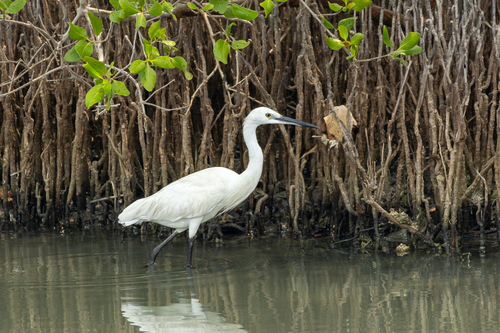 Little Egret
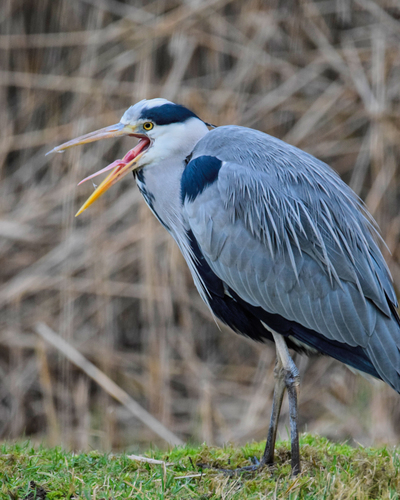 Grey Heron
In short
The most reliable field mark between Little Egret and Grey Heron is overall size and structure: Grey Heron is much larger, bulkier, and longer-necked, with a thick, dagger-like yellowish bill, while Little Egret is a slender, dainty white heron with a thin black bill and black legs with yellow feet. In flight, Little Egret shows entirely white plumage, whereas Grey Heron is pale grey above and below with a contrasting white neck and black head stripe. Juvenile Little Egrets may show duller legs and some greyish or brownish feathers, but never the strong grey and black patterning of a young Grey Heron. Both species can be seen in similar wetland habitats, but their size and structure are usually unmistakable in direct comparison.
Identification tips
- Size is the fastest check: Grey Heron is much larger and bulkier than Little Egret. If you see both together, the difference is striking; if alone, compare to nearby ducks or crows for scale.
- Bill color and shape: Little Egret has a thin, straight, black bill; Grey Heron has a thick, dagger-like, pinkish-yellow bill (brighter in breeding adults). Bill color is reliable at all ages.
- Leg and foot color: Adult Little Egret has black legs with bright yellow feet (except in some races); juveniles have duller yellow feet and greenish-black legs. Grey Heron always has brown legs and never shows yellow feet.
- Plumage color: Little Egret is pure white in all plumages, though juveniles may have a few greyish or brownish feathers. Grey Heron is ashy-grey above, greyish-white below, with a white head and neck and black head stripe in adults.
- Head pattern: Adult Grey Heron shows a strong black supercilium and crest, lacking in Little Egret. Juvenile Grey Heron has a grey head and paler face, still unlike the all-white Egret.
- Flight appearance: In flight, Little Egret is all white with black legs trailing behind; Grey Heron shows broad grey wings, a white neck and head, and a long, heavy body. The neck is retracted in both, but the Heron's is longer and more S-shaped.
- Breeding plumes: In breeding season, Little Egret has long, wispy plumes on the nape and breast; Grey Heron has elongated scapular and neck feathers but not the same delicate plumes.
- Juvenile confusion: Young Little Egrets may show some greyish or brownish feathers but never the full grey and white contrast or black head markings of a young Grey Heron. Juvenile Grey Herons are dull and ashy, with a small crest and no bright white.
- Feet in flight: The yellow feet of Little Egret are often visible trailing behind in flight, especially in good light. Grey Heron never shows this contrast.
- Behavior: Little Egret is more active, often running or stirring water; Grey Heron is more sedentary, standing still for long periods.
- Perched posture: Grey Heron often perches upright with a long neck and heavy bill; Little Egret is more compact and delicate in stance.
- Habitat overlap: Both can occur together, so do not rely on habitat alone for separation.
- Voice: Not diagnostic from available notes.
- Seasonal changes: Breeding plumes on Little Egret are most obvious in spring and summer; Grey Heron's bill becomes brighter in breeding season, but overall color pattern remains consistent.
- Common pitfalls: Do not mistake a distant, hunched Grey Heron for a Little Egret based on posture; always check bill color and size. Beware of juvenile Little Egrets with dull legs, but remember they are never as grey or as large as Grey Heron.
Size
Grey Heron is dramatically larger: standing up to 100 cm tall, with a body length of 84–102 cm and a wingspan of 155–195 cm, and weighing 1–2 kg. Little Egret is much smaller, 55–65 cm long, with a wingspan of 88–106 cm and a body mass around 532 g. Even at a distance, the Grey Heron's bulk, long neck, and broad wings are obvious compared to the Little Egret's more delicate, compact build. If seen together, the Egret looks almost half the size of the Heron.
Plumage
-
Juvenile/immature birds: Juvenile Little Egrets are mostly white but can show some greyish or brownish feathers, especially on the upperparts, and have greenish-black legs with duller yellow feet. Juvenile Grey Herons are much duller than adults, with a greyish head (lacking the strong black head stripe), a paler grey face, and only a small, dark grey crest. Their underparts are greyish-white, and they show a generally washed-out, ashy appearance. No juvenile Little Egret ever shows the grey-and-white contrast or the black head markings of a young Grey Heron.
-
Adults: Adult Little Egrets are entirely white, with long, wispy nape and breast plumes in breeding season. The bill is always black, the legs black, and the feet yellow (except in some races). Adult Grey Herons are ashy grey above, greyish-white below, with a white head and neck, a broad black supercilium extending into a crest, and bluish-black streaks on the neck. The bill is pinkish-yellow, becoming brighter in breeding season, and the legs are brown. In flight, Little Egret is all white; Grey Heron shows grey upperwings and body, with a white neck and head, and black on the head and flanks.
Behaviour
Both species are often seen wading in shallow water, but their foraging styles differ. Little Egret is more active, often running, shuffling its feet, or stirring the water to flush prey, and may also feed on land or scavenge opportunistically. Grey Heron typically stands motionless for long periods, waiting to strike at prey with its powerful bill, and is less likely to be seen running or stirring the water. In mixed feeding groups, Little Egret is more agile and may be dominant over other small herons, but not over Grey Heron. Flight style also differs: Grey Heron flies with slow, deep wingbeats and a retracted neck, appearing heavy and steady; Little Egret is lighter and more buoyant in flight.
Habitat
Both species use a wide range of wetland habitats, including lakes, rivers, ponds, marshes, and coastal areas. Little Egret can also be found feeding on land, especially near livestock or human activity, and is more likely to be seen scavenging or using disturbed prey. Grey Heron prefers quieter wetlands and is more often seen alone or in loose groups, especially at the water's edge or perched in trees near water. Both can overlap in range and habitat, so context alone is not diagnostic.