

Lesser Yellow-headed Vulture vs Greater Yellow-headed Vulture
Cathartes burrovianus versus Cathartes melambrotus
Play a quiz with Lesser Yellow-headed Vulture and Greater Yellow-headed Vulture
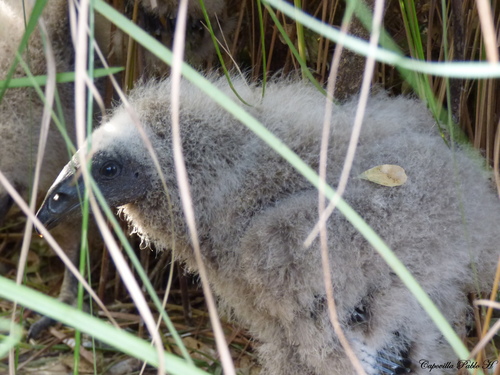 Lesser Yellow-headed Vulture
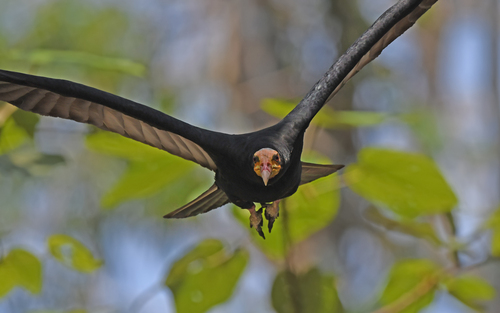 Greater Yellow-headed Vulture
In short
The most reliable field mark between Lesser and Greater Yellow-headed Vultures is the combination of head color and overall structure: Lesser has a more orange-tinged, smaller, and slimmer head with a shorter tail, while Greater shows a yellower head, bulkier build, and a longer, broader tail. In flight, Greater appears steadier with broader wings, whereas Lesser often glides lower and with less stability. Immature birds are tricky, but Greater juveniles have duller, greyish heads and blacker plumage, while Lesser immatures are browner with dusky heads. Habitat is a strong clue: Lesser favors open wetlands and savannas, Greater is almost always in humid forests.
Identification tips
- Head color (adults): Greater has a yellower, more uniform bare head with a blue crown and pinkish nape/nostril area; Lesser's head is more orange-tinged, with a reddish forehead/nape and gray-blue crown. This is most reliable in good light.
- Head color (immatures): Immature Greater has a dull greyish head; immature Lesser is dusky-headed with a white nape. These marks are subtle and require close views.
- Tail length and shape: Greater has a longer, broader, and more rounded tail, often even with or just beyond the closed wing tip. Lesser's tail is shorter and thinner; the closed wing tip extends beyond the tail.
- Leg color: Greater's legs are black (often streaked white from urohidrosis), while Lesser's are white. This is visible when perched or at close range.
- Plumage gloss: Greater is glossy black with green/purple sheen; Lesser is black but appears browner, especially in immatures.
- Body structure: Greater is bulkier, heavier, and more powerfully built; Lesser is slimmer and lighter.
- Flight style: Greater soars steadily, often high, with broad wings held flat or slightly dihedral. Lesser glides lower, with less steady, more erratic flight.
- Wing shape: Greater's wings are broader; Lesser's are narrower and longer relative to body size.
- Habitat: Open wetlands, grasslands, and degraded areas point to Lesser; dense, humid forest is Greater's domain.
- Perching behavior: Greater prefers high, dead trees; Lesser uses lower perches like fence posts.
- Bill shape: Greater's bill is thicker, rounder, and more strongly hooked; Lesser's is finer (but this is hard to see at distance).
- Underwing pattern: Greater's underwing is black with slightly paler secondaries and outer primaries; Lesser's underwing is not described as contrasting, but both are mostly dark. Greater may show a faint, broad, dark band down the middle of the wing.
- Iris color: Both have red irises; not diagnostic.
- Feet: Greater's feet are black; Lesser's are white. Only visible when perched or at close range.
- Vocalizations: Not useful; both are nearly silent.
- Season/sex: No seasonal or sexual dimorphism reported; all marks apply year-round and to both sexes.
- Range overlap: In areas where both occur, habitat is the best first clue—open for Lesser, forest for Greater.
- Confusion with Turkey Vulture: Both can resemble Turkey Vulture in flight, but head color and habitat are key for separation.
Size
Greater Yellow-headed Vulture is noticeably larger and more robust: length 64–75 cm, wingspan 166–178 cm, and average mass about 1.37 kg [wikidata]. Lesser Yellow-headed is smaller and lighter: length 53–66 cm, wingspan 150–165 cm, and mass 0.95–1.55 kg [wikipedia]. Tail is longer and broader in Greater, and the bird appears heavier and more powerfully built overall. Lesser is slimmer, with a shorter, thinner tail.
Plumage
- Juveniles/immatures: Greater Yellow-headed juveniles have a dull greyish head and otherwise resemble adults, with black, glossy plumage. Lesser Yellow-headed immatures are browner overall, with a dusky head and a white nape. These differences are subtle but can be seen at close range or in good light.
- Adults: Greater has black, glossy plumage with a green or purple sheen, a mostly yellow (sometimes orange) bare head with a blue crown, and a pinkish nape and nostril area. Lesser is black but browner (especially in immatures), with a more orange-tinged bare head, reddish forehead/nape, and gray-blue crown. Greater's legs are black (often streaked white from urohidrosis), Lesser's are white. Both have red irises and flesh-colored bills. In flight, Greater's tail is longer, and the tip of the closed wing is even with or just short of the tail tip; in Lesser, the wing tip extends beyond the shorter tail.
Behaviour
Greater Yellow-headed Vulture flies with steady, heavy wingbeats and often soars high above the forest, holding its wings flat or just above horizontal (dihedral). Lesser Yellow-headed Vulture prefers low, solitary gliding over open wetlands, often perching on low posts. Lesser's flight is less steady and more erratic. Both species are usually solitary or in pairs, rarely in groups, and both use static soaring on thermals. Greater tends to roost higher in dead trees, while Lesser uses lower perches.
Habitat
Habitat is a strong separator: Lesser Yellow-headed Vulture is found in open, seasonally wet or flooded grasslands, swamps, and degraded open areas—rarely in dense forest. Greater Yellow-headed Vulture is a forest specialist, found in humid, tropical lowland forests of South America. If you see a yellow-headed vulture in open country, it's almost certainly Lesser; in dense, unbroken forest, it's almost always Greater.
Voice
Both species lack a syrinx and are nearly silent, limited to grunts and low hisses. Voice is not useful for separation.
Lesser Yellow-headed Vulture · Greater Yellow-headed Vulture · My Tricky Birds