

Lesser Shrike-Tyrant vs Hooded Tanager
Agriornis murinus versus Nemosia pileata
Play a quiz with Lesser Shrike-Tyrant and Hooded Tanager
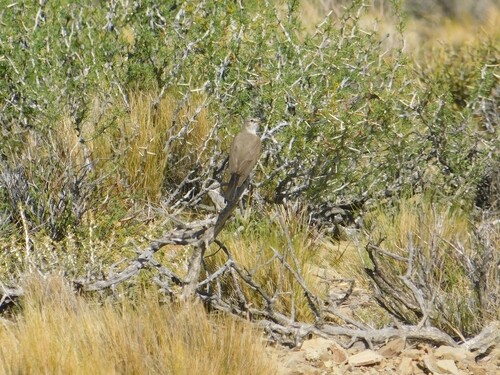 Lesser Shrike-Tyrant
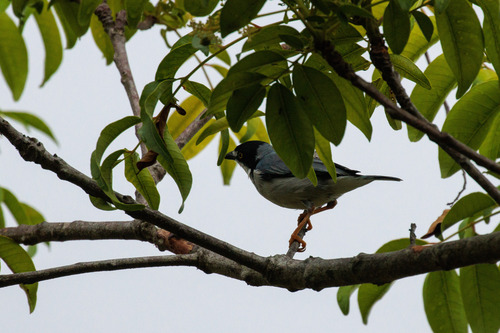 Hooded Tanager
In short
The most reliable field mark between Lesser Shrike-Tyrant and Hooded Tanager is the head pattern: adult male Hooded Tanagers have a striking black hood with white lores and throat, while Lesser Shrike-Tyrants show a gray-brown crown with mottled lores and a pale supercilium. Juvenile Hooded Tanagers are pale blue above and bluish gray below, never showing the streaked throat or brownish tones of the shrike-tyrant. Structure also helps: the shrike-tyrant is larger and more robust, with a heavier, hooked bill and longer tail. Both species can show pale underparts and grayish upperparts, but the combination of head pattern, bill shape, and leg color (yellow in tanager, blackish in shrike-tyrant) is decisive.
Identification tips
- Head pattern (adult males): Hooded Tanager males have a solid black hood with white lores and throat—unique and unmistakable. Lesser Shrike-Tyrant never shows a black hood; instead, look for a gray-brown crown, mottled lores, and a pale supercilium.
- Head pattern (adult females): Female Hooded Tanagers lack the black hood, but their head is the same grayish blue as the upperparts, with white lores. Female shrike-tyrants remain gray-brown with a pale supercilium and streaked throat.
- Juvenile plumage: Juvenile Hooded Tanagers are pale blue above and bluish gray below with rose-orange legs and feet—never streaked on the throat or brownish. Shrike-tyrant juveniles are not described in detail but should resemble adults in being gray-brown and streaked.
- Throat pattern: Shrike-tyrant always shows a white throat with thin black (male) or brown (female) streaks. Hooded Tanager males have a clean white throat; females have a buff-tinged white throat, never streaked.
- Bill shape: Shrike-tyrant has a slender, hooked black bill—noticeably shrike-like. Hooded Tanager has a shorter, more typical tanager bill: black in males, bicolored in females (black above, grayish below).
- Leg color: Hooded Tanager legs are yellow or yellow-brown (adults), rose-orange (juveniles). Shrike-tyrant legs are always blackish.
- Iris color: Hooded Tanager has a yellow iris; shrike-tyrant's iris is dark.
- Wing pattern: Shrike-tyrant shows dusky wings with whitish tips to coverts and pale edges to inner flight feathers, plus a dusky tail with pale outer webs. Hooded Tanager wings and tail are grayish blue, lacking pale tips or edges.
- Underparts: Both can appear pale below, but shrike-tyrant is creamy whitish with pale grayish brown flanks (buff-tinged); Hooded Tanager is white with pale gray (male) or buff (female) flanks.
- Structure and jizz: Shrike-tyrant is larger, bulkier, with a longer tail and more upright, shrike-like posture. Hooded Tanager is smaller, lighter, and more active.
- Behavior: Shrike-tyrant perches exposed and upright, often on low perches; tanager is more active in foliage, rarely perching out in the open for long.
- Habitat: Shrike-tyrant prefers open, shrubby, or grassland habitats; tanager is more often in wooded or semi-open areas.
- Sexual dimorphism: Hooded Tanager is strongly dimorphic (black hood in males only); shrike-tyrant sexes are similar, with only subtle differences in throat streak color.
- Tail pattern: Shrike-tyrant has a dusky tail with pale grayish to white outer webs on the outermost feathers; tanager's tail is plain grayish blue.
- Pitfalls: In poor light, both can appear grayish above and pale below, but the combination of head pattern, bill, and leg color is always diagnostic if seen well.
Size
Lesser Shrike-Tyrant is noticeably larger and bulkier, measuring 16–18.5 cm in length, compared to the Hooded Tanager's 12–13.5 cm. The tanager is lighter, with a typical adult mass around 16 g. The shrike-tyrant has a stouter, more upright posture and a proportionally longer tail, while the tanager is more compact and lighter-built.
Plumage
- Juveniles: Hooded Tanager juveniles are pale blue above and bluish gray below, with rose-orange legs and feet—never showing the streaked throat or brownish-gray tones of the shrike-tyrant. Lesser Shrike-Tyrant juveniles are not described in detail, but adults and immatures always show some combination of gray-brown upperparts and streaked white throat.
- Adult males: Hooded Tanager males have a bold black hood with white lores and throat, grayish blue upperparts, and white underparts with pale gray flanks. Lesser Shrike-Tyrant males are gray-brown above, with a mottled blackish and white lores, pale supercilium, and a white throat with thin black streaks.
- Adult females: Female Hooded Tanagers lack the black hood; their head matches the grayish blue upperparts, and underparts are white with a buff tinge. Female shrike-tyrants are very similar to males but have browner throat streaks.
- Wings and tail: Shrike-tyrant wings are dusky with whitish tips to coverts and pale edges to inner flight feathers; tail is dusky with pale outer webs. Hooded Tanager wings and tail are grayish blue, lacking the shrike-tyrant's pale covert tips and tail pattern.
Behaviour
Lesser Shrike-Tyrant typically perches upright and exposed, often on fences or low shrubs, scanning for prey with a shrike-like stance. Hooded Tanager is more active and agile, often moving through foliage or making short flights between branches, and is less likely to perch in the open for long periods. The shrike-tyrant's heavier build and deliberate movements contrast with the tanager's lighter, more restless behavior.
Habitat
Both species can overlap in range in parts of South America, but Lesser Shrike-Tyrant is more likely in open, shrubby habitats, grasslands, or edges, often at higher elevations or in drier areas. Hooded Tanager is found in a broader range of wooded and semi-open habitats, including forest edges, secondary growth, and sometimes gardens. If seen in dense woodland or humid lowland forest, Hooded Tanager is more likely; in open, arid, or highland areas, the shrike-tyrant is favored.