

Motmot

Lesser Frigatebird vs Christmas Island Frigatebird

Fregata ariel versus Fregata andrewsi

Play a quiz with Lesser Frigatebird and Christmas Island Frigatebird
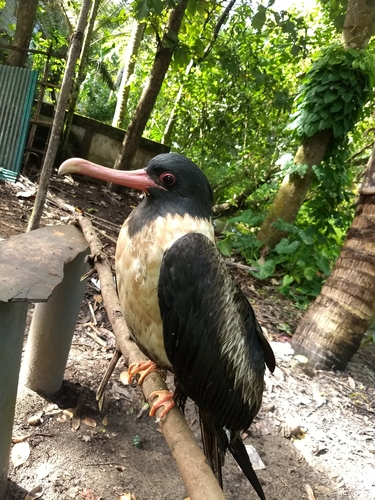
Lesser Frigatebird (Fregata ariel) Lesser Frigatebird
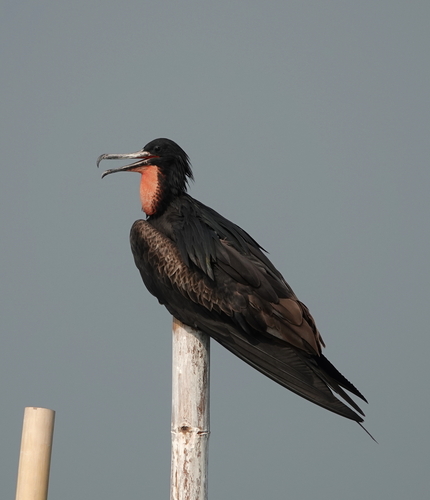
Christmas Island Frigatebird (Fregata andrewsi) Christmas Island Frigatebird

Media

Loading…

In short

The most reliable field mark to separate Lesser Frigatebird from Christmas Island Frigatebird is size: Christmas Island is much larger and heavier, with a noticeably longer wingspan and body length. In flight, both species show white underwing spurs and white bellies in non-adult males and females, but Christmas Island Frigatebird always shows a larger, more extensive white belly and longer underwing spurs, especially in immatures and females. Males of both species have a red gular sac, but the Christmas Island male has a distinctive egg-shaped white belly patch, while Lesser males show only a small white flank patch. Juveniles and immatures are best separated by the extent of white on the underparts and underwing. Structural differences are subtle but the size gap is striking when seen together.

Identification tips

  1. Size is the most immediate clue: Christmas Island Frigatebird is nearly twice as heavy and much longer-winged than Lesser. Use this when birds are seen together or with other seabirds for scale.
  2. Adult male plumage: Christmas Island male is all black except for a large, egg-shaped white belly patch; Lesser male is mostly black with only a small white flank patch and a pale bar on the upperwing. The difference is obvious in good views.
  3. Female plumage: Both have white breasts and bellies, but Christmas Island female shows a much more extensive white area, with longer white underwing spurs. Lesser female has a black head and neck, white collar and breast, and a narrow red eye-ring (not seen in Christmas Island female).
  4. Juvenile/immature underwing pattern: Christmas Island Frigatebird immatures have broader, longer white underwing spurs and a whiter belly than Lesser. Lesser immatures show more restricted white, often just in the armpits and flanks.
  5. White underparts: In all non-adult-male plumages, Christmas Island Frigatebird shows more extensive, cleaner white on the belly and underwing than Lesser.
  6. Upperwing bar (male Lesser only): Lesser Frigatebird males have a pale bar on the upperwing, which is absent in Christmas Island males.
  7. Red gular sac: Both adult males have a red throat pouch, but this is not a reliable separator between the two.
  8. Tail and wing shape: Both species have long, narrow wings and a deeply forked tail; these are not useful for separation.
  9. Context and range: Christmas Island Frigatebird is almost never seen away from Christmas Island; elsewhere, Lesser is far more likely.
  10. Bill and structure: No significant difference in bill shape or length for field separation.
  11. Behavior: Both species soar and harass other seabirds; behavior does not separate them.
  12. Voice: No useful vocal differences for field identification.
  13. Sexual dimorphism: Both species show sexual differences, but the extent and placement of white is more diagnostic than sex alone.
  14. Pitfalls: Immature and female Lesser Frigatebirds can be mistaken for Christmas Island due to white underparts, but the white is always less extensive and the bird is much smaller.
  15. When in doubt: Prioritize size, extent of white on underparts and underwing, and location. If the bird is large, with a broad white belly and long underwing spurs, and you are on or near Christmas Island, it is likely Christmas Island Frigatebird. Otherwise, it is almost certainly Lesser.

Size

Christmas Island Frigatebird is substantially larger than Lesser Frigatebird in every metric. Body mass averages about 1475 g for Christmas Island versus 806 g for Lesser. In length, Christmas Island measures 89–100 cm, while Lesser is 66–81 cm. Wingspan is also much greater: 205–230 cm for Christmas Island, compared to 155–193 cm for Lesser. Even at a distance, Christmas Island Frigatebird appears bulkier and longer-winged, with a more imposing silhouette. If both species are present, size alone is often enough for a confident identification.

Plumage

Juveniles and immatures of both species show white on the underparts and underwing, but Christmas Island Frigatebird always shows a broader, more extensive white belly and longer, more prominent white underwing spurs. Lesser Frigatebird immatures have smaller white patches, often restricted to the armpits and flanks. Adult males are easily separated: Christmas Island males are all black except for a large, egg-shaped white belly patch, while Lesser males are mostly black with only a small white patch on the flank and a pale bar on the upperwing. Females of both species have white breasts and bellies, but Christmas Island females show a more extensive white area, and the underwing spurs are longer and more obvious. Lesser females have a black head and neck with a white collar and breast, and a narrow red eye-ring, which is absent in Christmas Island females. In all plumages, the white on Christmas Island Frigatebird is more extensive and cleaner, especially on the belly and underwing.

Behaviour

Both species are highly aerial and rarely land except to nest. They share similar behaviors: soaring on long, narrow wings, rarely swimming, and engaging in kleptoparasitism (harassing other seabirds for food). There is no strong behavioral difference in flight style or feeding observable in the field to separate the two. Both are masters of the air and spend most of their lives on the wing.

Habitat

Christmas Island Frigatebird is almost entirely restricted to the waters around Christmas Island in the Indian Ocean, breeding only there. Lesser Frigatebird is much more widespread, found across tropical and subtropical waters of the Indian and Pacific Oceans, and off the Atlantic coast of Brazil. If seen away from Christmas Island, a frigatebird is almost certainly a Lesser (or another widespread species), not a Christmas Island Frigatebird. However, vagrancy is possible, so always confirm with plumage and size.

Submit a better description

Use the same sections as the comparison. Your text is published immediately.

The most reliable field mark to separate Lesser Frigatebird from Christmas Island Frigatebird is size: Christmas Island is much larger and heavier, with a noticeably longer wingspan and body length. In flight, both species show white underwing spurs and white bellies in non-adult males and females, but Christmas Island Frigatebird always shows a larger, more extensive white belly and longer underwing spurs, especially in immatures and females. Males of both species have a red gular sac, but the Christmas Island male has a distinctive egg-shaped white belly patch, while Lesser males show only a small white flank patch. Juveniles and immatures are best separated by the extent of white on the underparts and underwing. Structural differences are subtle but the size gap is striking when seen together.

  1. Size is the most immediate clue: Christmas Island Frigatebird is nearly twice as heavy and much longer-winged than Lesser. Use this when birds are seen together or with other seabirds for scale.
  2. Adult male plumage: Christmas Island male is all black except for a large, egg-shaped white belly patch; Lesser male is mostly black with only a small white flank patch and a pale bar on the upperwing. The difference is obvious in good views.
  3. Female plumage: Both have white breasts and bellies, but Christmas Island female shows a much more extensive white area, with longer white underwing spurs. Lesser female has a black head and neck, white collar and breast, and a narrow red eye-ring (not seen in Christmas Island female).
  4. Juvenile/immature underwing pattern: Christmas Island Frigatebird immatures have broader, longer white underwing spurs and a whiter belly than Lesser. Lesser immatures show more restricted white, often just in the armpits and flanks.
  5. White underparts: In all non-adult-male plumages, Christmas Island Frigatebird shows more extensive, cleaner white on the belly and underwing than Lesser.
  6. Upperwing bar (male Lesser only): Lesser Frigatebird males have a pale bar on the upperwing, which is absent in Christmas Island males.
  7. Red gular sac: Both adult males have a red throat pouch, but this is not a reliable separator between the two.
  8. Tail and wing shape: Both species have long, narrow wings and a deeply forked tail; these are not useful for separation.
  9. Context and range: Christmas Island Frigatebird is almost never seen away from Christmas Island; elsewhere, Lesser is far more likely.
  10. Bill and structure: No significant difference in bill shape or length for field separation.
  11. Behavior: Both species soar and harass other seabirds; behavior does not separate them.
  12. Voice: No useful vocal differences for field identification.
  13. Sexual dimorphism: Both species show sexual differences, but the extent and placement of white is more diagnostic than sex alone.
  14. Pitfalls: Immature and female Lesser Frigatebirds can be mistaken for Christmas Island due to white underparts, but the white is always less extensive and the bird is much smaller.
  15. When in doubt: Prioritize size, extent of white on underparts and underwing, and location. If the bird is large, with a broad white belly and long underwing spurs, and you are on or near Christmas Island, it is likely Christmas Island Frigatebird. Otherwise, it is almost certainly Lesser.

Christmas Island Frigatebird is substantially larger than Lesser Frigatebird in every metric. Body mass averages about 1475 g for Christmas Island versus 806 g for Lesser. In length, Christmas Island measures 89–100 cm, while Lesser is 66–81 cm. Wingspan is also much greater: 205–230 cm for Christmas Island, compared to 155–193 cm for Lesser. Even at a distance, Christmas Island Frigatebird appears bulkier and longer-winged, with a more imposing silhouette. If both species are present, size alone is often enough for a confident identification.

Juveniles and immatures of both species show white on the underparts and underwing, but Christmas Island Frigatebird always shows a broader, more extensive white belly and longer, more prominent white underwing spurs. Lesser Frigatebird immatures have smaller white patches, often restricted to the armpits and flanks. Adult males are easily separated: Christmas Island males are all black except for a large, egg-shaped white belly patch, while Lesser males are mostly black with only a small white patch on the flank and a pale bar on the upperwing. Females of both species have white breasts and bellies, but Christmas Island females show a more extensive white area, and the underwing spurs are longer and more obvious. Lesser females have a black head and neck with a white collar and breast, and a narrow red eye-ring, which is absent in Christmas Island females. In all plumages, the white on Christmas Island Frigatebird is more extensive and cleaner, especially on the belly and underwing.

Both species are highly aerial and rarely land except to nest. They share similar behaviors: soaring on long, narrow wings, rarely swimming, and engaging in kleptoparasitism (harassing other seabirds for food). There is no strong behavioral difference in flight style or feeding observable in the field to separate the two. Both are masters of the air and spend most of their lives on the wing.

Christmas Island Frigatebird is almost entirely restricted to the waters around Christmas Island in the Indian Ocean, breeding only there. Lesser Frigatebird is much more widespread, found across tropical and subtropical waters of the Indian and Pacific Oceans, and off the Atlantic coast of Brazil. If seen away from Christmas Island, a frigatebird is almost certainly a Lesser (or another widespread species), not a Christmas Island Frigatebird. However, vagrancy is possible, so always confirm with plumage and size.

Discard your changes?

You have unsaved edits. If you leave now, those changes will be lost.

Lesser Frigatebird · Christmas Island Frigatebird · My Tricky Birds