

Motmot

コグンカンドリ 対 シロハラグンカンドリ

Fregata ariel 対 Fregata andrewsi

コグンカンドリとシロハラグンカンドリのクイズ
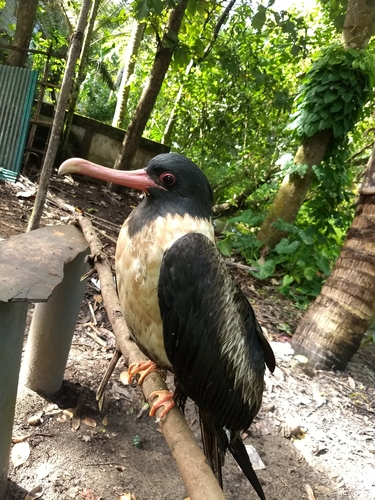
コグンカンドリ (Fregata ariel) コグンカンドリ
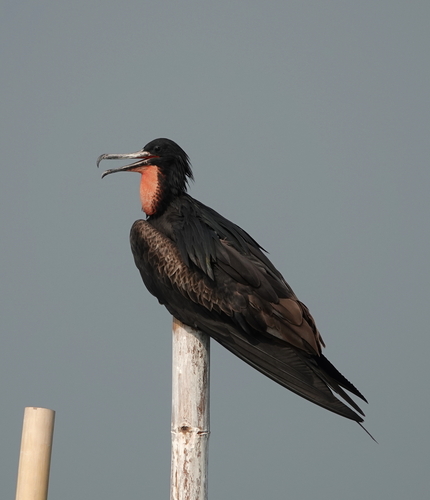
シロハラグンカンドリ (Fregata andrewsi) シロハラグンカンドリ

メディア

読み込み中…

要点

コグンカンドリとシロハラグンカンドリを区別する最も信頼できるフィールドマークはサイズです:シロハラグンカンドリははるかに大きく、重く、翼幅と体長が明らかに長いです。飛行中、両種は非成鳥のオスとメスで白いアンダーウイングスパーと白い腹部を示しますが、シロハラグンカンドリは常により大きく、広範囲な白い腹部と長いアンダーウイングスパーを示し、特に幼鳥とメスにおいて顕著です。両種のオスは赤い咽頭嚢を持っていますが、シロハラのオスは特徴的な卵型の白い腹部の斑点を持ち、コグンカンドリのオスは小さな白い側腹部の斑点しか示しません。幼鳥と幼体は、下部とアンダーウイングの白の広がりによって最もよく区別されます。構造的な違いは微妙ですが、サイズのギャップは一緒に見ると際立っています。

識別のコツ

  1. Size is the most immediate clue: シロハラグンカンドリはコグンカンドリのほぼ2倍の重さで、翼がはるかに長いです。これは、鳥が一緒に見られるときや他の海鳥と一緒にスケールを取るときに使用してください。
  2. Adult male plumage: シロハラのオスは大きな卵型の白い腹部の斑点を除いて全体が黒ですが、コグンカンドリのオスはほとんどが黒で、小さな白い側腹部の斑点と上翼に淡いバーしか持っていません。この違いは良い視界で明らかです。
  3. Female plumage: 両種とも白い胸と腹部を持っていますが、シロハラのメスははるかに広範囲な白い領域を示し、長い白いアンダーウイングスパーを持っています。コグンカンドリのメスは黒い頭と首、白い襟と胸、狭い赤いアイリングを持ち(シロハラのメスには見られません)。
  4. Juvenile/immature underwing pattern: シロハラグンカンドリの幼鳥はコグンカンドリよりも広く、長い白いアンダーウイングスパーと白い腹部を持っています。コグンカンドリの幼鳥は、しばしば脇の下と側腹部に限られた白を示します。
  5. White underparts: すべての非成鳥オスの羽衣において、シロハラグンカンドリはコグンカンドリよりも腹部とアンダーウイングにより広範囲で清潔な白を示します。
  6. Upperwing bar (male Lesser only): コグンカンドリのオスは上翼に淡いバーを持っていますが、シロハラのオスにはありません。
  7. Red gular sac: 両成鳥オスは赤い咽頭嚢を持っていますが、これは二者を区別する信頼できる要素ではありません。
  8. Tail and wing shape: 両種は長く狭い翼と深く分かれた尾を持っていますが、これらは区別には役立ちません。
  9. Context and range: シロハラグンカンドリはほとんどの場合、クリスマス島から離れた場所では見られません。他の場所では、コグンカンドリの方がはるかに可能性が高いです。
  10. Bill and structure: フィールドでの区別のためのくちばしの形や長さに重要な違いはありません。
  11. Behavior: 両種は空中での活動が高く、巣を作るため以外はほとんど着陸しません。彼らは似たような行動を共有しており、長く狭い翼で滑空し、泳ぐことはほとんどなく、他の海鳥を襲って食べ物を奪う行動をします。フィールドで二者を区別するための飛行スタイルや採餌における強い行動の違いはありません。両者は空の達人であり、ほとんどの時間を空中で過ごします。
  12. Voice: フィールド識別のための有用な声の違いはありません。
  13. Sexual dimorphism: 両種は性的な違いを示しますが、白の広がりと配置は性別だけよりも診断的です。
  14. Pitfalls: 幼鳥とメスのコグンカンドリは白い下部のためにシロハラグンカンドリと間違えられることがありますが、白は常に少なく、鳥ははるかに小さいです。
  15. When in doubt: サイズ、下部とアンダーウイングの白の広がり、位置を優先してください。もし鳥が大きく、広い白い腹部と長いアンダーウイングスパーを持ち、クリスマス島の上または近くにいるなら、それはシロハラグンカンドリの可能性が高いです。そうでなければ、ほぼ確実にコグンカンドリです。

大きさ

シロハラグンカンドリはすべての指標でコグンカンドリよりもかなり大きいです。体重はシロハラが約1475g、コグンカンドリが806gです。長さはシロハラが89〜100cm、コグンカンドリが66〜81cmです。翼幅もはるかに大きく、シロハラが205〜230cm、コグンカンドリが155〜193cmです。距離があっても、シロハラグンカンドリはより大きく、長い翼を持ち、より印象的なシルエットを持っています。両種が存在する場合、サイズだけで自信を持って識別することがしばしば可能です。

羽色

両種の幼鳥と幼体は下部とアンダーウイングに白を示しますが、シロハラグンカンドリは常により広く、より広範囲な白い腹部と長く、より目立つ白いアンダーウイングスパーを示します。コグンカンドリの幼体は小さな白い斑点を持ち、しばしば脇の下と側腹部に限られています。成鳥のオスは簡単に区別できます:シロハラのオスは大きな卵型の白い腹部の斑点を除いて全体が黒ですが、コグンカンドリのオスはほとんどが黒で、側腹部に小さな白い斑点と上翼に淡いバーしか持っていません。両種のメスは白い胸と腹部を持っていますが、シロハラのメスはより広範囲な白い領域を示し、アンダーウイングスパーはより長く、より明確です。コグンカンドリのメスは黒い頭と首、白い襟と胸、狭い赤いアイリングを持ち、これはシロハラのメスには見られません。すべての羽衣において、シロハラグンカンドリの白はより広範囲で清潔であり、特に腹部とアンダーウイングにおいて顕著です。

行動

両種は非常に空中性が高く、巣を作るため以外はほとんど着陸しません。彼らは似たような行動を共有しており、長く狭い翼で滑空し、泳ぐことはほとんどなく、他の海鳥を襲って食べ物を奪う行動をします。フィールドで二者を区別するための飛行スタイルや採餌における強い行動の違いはありません。両者は空の達人であり、ほとんどの時間を空中で過ごします。

生息環境

シロハラグンカンドリはインド洋のクリスマス島周辺の水域にほぼ完全に制限されており、そこでのみ繁殖します。コグンカンドリははるかに広範囲に分布しており、インド洋と太平洋の熱帯および亜熱帯の水域、ブラジルの大西洋沿岸で見られます。クリスマス島から離れた場所で見られた場合、フリゲートバードはほぼ確実にコグンカンドリ(または他の広範囲な種)であり、シロハラグンカンドリではありません。ただし、迷子になる可能性があるため、常に羽衣とサイズで確認してください。

より良い説明を送る

比較と同じ項目を使ってください。文章はすぐに公開されます。

The most reliable field mark to separate Lesser Frigatebird from Christmas Island Frigatebird is size: Christmas Island is much larger and heavier, with a noticeably longer wingspan and body length. In flight, both species show white underwing spurs and white bellies in non-adult males and females, but Christmas Island Frigatebird always shows a larger, more extensive white belly and longer underwing spurs, especially in immatures and females. Males of both species have a red gular sac, but the Christmas Island male has a distinctive egg-shaped white belly patch, while Lesser males show only a small white flank patch. Juveniles and immatures are best separated by the extent of white on the underparts and underwing. Structural differences are subtle but the size gap is striking when seen together.

  1. Size is the most immediate clue: Christmas Island Frigatebird is nearly twice as heavy and much longer-winged than Lesser. Use this when birds are seen together or with other seabirds for scale.
  2. Adult male plumage: Christmas Island male is all black except for a large, egg-shaped white belly patch; Lesser male is mostly black with only a small white flank patch and a pale bar on the upperwing. The difference is obvious in good views.
  3. Female plumage: Both have white breasts and bellies, but Christmas Island female shows a much more extensive white area, with longer white underwing spurs. Lesser female has a black head and neck, white collar and breast, and a narrow red eye-ring (not seen in Christmas Island female).
  4. Juvenile/immature underwing pattern: Christmas Island Frigatebird immatures have broader, longer white underwing spurs and a whiter belly than Lesser. Lesser immatures show more restricted white, often just in the armpits and flanks.
  5. White underparts: In all non-adult-male plumages, Christmas Island Frigatebird shows more extensive, cleaner white on the belly and underwing than Lesser.
  6. Upperwing bar (male Lesser only): Lesser Frigatebird males have a pale bar on the upperwing, which is absent in Christmas Island males.
  7. Red gular sac: Both adult males have a red throat pouch, but this is not a reliable separator between the two.
  8. Tail and wing shape: Both species have long, narrow wings and a deeply forked tail; these are not useful for separation.
  9. Context and range: Christmas Island Frigatebird is almost never seen away from Christmas Island; elsewhere, Lesser is far more likely.
  10. Bill and structure: No significant difference in bill shape or length for field separation.
  11. Behavior: Both species soar and harass other seabirds; behavior does not separate them.
  12. Voice: No useful vocal differences for field identification.
  13. Sexual dimorphism: Both species show sexual differences, but the extent and placement of white is more diagnostic than sex alone.
  14. Pitfalls: Immature and female Lesser Frigatebirds can be mistaken for Christmas Island due to white underparts, but the white is always less extensive and the bird is much smaller.
  15. When in doubt: Prioritize size, extent of white on underparts and underwing, and location. If the bird is large, with a broad white belly and long underwing spurs, and you are on or near Christmas Island, it is likely Christmas Island Frigatebird. Otherwise, it is almost certainly Lesser.

Christmas Island Frigatebird is substantially larger than Lesser Frigatebird in every metric. Body mass averages about 1475 g for Christmas Island versus 806 g for Lesser. In length, Christmas Island measures 89–100 cm, while Lesser is 66–81 cm. Wingspan is also much greater: 205–230 cm for Christmas Island, compared to 155–193 cm for Lesser. Even at a distance, Christmas Island Frigatebird appears bulkier and longer-winged, with a more imposing silhouette. If both species are present, size alone is often enough for a confident identification.

Juveniles and immatures of both species show white on the underparts and underwing, but Christmas Island Frigatebird always shows a broader, more extensive white belly and longer, more prominent white underwing spurs. Lesser Frigatebird immatures have smaller white patches, often restricted to the armpits and flanks. Adult males are easily separated: Christmas Island males are all black except for a large, egg-shaped white belly patch, while Lesser males are mostly black with only a small white patch on the flank and a pale bar on the upperwing. Females of both species have white breasts and bellies, but Christmas Island females show a more extensive white area, and the underwing spurs are longer and more obvious. Lesser females have a black head and neck with a white collar and breast, and a narrow red eye-ring, which is absent in Christmas Island females. In all plumages, the white on Christmas Island Frigatebird is more extensive and cleaner, especially on the belly and underwing.

Both species are highly aerial and rarely land except to nest. They share similar behaviors: soaring on long, narrow wings, rarely swimming, and engaging in kleptoparasitism (harassing other seabirds for food). There is no strong behavioral difference in flight style or feeding observable in the field to separate the two. Both are masters of the air and spend most of their lives on the wing.

Christmas Island Frigatebird is almost entirely restricted to the waters around Christmas Island in the Indian Ocean, breeding only there. Lesser Frigatebird is much more widespread, found across tropical and subtropical waters of the Indian and Pacific Oceans, and off the Atlantic coast of Brazil. If seen away from Christmas Island, a frigatebird is almost certainly a Lesser (or another widespread species), not a Christmas Island Frigatebird. However, vagrancy is possible, so always confirm with plumage and size.

変更を破棄しますか?

保存していない編集があります。今離れると失われます。

コグンカンドリ · シロハラグンカンドリ · 苦手な鳥