

Lesser Frigatebird vs Christmas Island Frigatebird
Fregata ariel contro Fregata andrewsi
Fai un quiz con Lesser Frigatebird e Christmas Island Frigatebird
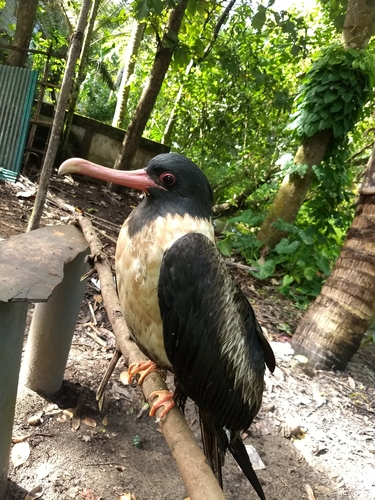 Lesser Frigatebird
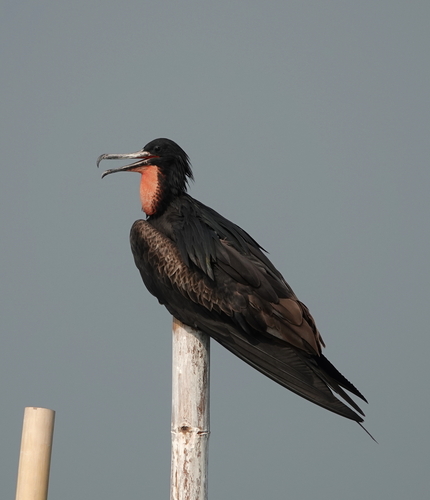 Christmas Island Frigatebird
In breve
Il segno di campo più affidabile per separare il Lesser Frigatebird dal Christmas Island Frigatebird è la dimensione: il Christmas Island è molto più grande e pesante, con un'apertura alare e una lunghezza del corpo notevolmente più lunghe. In volo, entrambe le specie mostrano speroni bianchi sotto le ali e pance bianche nei maschi e nelle femmine non adulte, ma il Christmas Island Frigatebird mostra sempre una pancia bianca più grande e più estesa e speroni sotto le ali più lunghi, specialmente negli immaturi e nelle femmine. I maschi di entrambe le specie hanno un sacco gulare rosso, ma il maschio del Christmas Island ha una distintiva macchia bianca a forma di uovo sulla pancia, mentre i maschi del Lesser mostrano solo una piccola macchia bianca sul fianco. I giovani e gli immaturi sono meglio separati dall'estensione del bianco sulle parti inferiori e sotto le ali. Le differenze strutturali sono sottili, ma il divario di dimensione è sorprendente quando visti insieme.
Consigli di identificazione
- La dimensione è l'indizio più immediato: il Christmas Island Frigatebird è quasi due volte più pesante e ha ali molto più lunghe rispetto al Lesser. Usa questo quando gli uccelli sono visti insieme o con altri uccelli marini per scala.
- Piumaggio del maschio adulto: il maschio del Christmas Island è tutto nero tranne per una grande macchia bianca a forma di uovo sulla pancia; il maschio del Lesser è per lo più nero con solo una piccola macchia bianca sul fianco e una barra chiara sulla parte superiore dell'ala. La differenza è ovvia in buone viste.
- Piumaggio della femmina: entrambe hanno petti e pance bianche, ma la femmina del Christmas Island mostra un'area bianca molto più estesa, con speroni bianchi sotto le ali più lunghi. La femmina del Lesser ha una testa e un collo neri, un collare e un petto bianchi, e un anello oculare rosso stretto (non presente nella femmina del Christmas Island).
- Schema delle ali sotto nei giovani/immaturi: gli immaturi del Christmas Island Frigatebird hanno speroni bianchi sotto le ali più larghi e lunghi e una pancia più bianca rispetto al Lesser. Gli immaturi del Lesser mostrano un bianco più ristretto, spesso solo nelle ascelle e nei fianchi.
- Parti inferiori bianche: in tutti i piumaggi non maschili adulti, il Christmas Island Frigatebird mostra un bianco più esteso e pulito sulla pancia e sotto le ali rispetto al Lesser.
- Barra sulla parte superiore dell'ala (solo maschio Lesser): i maschi del Lesser Frigatebird hanno una barra chiara sulla parte superiore dell'ala, assente nei maschi del Christmas Island.
- Sacco gulare rosso: entrambi i maschi adulti hanno un sacco gulare rosso, ma questo non è un separatore affidabile tra i due.
- Forma della coda e delle ali: entrambe le specie hanno ali lunghe e strette e una coda profondamente biforcuta; queste non sono utili per la separazione.
- Contesto e distribuzione: il Christmas Island Frigatebird non è quasi mai visto lontano dal Christmas Island; altrove, il Lesser è molto più probabile.
- Becco e struttura: nessuna differenza significativa nella forma o lunghezza del becco per la separazione sul campo.
- Comportamento: entrambe le specie planano e infastidiscono altri uccelli marini; il comportamento non le separa.
- Voce: nessuna differenza vocale utile per l'identificazione sul campo.
- Dimorfismo sessuale: entrambe le specie mostrano differenze sessuali, ma l'estensione e la posizione del bianco sono più diagnostiche del sesso da sole.
- Trappole: gli immaturi e le femmine del Lesser Frigatebird possono essere scambiati per il Christmas Island a causa delle parti inferiori bianche, ma il bianco è sempre meno esteso e l'uccello è molto più piccolo.
- Quando in dubbio: dai priorità alla dimensione, all'estensione del bianco sulle parti inferiori e sotto le ali, e alla posizione. Se l'uccello è grande, con una pancia bianca ampia e speroni lunghi sotto le ali, e sei su o vicino al Christmas Island, è probabile che sia un Christmas Island Frigatebird. Altrimenti, è quasi certamente un Lesser.
Taglia
Il Christmas Island Frigatebird è sostanzialmente più grande del Lesser Frigatebird in ogni metrica. La massa corporea media è di circa 1475 g per il Christmas Island contro 806 g per il Lesser. In lunghezza, il Christmas Island misura 89–100 cm, mentre il Lesser è 66–81 cm. L'apertura alare è anche molto maggiore: 205–230 cm per il Christmas Island, rispetto a 155–193 cm per il Lesser. Anche a distanza, il Christmas Island Frigatebird appare più robusto e con ali più lunghe, con un profilo più imponente. Se entrambe le specie sono presenti, la dimensione da sola è spesso sufficiente per un'identificazione sicura.
Piumaggio
I giovani e gli immaturi di entrambe le specie mostrano bianco sulle parti inferiori e sotto le ali, ma il Christmas Island Frigatebird mostra sempre una pancia bianca più ampia e più estesa e speroni bianchi sotto le ali più lunghi e più prominenti. Gli immaturi del Lesser Frigatebird hanno macchie bianche più piccole, spesso ristrette alle ascelle e ai fianchi. I maschi adulti sono facilmente separabili: i maschi del Christmas Island sono tutti neri tranne per una grande macchia bianca a forma di uovo sulla pancia, mentre i maschi del Lesser sono per lo più neri con solo una piccola macchia bianca sul fianco e una barra chiara sulla parte superiore dell'ala. Le femmine di entrambe le specie hanno petti e pance bianche, ma le femmine del Christmas Island mostrano un'area bianca più estesa, e gli speroni sotto le ali sono più lunghi e più evidenti. Le femmine del Lesser hanno una testa e un collo neri con un collare e un petto bianchi, e un anello oculare rosso stretto, assente nelle femmine del Christmas Island. In tutti i piumaggi, il bianco sul Christmas Island Frigatebird è più esteso e pulito, specialmente sulla pancia e sotto le ali.
Comportamento
Entrambe le specie sono altamente aeree e raramente atterrano tranne che per nidificare. Condividono comportamenti simili: planare su ali lunghe e strette, nuotare raramente e impegnarsi nel kleptoparassitismo (infastidire altri uccelli marini per il cibo). Non c'è una forte differenza comportamentale nello stile di volo o nell'alimentazione osservabile sul campo per separare i due. Entrambi sono maestri dell'aria e trascorrono la maggior parte della loro vita in volo.
Habitat
Il Christmas Island Frigatebird è quasi interamente ristretto alle acque intorno al Christmas Island nell'Oceano Indiano, nidificando solo lì. Il Lesser Frigatebird è molto più diffuso, trovato nelle acque tropicali e subtropicali degli oceani Indiano e Pacifico, e al largo della costa atlantica del Brasile. Se visto lontano dal Christmas Island, un fregata è quasi certamente un Lesser (o un'altra specie diffusa), non un Christmas Island Frigatebird. Tuttavia, la vaganza è possibile, quindi conferma sempre con piumaggio e dimensione.
Lesser Frigatebird · Christmas Island Frigatebird · I miei uccelli difficili