

Lesser Elaenia vs White-crested Elaenia
Elaenia chiriquensis versus Elaenia albiceps
Play a quiz with Lesser Elaenia and White-crested Elaenia
 Lesser Elaenia
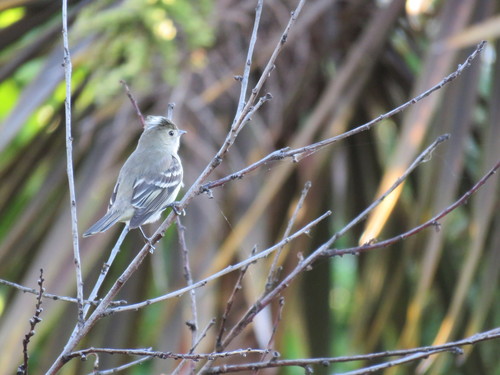 White-crested Elaenia
In short
The most reliable field mark between Lesser Elaenia and White-crested Elaenia is the color and extent of the belly and undertail: Lesser Elaenia shows a distinctly pale yellow belly and undertail coverts, while White-crested Elaenia is whitish below. Both species have a partially hidden white crown patch, two pale wing bars, and similar overall structure, which can make them tricky to separate at a glance, especially in dull light or with distant views. Subtle differences in head pattern, belly color, and crest shape are key, but beware of individual and subspecific variation. Both are small, crested flycatchers, so careful attention to underpart color and facial contrast is essential.
Identification tips
- Belly and undertail color: The single most useful mark—Lesser Elaenia has a distinctly pale yellow belly and undertail coverts, while White-crested Elaenia is whitish or light gray below. This works for adults and immatures.
- Head and crest: Both have a small crest with a partially hidden white patch or stripe. White-crested's crest is bushier and the white stripe is more central; Lesser Elaenia's is squarer and the white patch is less obvious.
- Facial pattern: Lesser Elaenia shows lighter cheeks and a thin whitish eyering, giving a slightly more open-faced look. White-crested has whitish lores and eyering, but the effect is less striking due to duller upperparts and less contrast in some subspecies.
- Upperparts: Both are olive to grayish-olive above, but White-crested is often duller or more gray-olive, especially in some subspecies. This is subtle and not always reliable.
- Wing bars: Both have two pale wing bars from white-tipped coverts. White-crested's bars may be slightly whiter and more distinct in nominate birds, but this varies with wear and subspecies. Not a strong separator.
- Flight feather edges: Both species have pale edges to the flight feathers, sometimes yellowish in White-crested (especially E. a. urubambae), but never as bright as the yellow belly of Lesser Elaenia.
- Tail: Both have dusky tails; White-crested's may show narrow olive edges, but this is subtle and rarely diagnostic in the field.
- Throat and breast: Lesser Elaenia has a gray throat and grayish olive breast, blending into the yellow belly. White-crested's throat is lighter gray or whitish, with a paler, less olive breast.
- Bill and legs: Both have dark bills with a pale base to the mandible and dark legs; not a useful field mark.
- Size and structure: White-crested averages slightly larger and bushier-crested, but overlap is extensive and not reliable for separation.
- Habitat and range: If in the Andes or southern South America, especially at higher elevations or in drier intermontane valleys, White-crested is more likely. In lowland Central America, Amazonia, or Trinidad, Lesser Elaenia is expected.
- Subspecies variation: Some White-crested subspecies (e.g., urubambae) may show a pale yellow wash on the belly, but never as bright or extensive as Lesser Elaenia's yellow. Be cautious in areas of overlap.
- Voice: If familiar, White-crested's burry, sneezing calls and complex dawn song can help, but beware of regional variation and similarity to other elaenias.
- Season and age: No unique juvenile or immature wing patterns are described for either species; all ages show two pale wing bars and pale-edged flight feathers.
- Pitfalls: Dull light, worn plumage, or poor views can obscure belly color and facial contrast. Always try to confirm underpart color and head pattern, and use range and habitat as supporting evidence, not primary marks.
Size
Both species are very close in size, with White-crested Elaenia averaging slightly larger (13.5–15 cm, 12.5–24.2 g) than Lesser Elaenia (13–14 cm, 11.5–22 g), but this difference is minor and not reliable in the field. Structure is similar: both are small, compact flycatchers with short, squarish or bushy crests. Bill and tail proportions are not distinctive between them.
Plumage
-
Juvenile/immature plumage: No specific age-unique wing or flight pattern differences are described for either species. Both show two pale wing bars formed by white-tipped coverts and pale edges to the flight feathers, present from juvenile through adult plumages.
-
Adult plumage: Lesser Elaenia is grayish olive above with a thin whitish eyering, lighter cheeks, and a partially hidden white crown patch. The underparts are grayish olive on the breast, with a distinctly pale yellow belly and undertail coverts. White-crested Elaenia is dull olive to olive-gray above, with a bushy crest showing a partially hidden white or creamy stripe, whitish lores and eyering, and a whitish to light gray throat and belly (not yellow). Its wing bars are white or whitish, and the tail is dusky with narrow olive edges. Subspecies of White-crested Elaenia may show paler or duller upperparts, less distinct wing bars, or a yellowish wash on the belly (not as strong as Lesser Elaenia's yellow).
Behaviour
Both species forage singly or in pairs, mainly by gleaning and short sallies from perches. Lesser Elaenia often forages in the upper understory and rarely joins mixed-species flocks. White-crested Elaenia also forages singly and is not noted for flocking. Foraging behavior is not a strong separator.
Habitat
Lesser Elaenia has a much broader range, found from Central America through most of South America (except Chile and Uruguay), including Trinidad and some Caribbean vagrants. It typically inhabits open woodlands, forest edges, and secondary growth. White-crested Elaenia is more restricted to the Andes and southern South America (Bolivia, Chile, Colombia, Ecuador, Peru), favoring edges of subtropical and temperate forests, open woodlands, scrub, and drier intermontane valleys, often at higher elevations. Overlap is possible in some Andean foothill regions, but White-crested is absent from much of Lesser Elaenia's lowland range.
Voice
Vocalizations differ but are variable and not always diagnostic in the field. White-crested Elaenia gives a series of burry, rising-falling notes and sneezing calls, with some subspecific variation. Lesser Elaenia's voice is not described in detail here. Unless you are familiar with local vocal dialects, voice is not a reliable separator.