

Motmot

Lesser Cuckooshrike vs Asian Fairy-bluebird

Lalage fimbriata versus Irena puella

Play a quiz with Lesser Cuckooshrike and Asian Fairy-bluebird
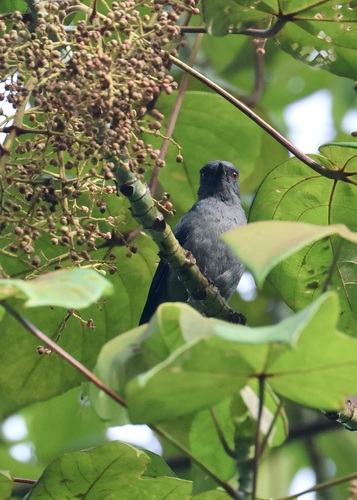
Lesser Cuckooshrike (Lalage fimbriata) Lesser Cuckooshrike
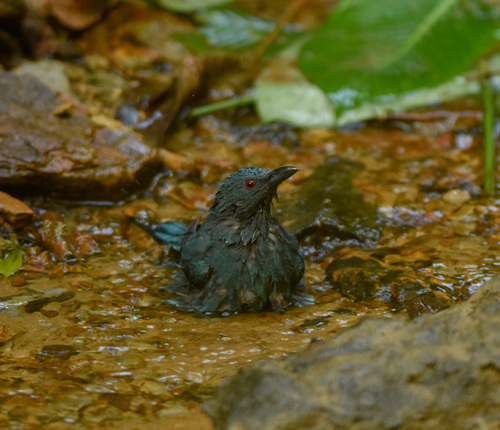
Asian Fairy-bluebird (Irena puella) Asian Fairy-bluebird

Media

Loading…

In short

The most reliable field mark to separate Lesser Cuckooshrike from Asian Fairy-bluebird is overall coloration: adult male Fairy-bluebirds are a striking, glossy ultramarine-blue and black, while male Lesser Cuckooshrikes are plain dark grey above with a blackish head and tail, lacking any blue. Females and immatures of both species are duller, but the Fairy-bluebird always shows some blue tones, especially on the underparts and tail, whereas Lesser Cuckooshrike females are paler grey with fine barring below and immatures are brownish with barring or spotting. In flight or at rest, the Fairy-bluebird is distinctly larger and bulkier, with a longer tail and heavier bill. Both species can be found in the same Southeast Asian forests, but Lesser Cuckooshrike is more often seen high in the canopy, sometimes in mixed flocks, while Fairy-bluebird is more likely to be seen singly or in pairs.

Identification tips

  1. Adult male Fairy-bluebird is glossy ultramarine-blue above with black underparts and blue-tipped coverts—no other bird in the region matches this combination. If you see strong blue gloss and black, it's not a Lesser Cuckooshrike.
  2. Male Lesser Cuckooshrike is dark grey above, paler grey below, with a blackish head and tail—never blue-toned. Look for a plain, shrike-like bird with a short tail and no iridescence.
  3. Female Fairy-bluebird is brownish-blue above with blue underparts; female Lesser Cuckooshrike is pale grey with fine barring below and no blue at all. If you see any blue on a female-type bird, it's a Fairy-bluebird.
  4. Immature Lesser Cuckooshrike is brownish with grey and white barring or spotting on the breast—distinct from the blue-tinged, more uniformly colored young Fairy-bluebird.
  5. Fairy-bluebird (all ages) has a crimson iris and pinkish eyelids; Lesser Cuckooshrike's iris is brown. This is visible at close range.
  6. Tail shape and color: Lesser Cuckooshrike has a short, black tail with white or greyish tips; Fairy-bluebird's tail is longer, black or dark brown, with a blue gloss on the central feathers (especially in males).
  7. Bill structure: Fairy-bluebird has a heavier, more robust bill, while Lesser Cuckooshrike's bill is slimmer and more shrike-like.
  8. Size: Fairy-bluebird is much larger and bulkier (24–27 cm, 65 g) compared to the smaller, more compact Lesser Cuckooshrike (20 cm).
  9. Behavior: Lesser Cuckooshrike is more active, often in mixed flocks, and moves quickly through the canopy; Fairy-bluebird is more solitary or in pairs, perches more openly, and moves more deliberately.
  10. Habitat context: Both species occur in forest canopy, but if you see a bird in a mixed-species flock, especially in the lowland or hill forest, Lesser Cuckooshrike is more likely. Fairy-bluebird is more often seen alone or in pairs.
  11. Flight style: Fairy-bluebird's flight is slower and more direct due to its heavier build and longer tail; Lesser Cuckooshrike is quicker and more agile.
  12. Underpart pattern: Lesser Cuckooshrike females and immatures show fine barring or spotting below; Fairy-bluebird (female and young) is more uniform blue or blue-tinged below.
  13. Tail tips: Look for white or greyish tips on the Lesser Cuckooshrike's tail, which are absent in Fairy-bluebird.
  14. Perched posture: Fairy-bluebird appears more upright and bulky when perched, with a proportionally longer tail, while Lesser Cuckooshrike is more compact and shrike-like.
  15. If you see any lilac or ultramarine gloss in the plumage, especially on the upperparts or tail, it's a Fairy-bluebird—never a Lesser Cuckooshrike.

Size

Asian Fairy-bluebird is noticeably larger and heavier than Lesser Cuckooshrike. Fairy-bluebird measures 24–27 cm in length and weighs about 65 g [wikidata], giving it a much bulkier appearance, especially with its proportionally longer tail and heavier bill. Lesser Cuckooshrike is smaller and more compact, about 20 cm long, with a shorter tail and slimmer build. This size difference is apparent even at a distance, especially when both species are seen in the same area.

Plumage

Juvenile and immature Lesser Cuckooshrikes are brownish above with grey and white barring or spotting on a pale breast, while young Asian Fairy-bluebirds resemble adult females but always show some blue, especially on the underparts and tail. Adult male Fairy-bluebirds are unmistakable: glossy ultramarine-blue with lilac reflections on the upperparts, black underparts, and blue-tipped coverts. Female Fairy-bluebirds are brownish-blue above with brighter feather edges and blue on the underparts, while female Lesser Cuckooshrikes are plain pale grey with fine barring below and lack any blue. The Lesser Cuckooshrike's tail is black with light tips (white to greyish), while the Fairy-bluebird's tail is mostly black or dark brown with blue gloss on the central feathers. In all ages, the Fairy-bluebird's iris is crimson, while the Cuckooshrike's is brown.

Behaviour

Lesser Cuckooshrike is typically seen high in the canopy, often in pairs or as part of mixed-species flocks, and sometimes forms small flocks in winter. It tends to be more active and moves through the treetops in search of insects. Asian Fairy-bluebird is also arboreal but is more likely to be seen singly or in pairs, moving more deliberately and often perching in the open. Its heavier build and longer tail give it a slower, more direct flight compared to the quicker, more agile movements of the Cuckooshrike.

Habitat

Both species inhabit forests across Southeast Asia and the Greater Sundas, but Lesser Cuckooshrike is more closely tied to primary lowland and hill forests, sometimes up to 1000–1500 m, and will also visit plantations and gardens near forest edges. Asian Fairy-bluebird is found in similar forest habitats but is generally more widespread in a variety of forest types, including secondary growth. Both species are arboreal and prefer the canopy, but Cuckooshrike is more likely to join mixed flocks.

Submit a better description

Use the same sections as the comparison. Your text is published immediately.

The most reliable field mark to separate Lesser Cuckooshrike from Asian Fairy-bluebird is overall coloration: adult male Fairy-bluebirds are a striking, glossy ultramarine-blue and black, while male Lesser Cuckooshrikes are plain dark grey above with a blackish head and tail, lacking any blue. Females and immatures of both species are duller, but the Fairy-bluebird always shows some blue tones, especially on the underparts and tail, whereas Lesser Cuckooshrike females are paler grey with fine barring below and immatures are brownish with barring or spotting. In flight or at rest, the Fairy-bluebird is distinctly larger and bulkier, with a longer tail and heavier bill. Both species can be found in the same Southeast Asian forests, but Lesser Cuckooshrike is more often seen high in the canopy, sometimes in mixed flocks, while Fairy-bluebird is more likely to be seen singly or in pairs.

  1. Adult male Fairy-bluebird is glossy ultramarine-blue above with black underparts and blue-tipped coverts—no other bird in the region matches this combination. If you see strong blue gloss and black, it's not a Lesser Cuckooshrike.
  2. Male Lesser Cuckooshrike is dark grey above, paler grey below, with a blackish head and tail—never blue-toned. Look for a plain, shrike-like bird with a short tail and no iridescence.
  3. Female Fairy-bluebird is brownish-blue above with blue underparts; female Lesser Cuckooshrike is pale grey with fine barring below and no blue at all. If you see any blue on a female-type bird, it's a Fairy-bluebird.
  4. Immature Lesser Cuckooshrike is brownish with grey and white barring or spotting on the breast—distinct from the blue-tinged, more uniformly colored young Fairy-bluebird.
  5. Fairy-bluebird (all ages) has a crimson iris and pinkish eyelids; Lesser Cuckooshrike's iris is brown. This is visible at close range.
  6. Tail shape and color: Lesser Cuckooshrike has a short, black tail with white or greyish tips; Fairy-bluebird's tail is longer, black or dark brown, with a blue gloss on the central feathers (especially in males).
  7. Bill structure: Fairy-bluebird has a heavier, more robust bill, while Lesser Cuckooshrike's bill is slimmer and more shrike-like.
  8. Size: Fairy-bluebird is much larger and bulkier (24–27 cm, 65 g) compared to the smaller, more compact Lesser Cuckooshrike (20 cm).
  9. Behavior: Lesser Cuckooshrike is more active, often in mixed flocks, and moves quickly through the canopy; Fairy-bluebird is more solitary or in pairs, perches more openly, and moves more deliberately.
  10. Habitat context: Both species occur in forest canopy, but if you see a bird in a mixed-species flock, especially in the lowland or hill forest, Lesser Cuckooshrike is more likely. Fairy-bluebird is more often seen alone or in pairs.
  11. Flight style: Fairy-bluebird's flight is slower and more direct due to its heavier build and longer tail; Lesser Cuckooshrike is quicker and more agile.
  12. Underpart pattern: Lesser Cuckooshrike females and immatures show fine barring or spotting below; Fairy-bluebird (female and young) is more uniform blue or blue-tinged below.
  13. Tail tips: Look for white or greyish tips on the Lesser Cuckooshrike's tail, which are absent in Fairy-bluebird.
  14. Perched posture: Fairy-bluebird appears more upright and bulky when perched, with a proportionally longer tail, while Lesser Cuckooshrike is more compact and shrike-like.
  15. If you see any lilac or ultramarine gloss in the plumage, especially on the upperparts or tail, it's a Fairy-bluebird—never a Lesser Cuckooshrike.

Asian Fairy-bluebird is noticeably larger and heavier than Lesser Cuckooshrike. Fairy-bluebird measures 24–27 cm in length and weighs about 65 g [wikidata], giving it a much bulkier appearance, especially with its proportionally longer tail and heavier bill. Lesser Cuckooshrike is smaller and more compact, about 20 cm long, with a shorter tail and slimmer build. This size difference is apparent even at a distance, especially when both species are seen in the same area.

Juvenile and immature Lesser Cuckooshrikes are brownish above with grey and white barring or spotting on a pale breast, while young Asian Fairy-bluebirds resemble adult females but always show some blue, especially on the underparts and tail. Adult male Fairy-bluebirds are unmistakable: glossy ultramarine-blue with lilac reflections on the upperparts, black underparts, and blue-tipped coverts. Female Fairy-bluebirds are brownish-blue above with brighter feather edges and blue on the underparts, while female Lesser Cuckooshrikes are plain pale grey with fine barring below and lack any blue. The Lesser Cuckooshrike's tail is black with light tips (white to greyish), while the Fairy-bluebird's tail is mostly black or dark brown with blue gloss on the central feathers. In all ages, the Fairy-bluebird's iris is crimson, while the Cuckooshrike's is brown.

Lesser Cuckooshrike is typically seen high in the canopy, often in pairs or as part of mixed-species flocks, and sometimes forms small flocks in winter. It tends to be more active and moves through the treetops in search of insects. Asian Fairy-bluebird is also arboreal but is more likely to be seen singly or in pairs, moving more deliberately and often perching in the open. Its heavier build and longer tail give it a slower, more direct flight compared to the quicker, more agile movements of the Cuckooshrike.

Both species inhabit forests across Southeast Asia and the Greater Sundas, but Lesser Cuckooshrike is more closely tied to primary lowland and hill forests, sometimes up to 1000–1500 m, and will also visit plantations and gardens near forest edges. Asian Fairy-bluebird is found in similar forest habitats but is generally more widespread in a variety of forest types, including secondary growth. Both species are arboreal and prefer the canopy, but Cuckooshrike is more likely to join mixed flocks.

Discard your changes?

You have unsaved edits. If you leave now, those changes will be lost.

Lesser Cuckooshrike · Asian Fairy-bluebird · My Tricky Birds