

Motmot

コアサクラサンショウクイ 対 ルリコノハドリ

Lalage fimbriata 対 Irena puella

コアサクラサンショウクイとルリコノハドリのクイズ
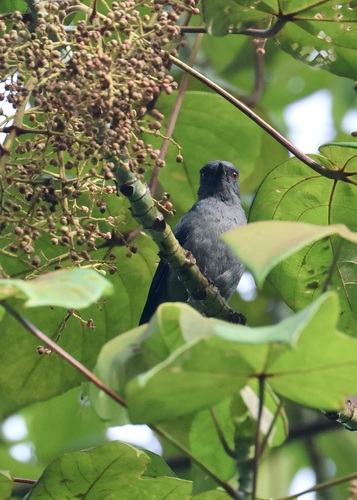
コアサクラサンショウクイ (Lalage fimbriata) コアサクラサンショウクイ
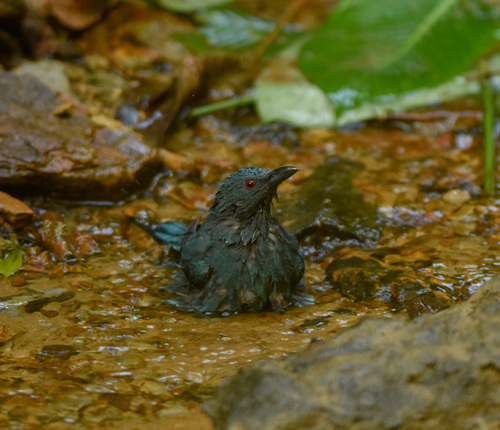
ルリコノハドリ (Irena puella) ルリコノハドリ

メディア

読み込み中…

要点

コアサクラサンショウクイとルリコノハドリを区別する最も信頼できるフィールドマークは全体の色合いです:成鳥のオスのルリコノハドリは目を引く光沢のあるウルトラマリンブルーと黒ですが、オスのコアサクラサンショウクイは上面が無地の暗灰色で、頭と尾が黒っぽく、青色がありません。両種の雌と幼鳥はより鈍い色合いですが、ルリコノハドリは常に下部や尾に青いトーンを示し、コアサクラサンショウクイの雌は下部に細かい縞模様のある淡い灰色で、幼鳥は縞模様や斑点のある茶色です。飛んでいるときも休んでいるときも、ルリコノハドリは明らかに大きくてずんぐりしており、尾が長く、くちばしが重いです。両種は同じ東南アジアの森林に生息していますが、コアサクラサンショウクイはより高い樹冠で見られることが多く、時には混合群れで見られますが、ルリコノハドリは単独またはペアで見られることが多いです。

識別のコツ

  1. 成鳥のオスのルリコノハドリは光沢のあるウルトラマリンブルーで、黒い下部と青い先端の覆羽を持っています—この組み合わせに合う他の鳥はいません。強い青い光沢と黒を見たら、それはコアサクラサンショウクイではありません。
  2. オスのコアサクラサンショウクイは上面が暗灰色で、下面が淡い灰色、黒っぽい頭と尾を持っています—青色のトーンはありません。短い尾と光沢のない普通のサンショウクイのような鳥を探してください。
  3. 雌のルリコノハドリは上面が茶色がかった青で、下部が青いです; 雌のコアサクラサンショウクイは淡い灰色で、下部に細かい縞模様があり、青色は全くありません。雌の鳥に青色が見えたら、それはルリコノハドリです。
  4. 幼鳥のコアサクラサンショウクイは胸に灰色と白の縞模様や斑点がある茶色がかった色をしています—青みがかっていて、より均一な色合いの若いルリコノハドリとは異なります。
  5. ルリコノハドリ(すべての年齢)は赤い虹彩とピンクがかったまぶたを持っています; コアサクラサンショウクイの虹彩は茶色です。これは近くで見るとわかります。
  6. 尾の形と色: コアサクラサンショウクイは短い黒い尾を持ち、白または灰色の先端があります; ルリコノハドリの尾は長く、黒または暗褐色で、中央の羽に青い光沢があります(特にオスにおいて)。
  7. くちばしの構造: ルリコノハドリはより重く、頑丈なくちばしを持っていますが、コアサクラサンショウクイのくちばしは細く、よりサンショウクイのようです。
  8. サイズ: ルリコノハドリははるかに大きく、ずんぐりしています(24–27 cm、65 g)に対して、より小さく、コンパクトなコアサクラサンショウクイは(20 cm)です。
  9. 行動: コアサクラサンショウクイはより活発で、混合群れの中でよく見られ、樹冠を素早く移動します; ルリコノハドリはより孤独またはペアで見られ、よりオープンに止まり、より慎重に移動します。
  10. 生息環境の文脈: 両種は森林の樹冠に生息しますが、特に低地や丘の森林で混合種の群れの中に鳥を見た場合、コアサクラサンショウクイの可能性が高いです。ルリコノハドリはより単独またはペアで見られることが多いです。
  11. 飛行スタイル: ルリコノハドリの飛行は、より重い体型と長い尾のために遅く、より直接的です; コアサクラサンショウクイはより速く、より敏捷です。
  12. 下部の模様: コアサクラサンショウクイの雌と幼鳥は下部に細かい縞模様や斑点を示します; ルリコノハドリ(雌と若鳥)は下部がより均一な青または青みがかっています。
  13. 尾の先端: コアサクラサンショウクイの尾に白または灰色の先端を探してください。これはルリコノハドリにはありません。
  14. 止まっている姿勢: ルリコノハドリは止まっているときにより直立してずんぐりして見え、相対的に長い尾を持っていますが、コアサクラサンショウクイはよりコンパクトでサンショウクイのようです。
  15. 羽毛にライラックまたはウルトラマリンの光沢が見えたら、特に上面や尾に、それはルリコノハドリです—決してコアサクラサンショウクイではありません。

大きさ

ルリコノハドリはコアサクラサンショウクイよりも明らかに大きく、重いです。ルリコノハドリは長さ24–27 cm、重さ約65 g [wikidata]で、特に相対的に長い尾と重いくちばしにより、ずんぐりした外観を持っています。コアサクラサンショウクイはより小さく、コンパクトで、約20 cmの長さで、短い尾と細い体型を持っています。このサイズの違いは、特に両種が同じ地域で見られるときに、遠くからでも明らかです。

羽色

幼鳥と未成熟のコアサクラサンショウクイは上面が茶色がかっており、淡い胸に灰色と白の縞模様や斑点がありますが、若いルリコノハドリは成鳥の雌に似ていますが、常に下部や尾に青色を示します。成鳥のオスのルリコノハドリは間違いなく、光沢のあるウルトラマリンブルーで、上面にライラックの反射があり、下部が黒く、青い先端の覆羽を持っています。雌のルリコノハドリは上面が茶色がかった青で、羽の縁が明るく、下部に青がありますが、雌のコアサクラサンショウクイは無地の淡い灰色で、下部に細かい縞模様があり、青色は全くありません。コアサクラサンショウクイの尾は黒で、明るい先端(白から灰色)がありますが、ルリコノハドリの尾は主に黒または暗褐色で、中央の羽に青い光沢があります。すべての年齢において、ルリコノハドリの虹彩は赤ですが、コアサクラサンショウクイの虹彩は茶色です。

行動

コアサクラサンショウクイは通常、樹冠の高いところで見られ、ペアまたは混合種の群れの一部として見られることが多く、時には冬に小さな群れを形成します。より活発で、昆虫を探して樹上を移動する傾向があります。ルリコノハドリも樹上性ですが、単独またはペアで見られることが多く、より慎重に移動し、しばしばオープンな場所に止まります。より重い体型と長い尾は、コアサクラサンショウクイのより速く、敏捷な動きに比べて、より遅く、より直接的な飛行を与えます。

生息環境

両種は東南アジアとグレーター・スンダ諸島の森林に生息していますが、コアサクラサンショウクイは主に低地と丘の原生林に密接に結びついており、時には1000–1500 mまで生息し、森林の端近くのプランテーションや庭にも訪れます。ルリコノハドリは同様の森林生息地に見られますが、一般的にさまざまな森林タイプ、特に二次成長の中でより広く分布しています。両種は樹上性で、樹冠を好みますが、コアサクラサンショウクイは混合群れに参加する可能性が高いです。

より良い説明を送る

比較と同じ項目を使ってください。文章はすぐに公開されます。

The most reliable field mark to separate Lesser Cuckooshrike from Asian Fairy-bluebird is overall coloration: adult male Fairy-bluebirds are a striking, glossy ultramarine-blue and black, while male Lesser Cuckooshrikes are plain dark grey above with a blackish head and tail, lacking any blue. Females and immatures of both species are duller, but the Fairy-bluebird always shows some blue tones, especially on the underparts and tail, whereas Lesser Cuckooshrike females are paler grey with fine barring below and immatures are brownish with barring or spotting. In flight or at rest, the Fairy-bluebird is distinctly larger and bulkier, with a longer tail and heavier bill. Both species can be found in the same Southeast Asian forests, but Lesser Cuckooshrike is more often seen high in the canopy, sometimes in mixed flocks, while Fairy-bluebird is more likely to be seen singly or in pairs.

  1. Adult male Fairy-bluebird is glossy ultramarine-blue above with black underparts and blue-tipped coverts—no other bird in the region matches this combination. If you see strong blue gloss and black, it's not a Lesser Cuckooshrike.
  2. Male Lesser Cuckooshrike is dark grey above, paler grey below, with a blackish head and tail—never blue-toned. Look for a plain, shrike-like bird with a short tail and no iridescence.
  3. Female Fairy-bluebird is brownish-blue above with blue underparts; female Lesser Cuckooshrike is pale grey with fine barring below and no blue at all. If you see any blue on a female-type bird, it's a Fairy-bluebird.
  4. Immature Lesser Cuckooshrike is brownish with grey and white barring or spotting on the breast—distinct from the blue-tinged, more uniformly colored young Fairy-bluebird.
  5. Fairy-bluebird (all ages) has a crimson iris and pinkish eyelids; Lesser Cuckooshrike's iris is brown. This is visible at close range.
  6. Tail shape and color: Lesser Cuckooshrike has a short, black tail with white or greyish tips; Fairy-bluebird's tail is longer, black or dark brown, with a blue gloss on the central feathers (especially in males).
  7. Bill structure: Fairy-bluebird has a heavier, more robust bill, while Lesser Cuckooshrike's bill is slimmer and more shrike-like.
  8. Size: Fairy-bluebird is much larger and bulkier (24–27 cm, 65 g) compared to the smaller, more compact Lesser Cuckooshrike (20 cm).
  9. Behavior: Lesser Cuckooshrike is more active, often in mixed flocks, and moves quickly through the canopy; Fairy-bluebird is more solitary or in pairs, perches more openly, and moves more deliberately.
  10. Habitat context: Both species occur in forest canopy, but if you see a bird in a mixed-species flock, especially in the lowland or hill forest, Lesser Cuckooshrike is more likely. Fairy-bluebird is more often seen alone or in pairs.
  11. Flight style: Fairy-bluebird's flight is slower and more direct due to its heavier build and longer tail; Lesser Cuckooshrike is quicker and more agile.
  12. Underpart pattern: Lesser Cuckooshrike females and immatures show fine barring or spotting below; Fairy-bluebird (female and young) is more uniform blue or blue-tinged below.
  13. Tail tips: Look for white or greyish tips on the Lesser Cuckooshrike's tail, which are absent in Fairy-bluebird.
  14. Perched posture: Fairy-bluebird appears more upright and bulky when perched, with a proportionally longer tail, while Lesser Cuckooshrike is more compact and shrike-like.
  15. If you see any lilac or ultramarine gloss in the plumage, especially on the upperparts or tail, it's a Fairy-bluebird—never a Lesser Cuckooshrike.

Asian Fairy-bluebird is noticeably larger and heavier than Lesser Cuckooshrike. Fairy-bluebird measures 24–27 cm in length and weighs about 65 g [wikidata], giving it a much bulkier appearance, especially with its proportionally longer tail and heavier bill. Lesser Cuckooshrike is smaller and more compact, about 20 cm long, with a shorter tail and slimmer build. This size difference is apparent even at a distance, especially when both species are seen in the same area.

Juvenile and immature Lesser Cuckooshrikes are brownish above with grey and white barring or spotting on a pale breast, while young Asian Fairy-bluebirds resemble adult females but always show some blue, especially on the underparts and tail. Adult male Fairy-bluebirds are unmistakable: glossy ultramarine-blue with lilac reflections on the upperparts, black underparts, and blue-tipped coverts. Female Fairy-bluebirds are brownish-blue above with brighter feather edges and blue on the underparts, while female Lesser Cuckooshrikes are plain pale grey with fine barring below and lack any blue. The Lesser Cuckooshrike's tail is black with light tips (white to greyish), while the Fairy-bluebird's tail is mostly black or dark brown with blue gloss on the central feathers. In all ages, the Fairy-bluebird's iris is crimson, while the Cuckooshrike's is brown.

Lesser Cuckooshrike is typically seen high in the canopy, often in pairs or as part of mixed-species flocks, and sometimes forms small flocks in winter. It tends to be more active and moves through the treetops in search of insects. Asian Fairy-bluebird is also arboreal but is more likely to be seen singly or in pairs, moving more deliberately and often perching in the open. Its heavier build and longer tail give it a slower, more direct flight compared to the quicker, more agile movements of the Cuckooshrike.

Both species inhabit forests across Southeast Asia and the Greater Sundas, but Lesser Cuckooshrike is more closely tied to primary lowland and hill forests, sometimes up to 1000–1500 m, and will also visit plantations and gardens near forest edges. Asian Fairy-bluebird is found in similar forest habitats but is generally more widespread in a variety of forest types, including secondary growth. Both species are arboreal and prefer the canopy, but Cuckooshrike is more likely to join mixed flocks.

変更を破棄しますか?

保存していない編集があります。今離れると失われます。

コアサクラサンショウクイ · ルリコノハドリ · 苦手な鳥