

Lapland Bunting vs Common Reed Bunting
Calcarius lapponicus versus Emberiza schoeniclus
Play a quiz with Lapland Bunting and Common Reed Bunting
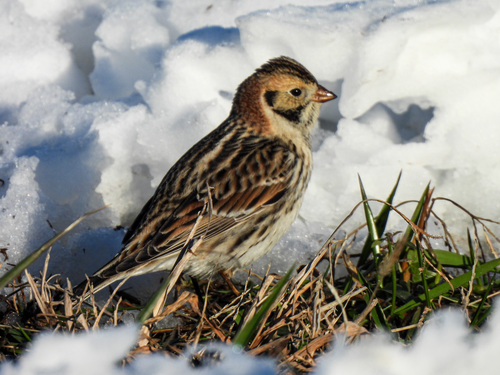 Lapland Bunting
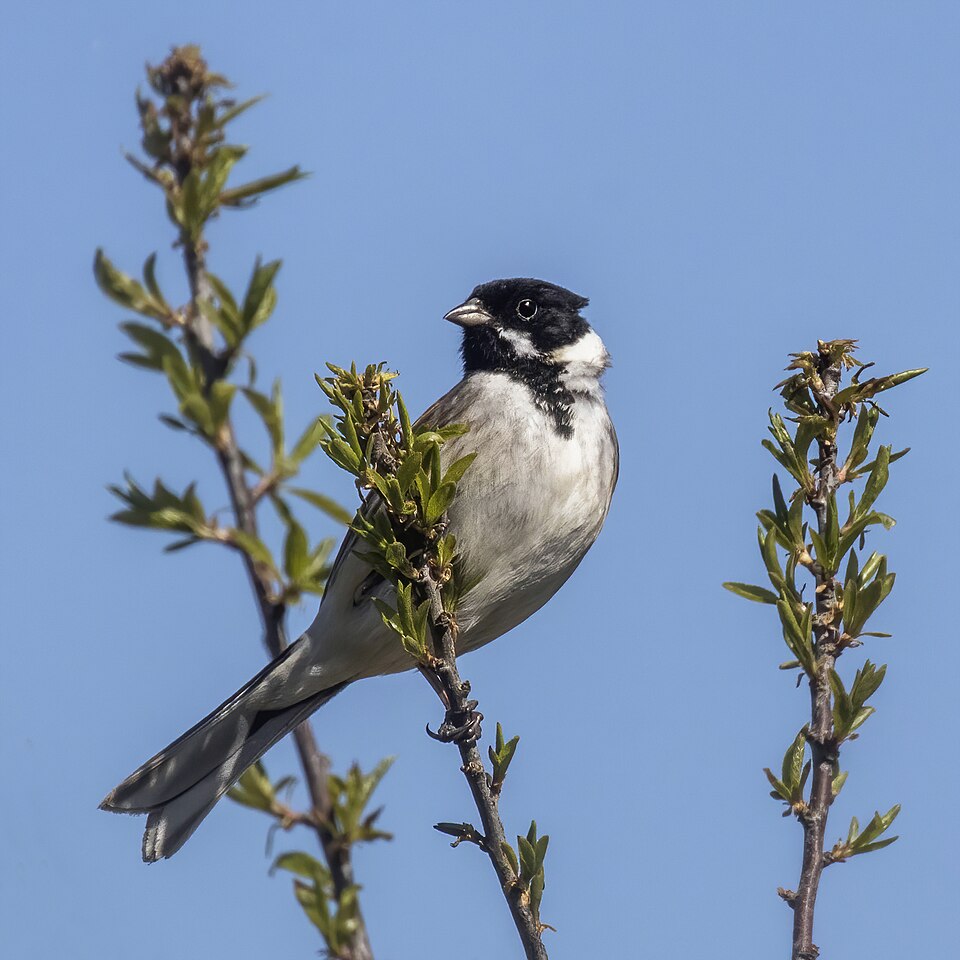 Common Reed Bunting
In short
The most reliable field mark between Lapland Bunting and Common Reed Bunting is the presence of a chestnut nape and contrasting head pattern in Lapland Bunting, especially in non-breeding and immature birds, versus the more uniformly streaked and brownish head of female and immature Reed Buntings. In flight or at rest, Lapland Bunting often shows a thicker, yellowish bill and a more robust, longspur-like structure, while Reed Bunting is slimmer with a smaller, conical bill. Adult males of both species can show black heads in breeding plumage, but Lapland Bunting males have a striking white eyestripe and chestnut nape, while Reed Bunting males have a white neck collar and lack the chestnut. Juvenile and winter birds are more easily confused, but careful attention to head pattern, bill color, and overall jizz will separate them in the field.
Identification tips
- Chestnut nape (Lapland Bunting): Look for a rich chestnut patch on the nape, visible in all plumages except the most worn or abraded. Reed Bunting never shows this feature.
- Head pattern (all ages): Lapland Bunting has a more contrasting head, with a pale supercilium and chestnut nape; Reed Bunting is plainer, especially in females and immatures, with a streaked brown head and no chestnut.
- Bill color and shape: Lapland Bunting has a thicker, yellowish bill with a dark tip, giving a robust impression; Reed Bunting's bill is smaller, more conical, and horn-colored.
- Male breeding plumage: Both can show black heads, but Lapland Bunting male has a white eyestripe and chestnut nape, while Reed Bunting male has a white neck collar and no chestnut.
- Underparts: Lapland Bunting has white underparts with limited streaking, mainly on the flanks; Reed Bunting is more heavily streaked and barred below, especially in females and immatures.
- Back and wing panel: Lapland Bunting's back is heavily streaked with black-grey and can show chestnut in the wing panel; Reed Bunting's back is brown and barred but lacks the chestnut tones.
- Overall structure: Lapland Bunting is more robust and stocky, with a longer, heavier body and thicker bill; Reed Bunting is slimmer and more delicate.
- Habitat context: In reedbeds or marshy areas, Reed Bunting is much more likely; in open tundra, stubble, or grassland, especially in migration, Lapland Bunting is favored.
- Behavior: Lapland Bunting is more likely to be seen in flocks on open ground, moving frequently; Reed Bunting is often solitary or in pairs, perching on reeds or bushes.
- Flight jizz: Lapland Bunting may appear more robust and less fluttery in flight; Reed Bunting is lighter and more agile, often dropping into cover.
- Vocalization (where heard): Reed Bunting male sings a repetitive 'srip'; Lapland Bunting's call (not described here) is a dry rattle, useful if heard.
- Seasonal context: In winter, both species can occur in farmland, but Lapland Bunting is scarcer and more likely to be in open, bare fields; Reed Bunting is commoner in wetland edges and hedgerows.
- Female/immature confusion: When faced with streaky brown buntings, focus on the nape color, bill shape, and head pattern; chestnut nape and yellowish bill point to Lapland Bunting, plain streaked head and smaller bill to Reed Bunting.
- Abundance: Reed Bunting is much more common in most of Europe, especially outside the far north; Lapland Bunting is scarce and usually seen in migration or winter flocks.
- Pitfalls: Beware of worn Lapland Buntings losing head contrast, and dull Reed Buntings appearing more orange-brown in some lights. Always check multiple features.
Size
Lapland Bunting is slightly larger and heavier: 15–16 cm length, 22.3–33.1 g weight, and 22–29 cm wingspan [wikipedia][avonet]. Common Reed Bunting is 13.5–15.5 cm long and weighs 10–28 g [wikipedia][avonet]. In the hand or at close range, Lapland Bunting feels more robust and stocky, while Reed Bunting is slimmer and more delicate. However, there is overlap, and size alone is not diagnostic in the field.
Plumage
- Juvenile/First-winter/Non-breeding birds:
- Lapland Bunting: Head is orange-brown with a chestnut nape and often a faint pale supercilium; back is brown with heavy black-grey streaking; wing panels can show chestnut tones. Bill is yellowish, often with a dark tip. Underparts are white with variable streaking on the flanks. The overall impression is of a robust, streaky bird with a contrasting head pattern and chestnut nape.
- Common Reed Bunting: Female/immature birds have a streaked brown head, lacking the chestnut nape; underparts are more heavily barred and streaked, especially on the breast and flanks. Bill is smaller, conical, and generally horn-colored. The head pattern is plainer, with a less distinct supercilium and no chestnut. Back is also streaked but lacks the rich chestnut tones.
- Adult breeding males:
- Lapland Bunting: Striking black head and throat, white eyestripe, chestnut nape, white underparts, and heavily streaked black-grey back. The bill remains yellowish.
- Common Reed Bunting: Black head and throat, white neck collar and underparts, heavily barred brown back. No chestnut nape; bill is smaller and horn-colored.
- In flight: No distinctive upperwing pattern is described for either species in these notes, but Lapland Bunting may show more obvious chestnut in the wing panel and nape, especially in fresh plumage.
Behaviour
Lapland Bunting forages mainly on the ground, picking seeds from bare earth or low vegetation, often in flocks during migration and winter. They are restless, moving between feeding areas frequently. Reed Bunting is also ground-feeding but more often seen perched on reeds, bushes, or fence lines, especially near water or in marshy habitats. Reed Buntings are less likely to form large flocks and are more often seen singly or in pairs during the breeding season.
Habitat
Lapland Bunting is a bird of open, often arctic or tundra habitats in the breeding season, but in migration and winter can be found in open fields, stubble, and grasslands. Reed Bunting is strongly associated with wetlands, reedbeds, and damp scrub, but in winter can also be found in farmland and hedgerows. If you find a bunting in a reedbed or marsh, Reed Bunting is far more likely; in open stubble or tundra, Lapland Bunting is favored.
Voice
The only vocalization described is the Reed Bunting male's song: a repetitive 'srip.' No vocal notes are given for Lapland Bunting here. In practice, Lapland Bunting gives a dry, rattling call in flight, but this is not covered in the provided notes.