

Japanese Woodpecker vs Grey-headed Woodpecker
Picus awokera versus Picus canus
Play a quiz with Japanese Woodpecker and Grey-headed Woodpecker
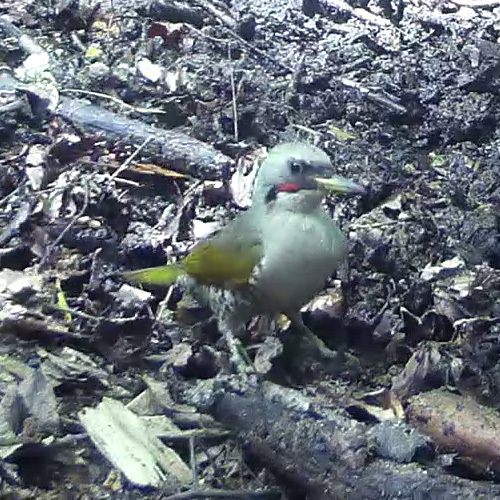 Japanese Woodpecker
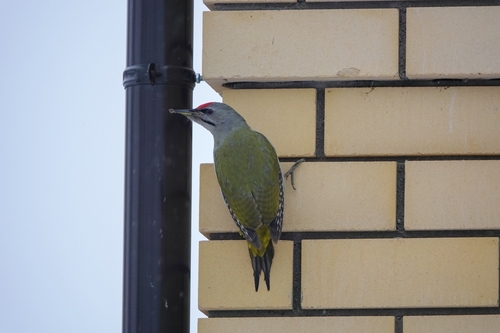 Grey-headed Woodpecker
In short
The most reliable field mark to separate Japanese Woodpecker from Grey-headed Woodpecker is the color and extent of the head and underparts: Japanese Woodpecker shows a gray head, neck, and chest with white underparts marked in black, while Grey-headed Woodpecker has a uniformly pale grey head and underbody, with less extensive black. Both species have green upperparts, but Japanese Woodpecker is slightly larger and has a brighter green wing and tail. Males of both species show red on the crown, but the pattern and intensity differ. In flight or perched, focus on head and underpart coloration, as wing patterns are not highly distinctive between these two. Vocalizations differ subtly, but are less reliable for quick field separation.
Identification tips
- Head and neck color: Japanese Woodpecker has a gray head, neck, and chest, while Grey-headed Woodpecker's head and underbody are pale grey. This is the quickest visual cue in most views.
- Underpart pattern: Japanese Woodpecker shows white underparts with black markings, giving a more contrasting and patterned look below. Grey-headed Woodpecker's underparts are pale grey and much plainer, with little to no black.
- Facial markings: Japanese Woodpecker has a red or black mustache and crown (males), sometimes with a black crown in some individuals. Grey-headed Woodpecker males have a red forecrown, a black line across the lores, and a narrow black moustache; females lack the red forecrown and show fine black streaks on the crown.
- Bill color: Japanese Woodpecker has a yellow bill, while Grey-headed Woodpecker's bill is not described as yellow and is typically darker (though this is less reliable at distance).
- Iris color: Japanese Woodpecker has a red iris, which can be a subtle but useful mark at close range; Grey-headed Woodpecker's iris color is not highlighted as distinctive.
- Upperparts: Both species have green backs and wings, but Japanese Woodpecker's are described as brighter green, while Grey-headed Woodpecker's are olive green. This difference is subtle and not always reliable in poor light.
- Tail color: Japanese Woodpecker has a bright green tail; Grey-headed Woodpecker's tail is not described as especially bright, but this is a minor point.
- Sex differences: In both species, males show red on the head (crown or forecrown), but the pattern differs: Japanese Woodpecker's red is on the crown and/or mustache, while Grey-headed Woodpecker's is restricted to the forecrown.
- Subspecies variation: Some Grey-headed Woodpecker subspecies (notably in southeast Asia) have a black nape and darker green wings, but these do not overlap with Japanese Woodpecker's range.
- Size: Japanese Woodpecker is slightly larger and heavier, but this is rarely diagnostic in the field unless both species are seen together.
- Vocalizations: Japanese Woodpecker's 'pijo' call is sharp and whip-like, and its drumming is very fast and long. Grey-headed Woodpecker's song is more melodic and melancholic, with a series of notes that slow and drop in pitch. Calls can be similar, so use with caution unless well known.
- Geographic range: If you are in Japan, only Japanese Woodpecker is expected; elsewhere in Eurasia, Grey-headed Woodpecker is the likely candidate.
- Plumage pitfalls: Both species can show green upperparts and some red on the head in males, but the extent and placement of red, and the underpart pattern, are key. Immature and juvenile plumages are not described as highly distinctive, so rely on adult-like features.
- Perched vs. flight views: In perched birds, head and underpart color are most useful. In flight, look for the overall color impression and any flashes of white or black below, but no unique wing patterns are described for either species.
- Leg and foot color: Japanese Woodpecker has light gray legs and feet, which may be visible at close range; this is not described for Grey-headed Woodpecker.
Size
Japanese Woodpecker is slightly larger, averaging about 30 cm in length and 129 g in mass, compared to Grey-headed Woodpecker at 25–26 cm and around 125 g. In the field, this size difference is subtle and not always apparent, especially without direct comparison. Both are medium-sized woodpeckers, but Japanese Woodpecker may appear a bit bulkier and longer-tailed.
Plumage
No strong age-specific wing or flight pattern differences are described between these two species, so separation relies mainly on head, underpart, and facial markings in all plumages. Japanese Woodpecker of all ages shows a gray head, neck, and chest, with white underparts marked with black, and bright green wings and tail. The bill is yellow and the iris is red. Males have a red or black mustache and crown. Grey-headed Woodpecker, in contrast, has a pale grey head and underbody, green back and wings, and a more subtle facial pattern: the male has a red forecrown, black lores, and a narrow black moustache, while the female lacks the red forecrown and has fine black streaks on the crown. The underparts are pale grey without the strong black markings seen on Japanese Woodpecker. Subspecies variation in Grey-headed Woodpecker can cause some individuals to appear slightly greener or greyer, but the overall pattern remains consistent. Juvenile and immature plumages are not described as highly distinctive for either species in the provided notes.
Behaviour
Both species behave like typical Picus woodpeckers, foraging on trunks and branches and often seen clinging to tree bark. There is no strong behavioral difference highlighted in the notes that would reliably separate them in the field. Flight is undulating and direct, as with most woodpeckers.
Habitat
Japanese Woodpecker is endemic to Japan and will only be found there, while Grey-headed Woodpecker has a broad Eurasian range, stretching from Europe across Asia to the Pacific, and south to the Himalayas and Malay Peninsula. If you are birding in Japan, only Japanese Woodpecker is expected; elsewhere in Eurasia, Grey-headed Woodpecker is the likely species. Habitat preferences are not detailed in the notes, but both occupy woodland and forested areas.
Voice
Japanese Woodpecker gives loud, whip-crack-like 'pijo' calls and a fast, long drumroll, especially before and after the breeding season. Grey-headed Woodpecker's territorial song is more melodic and cleaner than the explosive 'laughter' of the European green woodpecker, consisting of a series of 10–15 notes of declining pitch. Its sharp 'kuek' and 'kek' calls can be aggressive or serve as predator warnings. While both can sound similar to the untrained ear, Japanese Woodpecker's calls are sharper and more whip-like, while Grey-headed Woodpecker's song is more melodic and melancholic.
Japanese Woodpecker · Grey-headed Woodpecker · My Tricky Birds