

Japanese Night Heron vs Medium Egret
Gorsachius goisagi versus Ardea intermedia
Play a quiz with Japanese Night Heron and Medium Egret
 Japanese Night Heron
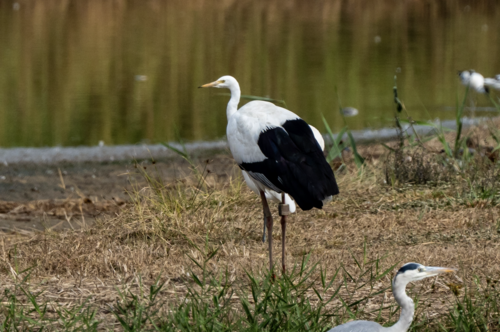 Medium Egret
In short
The most reliable field mark between Japanese Night Heron and Medium Egret is overall color: Japanese Night Heron is a dark, earth-toned bird (adults with russet head/neck, dark brown wings; juveniles darker-headed, paler-winged), while Medium Egret is entirely white at all ages. In flight or perched, the Night Heron's compact, chunky build and dark plumage contrast sharply with the Egret's slender, long-necked, all-white appearance. Juvenile Japanese Night Herons show irregular black lines on the wing coverts, a feature never seen in egrets. Bill color and shape, leg color, and foraging style also help, especially in mixed heron/egret flocks.
Identification tips
- Overall color is the fastest check: Japanese Night Heron is never white; Medium Egret is always white. If you see any brown, russet, or blackish tones, rule out Egret.
- Juvenile Night Herons show irregular black lines on the wing coverts—look for these in perched or flying birds. Egrets never show this pattern at any age.
- Adult Night Heron has a russet (reddish-brown) head and neck, with dark brown wings. Medium Egret is pure white, with no earth tones or dark patches.
- Bill shape and color: Night Heron has a thick, heavy, dark bill; Egret's bill is long, slender, and yellow (non-breeding) or blackish (breeding, Asian birds). If you see a thick, stubby bill, think Night Heron.
- Leg color: Medium Egret has dark legs (may show dull yellow or pink in breeding), while Night Heron's legs are not described in detail but are not a key mark for separation here.
- Structure and posture: Night Heron is compact, short-necked, and often hunched; Egret is tall, slender, with a long neck often held extended.
- Flight jizz: Night Heron flies with slow, deep wingbeats, neck retracted, and appears chunky. Egret flies with neck retracted as well, but looks much longer-winged, more graceful, and all-white.
- Foraging behavior: Night Heron forages at dusk or in shade, often on the ground or in dense cover. Egret is active by day, in open water or fields, stalking prey in full view.
- Habitat context: If the bird is deep in forest or dense undergrowth, Egret is unlikely. If in open wetland or field, Egret is much more likely.
- Group size: Night Heron is usually solitary or in small groups; Egret often feeds in larger flocks.
- Eye skin: Both have yellowish skin around the eye, so this is not a reliable separator.
- Breeding plumes: Egret in breeding season may show long filamentous plumes on breast and back; Night Heron does not.
- Seasonal bill color: Egret's bill may turn blackish in breeding season (Asian birds), but is always yellow in non-breeding; Night Heron's bill does not change seasonally.
- Mistaken identity risk: In poor light, a Night Heron may look paler, but will never appear truly white. Juvenile Night Herons may be confused with other brown herons, but not with Egrets if color is seen clearly.
- Size: If you can compare directly, Egret is much larger and taller than Night Heron.
Size
Medium Egret is significantly larger and more elongated: 56–72 cm long with a 105–115 cm wingspan and about 400 g in weight [wikipedia]. Japanese Night Heron is much smaller and stockier, with a wingspan of 43–47 cm [wikipedia]; length is not specified but is clearly less than the egret. The Egret's neck is proportionally longer (neck length nearly as long as body), while the Night Heron is short-necked and compact.
Plumage
Juvenile Japanese Night Herons have a dark (almost blackish) head and paler brown wings, with distinctive irregular black lines down the wing coverts—this pattern is unique and not found in Medium Egret of any age. Adults are russet-headed and dark-winged, still showing those covert lines. In contrast, Medium Egret is pure white at all ages and seasons, with no dark or patterned areas on the body or wings. Breeding Egrets may show ornamental plumes and subtle changes in bill and leg color, but never any dark streaks or earth tones. Both species have yellowish bare parts around the eye, but only the Egret's bill and legs change color seasonally. The Night Heron's bill is always thick and dark, while the Egret's is yellow (non-breeding) or blackish (breeding, Asian birds).
Behaviour
Japanese Night Heron is secretive, feeding solitarily or in small groups at dusk, often on the forest floor, and rarely in the open. It digs for earthworms and snails, sometimes foraging along swamp or paddy edges. Medium Egret is much more conspicuous, stalking prey methodically in open shallow water, flooded fields, or coastal areas, often in mixed heron/egret flocks. Egrets stand upright, neck extended, and are more likely to be seen in the open during the day.
Habitat
Japanese Night Heron prefers dense, wooded habitats—forest floors, shaded swamps, and rice paddies, especially during breeding. It is rarely seen in open water or fields. Medium Egret is a bird of open wetlands: shallow lakes, rivers, flooded fields, and coastal shallows, often far from forest cover. If you see a heron in deep forest or dense undergrowth, Egret is highly unlikely.