

Isabelline Shrike vs Brown Shrike
Lanius isabellinus versus Lanius cristatus
Play a quiz with Isabelline Shrike and Brown Shrike
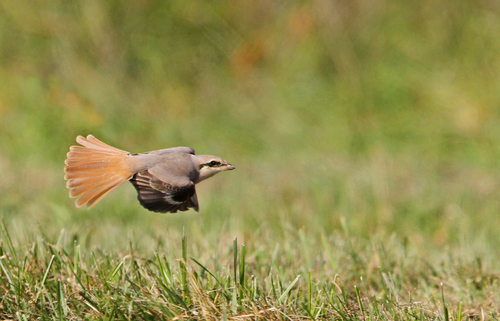 Isabelline Shrike
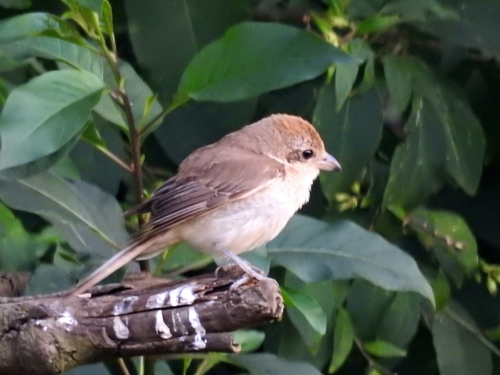 Brown Shrike
In short
The most reliable field mark to separate Isabelline Shrike from Brown Shrike is overall coloration: Isabelline Shrike shows a sandy, isabelline (pale, warm buff) tone with a distinctly red tail, while Brown Shrike is more uniformly brown above with a brownish or rufous-tinged tail and a prominent dark facial mask, often with a white supercilium. Juvenile and immature birds are especially challenging, but Isabelline Shrike juveniles have much sparser vermiculations on the underparts compared to the denser scalloping or barring of young Brown Shrikes. Subtle differences in tail color, mask definition, and underpart patterning are key, especially in non-adult plumages. Structure and size are very similar, so focus on plumage and facial pattern for field separation.
Identification tips
- Juvenile underpart pattern: Isabelline Shrike juveniles have much sparser vermiculations (fine barring) on the underparts, giving a cleaner, paler look; Brown Shrike juveniles are more heavily scalloped or barred below. This is the most reliable mark for young birds.
- Overall upperpart color: Isabelline Shrike is sandy or isabelline (warm buff) above, while Brown Shrike is more uniformly brown or rufous-brown above. In strong light, Isabelline can appear strikingly pale compared to Brown.
- Tail color: Isabelline Shrike has a distinctly red tail, especially obvious in adults; Brown Shrike's tail is brownish or rufous, sometimes with a white tip (especially in superciliosus), but not as bright red as Isabelline.
- Facial mask: Brown Shrike has a strong dark mask (black in males, dark brown in females), often with a prominent white supercilium (brow). Isabelline Shrike's mask is less bold, and the face appears paler and less contrasting.
- Supercilium (brow): Brown Shrike, especially superciliosus and confusus subspecies, shows a broad white supercilium; Isabelline Shrike lacks this strong white brow.
- Underpart tone: Isabelline Shrike is paler and cleaner below, especially on the belly; Brown Shrike often has rufous flanks and a creamier, more marked belly.
- Tail shape: Brown Shrike's tail is described as rounded; Isabelline Shrike's tail shape is not specifically noted as diagnostic, but look for the color difference instead.
- Sex differences: Female Brown Shrikes have a less well-marked mask and more scalloped underparts, which can resemble Isabelline, but the denser underpart markings and brown upperparts still help separate them.
- Subspecies confusion: Some Brown Shrike subspecies (e.g., superciliosus) can show a redder tail and richer crown, but the facial mask and supercilium remain strong clues. Isabelline Shrike does not show a strong white brow.
- Overlap and hybrids: In central Asia, populations of Brown, Isabelline, and Red-backed Shrikes can overlap and intergrade, making some individuals very challenging. Use a combination of marks and beware of intermediate birds.
- Flight views: No specific wing pattern differences are described for these two, so rely on tail color and overall tone in flight.
- Perched views: Focus on face pattern (mask and supercilium), tail color, and underpart markings. Binocular views of the head and tail are most helpful.
- Size and structure: Both are similar in size and shape; do not rely on bulk or length for separation.
- Habitat and behavior: Both use similar open habitats and hunting strategies; do not use habitat or jizz alone for identification.
- Voice: No reliable differences in calls or song for field separation; do not use vocalizations as a primary mark.
Size
Both species are very close in size, with Brown Shrike averaging slightly heavier (Brown Shrike: 33.0g; Isabelline Shrike: 30.0g) [wikidata]. In the field, this difference is negligible and not a reliable separation point. Overall jizz, bill size, and tail length are similar; neither species is notably bulkier or longer than the other.
Plumage
- Juvenile/immature birds: Isabelline Shrike shows much sparser vermiculations (fine barring or scalloping) on the underparts, giving a cleaner, paler look. Brown Shrike juveniles and females have denser scalloping or barring below, often appearing more heavily marked and less uniform.
- Adults: Isabelline Shrike is sandy or isabelline above, with a distinctly red tail. Brown Shrike is more uniformly brown above, with a brownish or rufous-tinged tail (not as red as Isabelline), and a prominent dark mask (black in males, dark brown in females) with a white supercilium (brow) that is especially broad in some subspecies (e.g., superciliosus).
- Tail: Isabelline Shrike has a red tail; Brown Shrike's tail is browner or rufous, sometimes with a white tip (in superciliosus). The tail of Brown Shrike is rounded, while Isabelline's is not specifically described as such.
- Facial pattern: Brown Shrike has a strong dark mask, often with a white supercilium. Isabelline's mask is less emphasized and the face appears paler overall.
- Underparts: Isabelline is paler and cleaner below, especially in juveniles; Brown Shrike has more rufous flanks and belly, and more marked underparts in young/female birds.
Behaviour
Both species are typical shrikes: they hunt from exposed perches, sallying to the ground for prey, and may impale prey on thorns. No diagnostic behavioral differences are noted between these two. Both are migratory and establish winter territories, but this is not useful for field separation.
Habitat
Both shrikes occupy similar open habitats across Asia, including semi-desert, scrub, and forest edge. Overlap in range and habitat is possible, especially in migration and winter. Habitat alone is not diagnostic for separating these two species.
Voice
No distinctive vocal differences are described in the available notes for separating Isabelline Shrike from Brown Shrike. Brown Shrike's winter song is faint and chattering, but this is not contrasted with Isabelline Shrike; both may mimic other birds. Vocalizations are not a reliable field mark for this pair based on current sources.