

Motmot

Hume's Warbler vs Radde's Warbler

Phylloscopus humei versus Phylloscopus schwarzi

Play a quiz with Hume's Warbler and Radde's Warbler
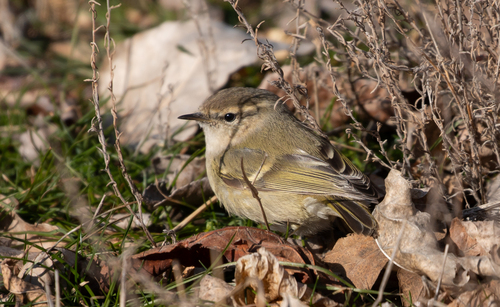
Hume's Warbler (Phylloscopus humei) Hume's Warbler
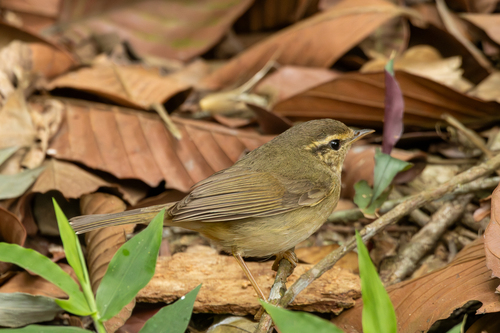
Radde's Warbler (Phylloscopus schwarzi) Radde's Warbler

Media

Loading…

In short

The most reliable field mark to separate Hume's Warbler from Radde's Warbler is the presence of a single clear wing bar (with only a faint second bar) on Hume's, versus the complete lack of wing bars on Radde's. Hume's also shows duller greenish tones above and off-white below, while Radde's is warmer brown above and buff below. Structure and behavior differ: Hume's is smaller, more arboreal, and constantly active in the canopy, while Radde's is bulkier, more terrestrial, and often found low in dense cover. Bill and leg color, as well as subtle differences in supercilium and underpart tone, help clinch the ID when plumage is ambiguous.

Identification tips

  1. Wing bars: Hume's Warbler always shows a single strong pale wing bar on the greater coverts, with at most a faint second bar; Radde's Warbler never shows any wing bars. This is the single most reliable field mark in all ages and seasons.
  2. Upperpart color: Hume's is greenish-tinged above, while Radde's is plain brown. In good light, this difference is clear, but can be subtle in poor conditions.
  3. Underpart color: Hume's is off-white below, while Radde's is buff or yellowish-buff, especially on the flanks and undertail. Juvenile Radde's are even more yellowish below.
  4. Supercilium: Both have long supercilia, but Radde's is broader, more prominent, and strikingly whitish, often appearing to 'flare' behind the eye. Hume's supercilium is long but less contrasting.
  5. Crown stripe: Hume's shows a faint crown stripe, which is lacking in Radde's.
  6. Tertial edges: Hume's has yellowish edges to the tertials; Radde's tertials are plain brown with no contrasting edges.
  7. Bill color and shape: Hume's has a dark lower mandible and a finer bill; Radde's bill is thicker and the lower mandible is not as dark.
  8. Leg and feet color: Hume's has dark legs; Radde's legs are paler, and the feet are noticeably large, adapted for walking on the ground.
  9. Size and structure: Radde's is bulkier, with a heavier body and larger feet; Hume's is smaller and more delicate. This is most obvious when both are seen together.
  10. Behavior: Hume's is almost always in the canopy, active and restless; Radde's is more often low or on the ground, moving more deliberately.
  11. Habitat: On passage or wintering grounds, Hume's prefers open woodland and forest edge, often higher up; Radde's is in dense, low vegetation or scrub.
  12. Voice: Hume's call is a high-pitched, buzzing, disyllabic note; Radde's is a soft 'chick'. Calls can be helpful when plumage is ambiguous.
  13. Juvenile confusion: Even in juvenile/first-winter plumage, Hume's shows the single wing bar, while Radde's never does. Juvenile Radde's are yellower below, but this is variable.
  14. Pitfalls: In poor light, Hume's can appear dull and Radde's can look paler below, but the presence or absence of wing bars remains diagnostic.
  15. Sex and season: Both species are sexually monomorphic; all field marks apply year-round.

Size

Radde's Warbler is noticeably larger and heavier (body mass about 11.5g [wikidata]), with a bulkier appearance and larger feet, reflecting its more terrestrial habits. Hume's Warbler is one of the smallest leaf warblers, appearing daintier and more delicate overall. In direct comparison, Hume's will look slimmer and lighter, especially when both are seen in the same habitat.

Plumage

The most diagnostic plumage difference is in the wing pattern: Hume's Warbler (all ages) shows a single prominent pale wing bar on the greater coverts, with at most a faint second bar on the median coverts, while Radde's Warbler completely lacks wing bars at all ages. Hume's upperparts are greenish-tinged, with off-white underparts, and a long supercilium and crown stripe; the tertials are edged yellow. Radde's is unstreaked brown above, with buff underparts and a very long, prominent whitish supercilium. Juvenile Radde's are yellower below, but never show wing bars. Hume's has a darker lower mandible and legs, while Radde's legs are paler and the feet appear large. Both have long supercilia, but Radde's is more strikingly pale and contrasts with the surrounding plumage.

Behaviour

Hume's Warbler is highly arboreal, rarely descending from the canopy, and is constantly in motion, flicking through foliage in search of insects. Radde's Warbler, in contrast, is more terrestrial, often seen foraging low in dense undergrowth or even on the ground, moving with a heavier, more deliberate gait. Radde's large feet are adapted for this terrestrial lifestyle. Hume's tends to be more active and restless, while Radde's may appear more methodical and less frenetic.

Habitat

Hume's Warbler breeds in the mountains of inner Asia and winters mainly in India, favoring montane forests dominated by fir, hemlock, and rhododendron. It is mostly found in the canopy or upper levels of trees. Radde's Warbler breeds in Siberia and winters in Southeast Asia, typically occupying dense, low vegetation and thickets, often near water. In migration, Hume's is more likely in open woodland and forest edge, while Radde's prefers dense, low cover and can be found in scrub or reedbeds.

Voice

Hume's Warbler gives a buzzing, high-pitched, more disyllabic call, which is a key separation from similar species but less useful versus Radde's. Radde's Warbler's call is a soft 'chick', less sharp or buzzy than Hume's. Song is rarely heard on migration or wintering grounds, so calls are more useful for separation if heard.

Submit a better description

Use the same sections as the comparison. Your text is published immediately.

The most reliable field mark to separate Hume's Warbler from Radde's Warbler is the presence of a single clear wing bar (with only a faint second bar) on Hume's, versus the complete lack of wing bars on Radde's. Hume's also shows duller greenish tones above and off-white below, while Radde's is warmer brown above and buff below. Structure and behavior differ: Hume's is smaller, more arboreal, and constantly active in the canopy, while Radde's is bulkier, more terrestrial, and often found low in dense cover. Bill and leg color, as well as subtle differences in supercilium and underpart tone, help clinch the ID when plumage is ambiguous.

  1. Wing bars: Hume's Warbler always shows a single strong pale wing bar on the greater coverts, with at most a faint second bar; Radde's Warbler never shows any wing bars. This is the single most reliable field mark in all ages and seasons.
  2. Upperpart color: Hume's is greenish-tinged above, while Radde's is plain brown. In good light, this difference is clear, but can be subtle in poor conditions.
  3. Underpart color: Hume's is off-white below, while Radde's is buff or yellowish-buff, especially on the flanks and undertail. Juvenile Radde's are even more yellowish below.
  4. Supercilium: Both have long supercilia, but Radde's is broader, more prominent, and strikingly whitish, often appearing to 'flare' behind the eye. Hume's supercilium is long but less contrasting.
  5. Crown stripe: Hume's shows a faint crown stripe, which is lacking in Radde's.
  6. Tertial edges: Hume's has yellowish edges to the tertials; Radde's tertials are plain brown with no contrasting edges.
  7. Bill color and shape: Hume's has a dark lower mandible and a finer bill; Radde's bill is thicker and the lower mandible is not as dark.
  8. Leg and feet color: Hume's has dark legs; Radde's legs are paler, and the feet are noticeably large, adapted for walking on the ground.
  9. Size and structure: Radde's is bulkier, with a heavier body and larger feet; Hume's is smaller and more delicate. This is most obvious when both are seen together.
  10. Behavior: Hume's is almost always in the canopy, active and restless; Radde's is more often low or on the ground, moving more deliberately.
  11. Habitat: On passage or wintering grounds, Hume's prefers open woodland and forest edge, often higher up; Radde's is in dense, low vegetation or scrub.
  12. Voice: Hume's call is a high-pitched, buzzing, disyllabic note; Radde's is a soft 'chick'. Calls can be helpful when plumage is ambiguous.
  13. Juvenile confusion: Even in juvenile/first-winter plumage, Hume's shows the single wing bar, while Radde's never does. Juvenile Radde's are yellower below, but this is variable.
  14. Pitfalls: In poor light, Hume's can appear dull and Radde's can look paler below, but the presence or absence of wing bars remains diagnostic.
  15. Sex and season: Both species are sexually monomorphic; all field marks apply year-round.

Radde's Warbler is noticeably larger and heavier (body mass about 11.5g [wikidata]), with a bulkier appearance and larger feet, reflecting its more terrestrial habits. Hume's Warbler is one of the smallest leaf warblers, appearing daintier and more delicate overall. In direct comparison, Hume's will look slimmer and lighter, especially when both are seen in the same habitat.

The most diagnostic plumage difference is in the wing pattern: Hume's Warbler (all ages) shows a single prominent pale wing bar on the greater coverts, with at most a faint second bar on the median coverts, while Radde's Warbler completely lacks wing bars at all ages. Hume's upperparts are greenish-tinged, with off-white underparts, and a long supercilium and crown stripe; the tertials are edged yellow. Radde's is unstreaked brown above, with buff underparts and a very long, prominent whitish supercilium. Juvenile Radde's are yellower below, but never show wing bars. Hume's has a darker lower mandible and legs, while Radde's legs are paler and the feet appear large. Both have long supercilia, but Radde's is more strikingly pale and contrasts with the surrounding plumage.

Hume's Warbler is highly arboreal, rarely descending from the canopy, and is constantly in motion, flicking through foliage in search of insects. Radde's Warbler, in contrast, is more terrestrial, often seen foraging low in dense undergrowth or even on the ground, moving with a heavier, more deliberate gait. Radde's large feet are adapted for this terrestrial lifestyle. Hume's tends to be more active and restless, while Radde's may appear more methodical and less frenetic.

Hume's Warbler breeds in the mountains of inner Asia and winters mainly in India, favoring montane forests dominated by fir, hemlock, and rhododendron. It is mostly found in the canopy or upper levels of trees. Radde's Warbler breeds in Siberia and winters in Southeast Asia, typically occupying dense, low vegetation and thickets, often near water. In migration, Hume's is more likely in open woodland and forest edge, while Radde's prefers dense, low cover and can be found in scrub or reedbeds.

Hume's Warbler gives a buzzing, high-pitched, more disyllabic call, which is a key separation from similar species but less useful versus Radde's. Radde's Warbler's call is a soft 'chick', less sharp or buzzy than Hume's. Song is rarely heard on migration or wintering grounds, so calls are more useful for separation if heard.

Discard your changes?

You have unsaved edits. If you leave now, those changes will be lost.

Hume's Warbler · Radde's Warbler · My Tricky Birds