

Motmot

バフマユムシクイ 対 カラフトムジセッカ

Phylloscopus humei 対 Phylloscopus schwarzi

バフマユムシクイとカラフトムジセッカのクイズ
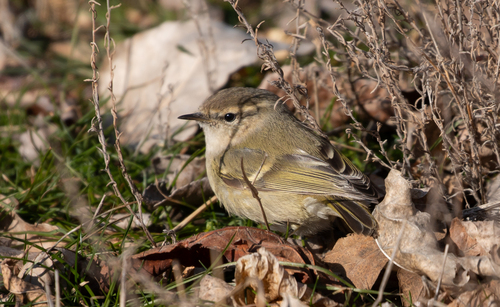
バフマユムシクイ (Phylloscopus humei) バフマユムシクイ
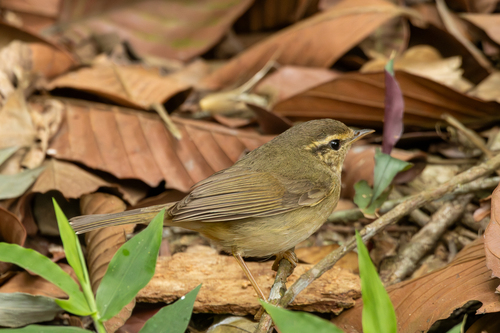
カラフトムジセッカ (Phylloscopus schwarzi) カラフトムジセッカ

メディア

読み込み中…

要点

バフマユムシクイとカラフトムジセッカを区別する最も信頼できるフィールドマークは、Hume'sに見られる1本の明確な翼帯(わずかに薄い2本目の帯がある場合もある)に対し、Radde'sには翼帯が全くないことです。Hume'sは上面が鈍い緑がかった色合いで、下面がオフホワイトですが、Radde'sは上面が暖かい茶色で、下面がバフ色です。構造と行動が異なります:Hume'sは小さく、より樹上性で、常に樹冠の中で活発に動き回りますが、Radde'sはより大きく、地上性で、密なカバーの中で低い位置にいることが多いです。くちばしと足の色、さらには眉斑と下面の色合いの微妙な違いが、羽毛があいまいな場合の同定に役立ちます。

識別のコツ

  1. Wing bars: バフマユムシクイは常に大覆羽に1本の強い淡い翼帯を示し、せいぜい薄い2本目の帯があるだけです;カラフトムジセッカは翼帯を示しません。これはすべての年齢と季節において最も信頼できるフィールドマークです。
  2. Upperpart color: Hume'sは上面が緑がかった色合いですが、Radde'sは単純な茶色です。良い光の下ではこの違いは明確ですが、悪条件では微妙になることがあります。
  3. Underpart color: Hume'sは下面がオフホワイトですが、Radde'sはバフまたは黄味がかったバフで、特に側面と尾の下部で顕著です。幼鳥のRadde'sはさらに黄色味が強いです。
  4. Supercilium: 両者とも長い眉斑を持っていますが、Radde'sはより広く、目立ち、驚くほど白っぽく、しばしば目の後ろで「広がって」見えます。Hume'sの眉斑は長いですが、コントラストが少ないです。
  5. Crown stripe: Hume'sは薄い冠帯を示しますが、Radde'sにはありません。
  6. Tertial edges: Hume'sは三次羽に黄色がかった縁を持っています;Radde'sの三次羽は単純な茶色で、コントラストのある縁はありません。
  7. Bill color and shape: Hume'sは暗い下顎を持ち、より細いくちばしです;Radde'sのくちばしは太く、下顎はそれほど暗くありません。
  8. Leg and feet color: Hume'sは暗い足を持っています;Radde'sの足はより淡く、足は明らかに大きく、地面を歩くために適応しています。
  9. Size and structure: Radde'sはより大きく、重い体と大きな足を持ち、地上性の習性を反映しています;Hume'sは小さく、より繊細です。これは両者が一緒に見られるときに最も明らかです。
  10. Behavior: Hume'sはほぼ常に樹冠にいて、活発で落ち着きがありません;Radde'sはより低い位置や地面にいることが多く、より慎重に動きます。
  11. Habitat: 渡りや越冬地では、Hume'sは開けた森林や森林の縁を好み、しばしば高い位置にいます;Radde'sは密な低い植生や茂みの中にいます。
  12. Voice: Hume'sの鳴き声は高音で、ブンブンという二音節の音です;Radde'sは柔らかい「チック」です。鳴き声は羽毛があいまいな場合に役立ちます。
  13. Juvenile confusion: 幼鳥や初冬羽毛の状態でも、Hume'sは1本の翼帯を示しますが、Radde'sは決して示しません。幼鳥のRadde'sは下面がより黄色味が強いですが、これは変動があります。
  14. Pitfalls: 悪い光の下では、Hume'sは鈍く見え、Radde'sは下面がより淡く見えることがありますが、翼帯の有無は診断的です。
  15. Sex and season: 両種は性別において単形であり、すべてのフィールドマークは年間を通じて適用されます。

大きさ

カラフトムジセッカは明らかに大きく、重い(体重約11.5g [wikidata])、より大きな足を持ち、地上性の習性を反映しています。バフマユムシクイは最も小さな葉ムシクイの一つで、全体的により繊細で優雅に見えます。直接比較すると、Hume'sは特に同じ生息地で見られるときに、よりスリムで軽く見えます。

羽色

最も診断的な羽毛の違いは翼のパターンにあります:バフマユムシクイ(すべての年齢)は大覆羽に1本の目立つ淡い翼帯を示し、せいぜい中覆羽に薄い2本目の帯があるだけですが、カラフトムジセッカはすべての年齢で翼帯が全くありません。Hume'sの上面は緑がかった色合いで、下面はオフホワイト、長い眉斑と冠帯を持ち、三次羽の縁は黄色です。Radde'sは上面が無斑の茶色で、下面はバフ色、非常に長く目立つ白っぽい眉斑を持っています。幼鳥のRadde'sは下面がより黄色味が強いですが、決して翼帯を示しません。Hume'sは下顎と足が暗いですが、Radde'sの足はより淡く、足は大きく見えます。両者とも長い眉斑を持っていますが、Radde'sはより目立つ淡い色で、周囲の羽毛とコントラストを成しています。

行動

バフマユムシクイは非常に樹上性で、樹冠から降りることはほとんどなく、常に動き回り、葉の中で昆虫を探しています。対照的にカラフトムジセッカはより地上性で、密な下草の中や地面で採餌しているのがよく見られ、より重く、慎重な動きで移動します。Radde'sの大きな足はこの地上性のライフスタイルに適応しています。Hume'sはより活発で落ち着きがない傾向がありますが、Radde'sはより計画的で、あまり慌ただしく見えないことがあります。

生息環境

バフマユムシクイは内アジアの山岳地帯で繁殖し、主にインドで越冬し、モミ、ヒメコマツ、シャクナゲが優勢な高山林を好みます。主に樹冠や木の上部で見られます。カラフトムジセッカはシベリアで繁殖し、東南アジアで越冬し、通常は密な低い植生や茂みを占め、水の近くにいることが多いです。渡りの際、Hume'sは開けた森林や森林の縁にいる可能性が高いですが、Radde'sは密な低いカバーを好み、茂みや葦原に見られることがあります。

声

バフマユムシクイはブンブンという高音で、より二音節の鳴き声を出し、これは類似種との重要な区別点ですが、Radde'sに対してはそれほど役立ちません。カラフトムジセッカの鳴き声は柔らかい「チック」で、Hume'sよりも鋭くなく、ブンブンという感じではありません。渡りや越冬地では歌声はほとんど聞かれないため、鳴き声は聞かれた場合の区別により役立ちます。

より良い説明を送る

比較と同じ項目を使ってください。文章はすぐに公開されます。

The most reliable field mark to separate Hume's Warbler from Radde's Warbler is the presence of a single clear wing bar (with only a faint second bar) on Hume's, versus the complete lack of wing bars on Radde's. Hume's also shows duller greenish tones above and off-white below, while Radde's is warmer brown above and buff below. Structure and behavior differ: Hume's is smaller, more arboreal, and constantly active in the canopy, while Radde's is bulkier, more terrestrial, and often found low in dense cover. Bill and leg color, as well as subtle differences in supercilium and underpart tone, help clinch the ID when plumage is ambiguous.

  1. Wing bars: Hume's Warbler always shows a single strong pale wing bar on the greater coverts, with at most a faint second bar; Radde's Warbler never shows any wing bars. This is the single most reliable field mark in all ages and seasons.
  2. Upperpart color: Hume's is greenish-tinged above, while Radde's is plain brown. In good light, this difference is clear, but can be subtle in poor conditions.
  3. Underpart color: Hume's is off-white below, while Radde's is buff or yellowish-buff, especially on the flanks and undertail. Juvenile Radde's are even more yellowish below.
  4. Supercilium: Both have long supercilia, but Radde's is broader, more prominent, and strikingly whitish, often appearing to 'flare' behind the eye. Hume's supercilium is long but less contrasting.
  5. Crown stripe: Hume's shows a faint crown stripe, which is lacking in Radde's.
  6. Tertial edges: Hume's has yellowish edges to the tertials; Radde's tertials are plain brown with no contrasting edges.
  7. Bill color and shape: Hume's has a dark lower mandible and a finer bill; Radde's bill is thicker and the lower mandible is not as dark.
  8. Leg and feet color: Hume's has dark legs; Radde's legs are paler, and the feet are noticeably large, adapted for walking on the ground.
  9. Size and structure: Radde's is bulkier, with a heavier body and larger feet; Hume's is smaller and more delicate. This is most obvious when both are seen together.
  10. Behavior: Hume's is almost always in the canopy, active and restless; Radde's is more often low or on the ground, moving more deliberately.
  11. Habitat: On passage or wintering grounds, Hume's prefers open woodland and forest edge, often higher up; Radde's is in dense, low vegetation or scrub.
  12. Voice: Hume's call is a high-pitched, buzzing, disyllabic note; Radde's is a soft 'chick'. Calls can be helpful when plumage is ambiguous.
  13. Juvenile confusion: Even in juvenile/first-winter plumage, Hume's shows the single wing bar, while Radde's never does. Juvenile Radde's are yellower below, but this is variable.
  14. Pitfalls: In poor light, Hume's can appear dull and Radde's can look paler below, but the presence or absence of wing bars remains diagnostic.
  15. Sex and season: Both species are sexually monomorphic; all field marks apply year-round.

Radde's Warbler is noticeably larger and heavier (body mass about 11.5g [wikidata]), with a bulkier appearance and larger feet, reflecting its more terrestrial habits. Hume's Warbler is one of the smallest leaf warblers, appearing daintier and more delicate overall. In direct comparison, Hume's will look slimmer and lighter, especially when both are seen in the same habitat.

The most diagnostic plumage difference is in the wing pattern: Hume's Warbler (all ages) shows a single prominent pale wing bar on the greater coverts, with at most a faint second bar on the median coverts, while Radde's Warbler completely lacks wing bars at all ages. Hume's upperparts are greenish-tinged, with off-white underparts, and a long supercilium and crown stripe; the tertials are edged yellow. Radde's is unstreaked brown above, with buff underparts and a very long, prominent whitish supercilium. Juvenile Radde's are yellower below, but never show wing bars. Hume's has a darker lower mandible and legs, while Radde's legs are paler and the feet appear large. Both have long supercilia, but Radde's is more strikingly pale and contrasts with the surrounding plumage.

Hume's Warbler is highly arboreal, rarely descending from the canopy, and is constantly in motion, flicking through foliage in search of insects. Radde's Warbler, in contrast, is more terrestrial, often seen foraging low in dense undergrowth or even on the ground, moving with a heavier, more deliberate gait. Radde's large feet are adapted for this terrestrial lifestyle. Hume's tends to be more active and restless, while Radde's may appear more methodical and less frenetic.

Hume's Warbler breeds in the mountains of inner Asia and winters mainly in India, favoring montane forests dominated by fir, hemlock, and rhododendron. It is mostly found in the canopy or upper levels of trees. Radde's Warbler breeds in Siberia and winters in Southeast Asia, typically occupying dense, low vegetation and thickets, often near water. In migration, Hume's is more likely in open woodland and forest edge, while Radde's prefers dense, low cover and can be found in scrub or reedbeds.

Hume's Warbler gives a buzzing, high-pitched, more disyllabic call, which is a key separation from similar species but less useful versus Radde's. Radde's Warbler's call is a soft 'chick', less sharp or buzzy than Hume's. Song is rarely heard on migration or wintering grounds, so calls are more useful for separation if heard.

変更を破棄しますか?

保存していない編集があります。今離れると失われます。

バフマユムシクイ · カラフトムジセッカ · 苦手な鳥