

Motmot

House Sparrow vs Cape Verde Sparrow

Passer domesticus versus Passer iagoensis

Play a quiz with House Sparrow and Cape Verde Sparrow
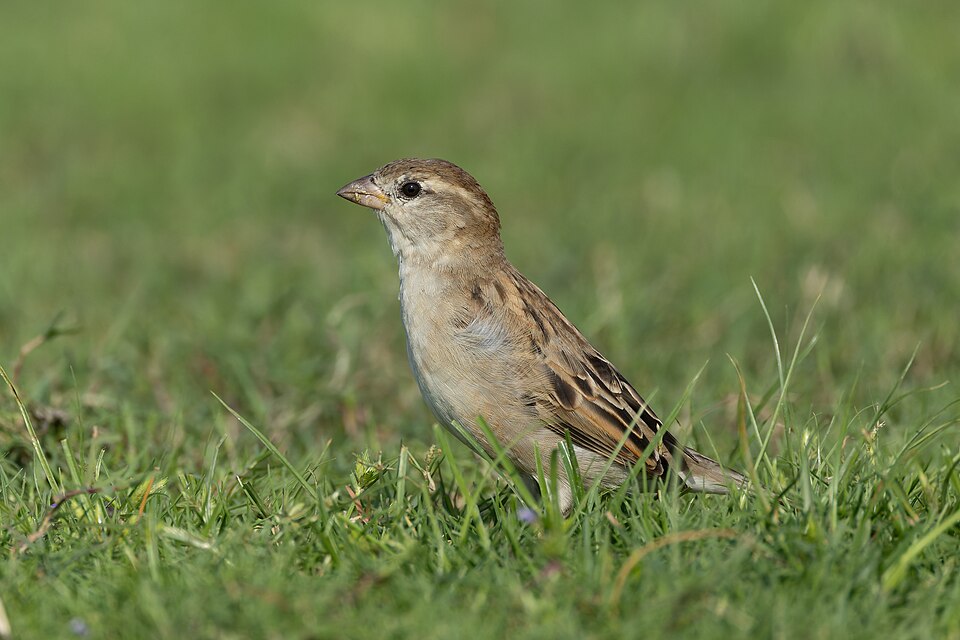
House Sparrow (Passer domesticus) House Sparrow
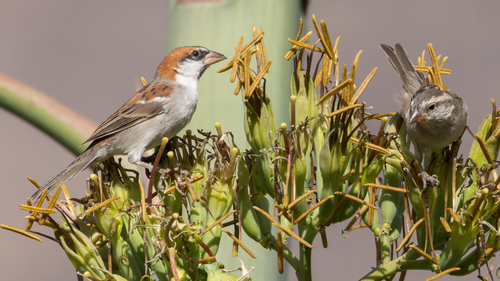
Cape Verde Sparrow (Passer iagoensis) Cape Verde Sparrow

Media

Loading…

In short

The most reliable field mark between House Sparrow and Cape Verde (Iago) Sparrow is the supercilium (eyebrow stripe) on females and juveniles: Cape Verde Sparrow shows a much more prominent and pale supercilium, while House Sparrow females and young have only a faint or poorly defined one. Males are trickier, but Cape Verde Sparrow males have a richer cinnamon color above the eye and a smaller, less extensive black bib than House Sparrow males. House Sparrow is noticeably larger and bulkier, with a stouter bill. Juveniles of both species resemble their respective females, but the Cape Verde Sparrow's supercilium remains a key distinction. In flight or perched, structure and size can help, but focus on head pattern for the most consistent separation.

Identification tips

  1. Supercilium (eyebrow stripe): On females and juveniles, Cape Verde Sparrow has a broad, pale, and obvious supercilium, while House Sparrow's is faint or poorly defined. This is the single most reliable mark for non-males.
  2. Male head pattern: House Sparrow males have a bold black bib, grey crown, and white cheek; Cape Verde Sparrow males have a smaller black bib, black or greyish-black crown and eyestripe, grey nape, and rich cinnamon above the eye. The cinnamon color above the eye is unique to Cape Verde Sparrow.
  3. Bib size: The black throat bib is much larger and bolder in House Sparrow males, while it is smaller and less extensive in Cape Verde Sparrow males.
  4. Cheek color: House Sparrow males have a white cheek, while Cape Verde Sparrow males have a pale grey cheek and more rufous on the sides of the head.
  5. Upperparts: Both species are brown and streaked above, but Cape Verde Sparrow males have white and brown scapulars and more rufous on the head sides.
  6. Juvenile plumage: Juvenile House Sparrows are deeper brown below and scruffier, but this is subtle; focus on the supercilium for separation. Juvenile Cape Verde Sparrow males show chestnut tones and a trace of a black bib early on.
  7. Bill shape: House Sparrow has a stouter, more conical bill, especially noticeable in adults.
  8. Size and structure: House Sparrow is larger, bulkier, and more robust, with a fuller chest and larger head. Cape Verde Sparrow is smaller and more slender. Use this only when you have a direct comparison or experience with both.
  9. Habitat: In Cape Verde, Cape Verde Sparrow is more likely in wild or rural habitats, House Sparrow in dense settlements. Outside Cape Verde, House Sparrow is the default.
  10. Flight views: No distinctive wing or tail pattern is described for either species, so rely on head pattern and structure in flight.
  11. Sexing juveniles: Both species' juveniles resemble their respective females, but sexing by plumage is unreliable, especially in House Sparrow.
  12. Geographic context: Cape Verde Sparrow is endemic to Cape Verde; House Sparrow is cosmopolitan. Location is a strong clue.
  13. Plumage contrast: House Sparrow is generally more contrasting and boldly marked, especially in males.
  14. Vocalizations: Calls are similar and not reliably separable in the field based on available descriptions.
  15. Seasonal variation: Both species show some seasonal molt, but no diagnostic seasonal marks are described; focus on structural and head pattern differences year-round.

Size

House Sparrow is distinctly larger and heavier (about 16 cm long, 30.5 g) compared to Cape Verde Sparrow (12.5–13 cm, no mass given but clearly smaller). House Sparrow appears more robust, with a fuller chest, larger rounded head, and a stouter, conical bill. Cape Verde Sparrow is more petite and slighter overall, with a shorter wing and tail. When seen side-by-side, the difference in bulk and length is obvious, but beware of lone birds where size can be deceptive without direct comparison.

Plumage

Juveniles and females are best separated by the supercilium: Cape Verde Sparrow of both ages shows a broad, pale, and obvious eyebrow stripe, while House Sparrow's is faint and less defined. Both species' females and young are brown above and greyish below, but Cape Verde Sparrow is generally duller and greyer underneath, with more black streaking above. Juvenile House Sparrows are deeper brown below and have scruffier, looser plumage, but this is subtle. Males of both species have black on the crown and face, but House Sparrow males have a much larger, bolder black bib, a grey crown, and a white cheek, while Cape Verde Sparrow males have a smaller black bib, a black or greyish-black crown and eyestripe, a grey nape, and rich cinnamon above the eye. The Cape Verde Sparrow male's scapulars are white and brown, and the sides of the head are more rufous. In all ages, House Sparrow is more contrasting and boldly marked, especially in the head pattern.

Behaviour

Both species are typical sparrows in behavior, often found in flocks and foraging on the ground. House Sparrow is more likely to be seen in direct association with people, buildings, and dense settlements, while Cape Verde Sparrow is more common in natural or rural habitats away from dense human habitation. No major behavioral difference is diagnostic in the field, but context can help if both species are possible.

Habitat

House Sparrow is cosmopolitan and strongly associated with human settlements, often found in cities, towns, and farms worldwide. Cape Verde Sparrow is endemic to the Cape Verde Islands and occurs in most available habitats there, such as lava plains, rocky hills, and gorges, but avoids the densest settlements where House Sparrow may occur (if present). If you are outside Cape Verde, you are almost certainly seeing House Sparrow. Within Cape Verde, habitat context can help: Cape Verde Sparrow is more likely in wild or rural areas, while House Sparrow prefers denser, built-up zones.

Voice

Both species have typical sparrow chirps. Cape Verde Sparrow's male call is described as 'twangy' or 'chew-weep', while the female's is a more sibilant 'chisk.' House Sparrow's calls are not described in detail here, but are similar. Song and alarm calls are not reliably separable in the field based on these notes.

Submit a better description

Use the same sections as the comparison. Your text is published immediately.

The most reliable field mark between House Sparrow and Cape Verde (Iago) Sparrow is the supercilium (eyebrow stripe) on females and juveniles: Cape Verde Sparrow shows a much more prominent and pale supercilium, while House Sparrow females and young have only a faint or poorly defined one. Males are trickier, but Cape Verde Sparrow males have a richer cinnamon color above the eye and a smaller, less extensive black bib than House Sparrow males. House Sparrow is noticeably larger and bulkier, with a stouter bill. Juveniles of both species resemble their respective females, but the Cape Verde Sparrow's supercilium remains a key distinction. In flight or perched, structure and size can help, but focus on head pattern for the most consistent separation.

  1. Supercilium (eyebrow stripe): On females and juveniles, Cape Verde Sparrow has a broad, pale, and obvious supercilium, while House Sparrow's is faint or poorly defined. This is the single most reliable mark for non-males.
  2. Male head pattern: House Sparrow males have a bold black bib, grey crown, and white cheek; Cape Verde Sparrow males have a smaller black bib, black or greyish-black crown and eyestripe, grey nape, and rich cinnamon above the eye. The cinnamon color above the eye is unique to Cape Verde Sparrow.
  3. Bib size: The black throat bib is much larger and bolder in House Sparrow males, while it is smaller and less extensive in Cape Verde Sparrow males.
  4. Cheek color: House Sparrow males have a white cheek, while Cape Verde Sparrow males have a pale grey cheek and more rufous on the sides of the head.
  5. Upperparts: Both species are brown and streaked above, but Cape Verde Sparrow males have white and brown scapulars and more rufous on the head sides.
  6. Juvenile plumage: Juvenile House Sparrows are deeper brown below and scruffier, but this is subtle; focus on the supercilium for separation. Juvenile Cape Verde Sparrow males show chestnut tones and a trace of a black bib early on.
  7. Bill shape: House Sparrow has a stouter, more conical bill, especially noticeable in adults.
  8. Size and structure: House Sparrow is larger, bulkier, and more robust, with a fuller chest and larger head. Cape Verde Sparrow is smaller and more slender. Use this only when you have a direct comparison or experience with both.
  9. Habitat: In Cape Verde, Cape Verde Sparrow is more likely in wild or rural habitats, House Sparrow in dense settlements. Outside Cape Verde, House Sparrow is the default.
  10. Flight views: No distinctive wing or tail pattern is described for either species, so rely on head pattern and structure in flight.
  11. Sexing juveniles: Both species' juveniles resemble their respective females, but sexing by plumage is unreliable, especially in House Sparrow.
  12. Geographic context: Cape Verde Sparrow is endemic to Cape Verde; House Sparrow is cosmopolitan. Location is a strong clue.
  13. Plumage contrast: House Sparrow is generally more contrasting and boldly marked, especially in males.
  14. Vocalizations: Calls are similar and not reliably separable in the field based on available descriptions.
  15. Seasonal variation: Both species show some seasonal molt, but no diagnostic seasonal marks are described; focus on structural and head pattern differences year-round.

House Sparrow is distinctly larger and heavier (about 16 cm long, 30.5 g) compared to Cape Verde Sparrow (12.5–13 cm, no mass given but clearly smaller). House Sparrow appears more robust, with a fuller chest, larger rounded head, and a stouter, conical bill. Cape Verde Sparrow is more petite and slighter overall, with a shorter wing and tail. When seen side-by-side, the difference in bulk and length is obvious, but beware of lone birds where size can be deceptive without direct comparison.

Juveniles and females are best separated by the supercilium: Cape Verde Sparrow of both ages shows a broad, pale, and obvious eyebrow stripe, while House Sparrow's is faint and less defined. Both species' females and young are brown above and greyish below, but Cape Verde Sparrow is generally duller and greyer underneath, with more black streaking above. Juvenile House Sparrows are deeper brown below and have scruffier, looser plumage, but this is subtle. Males of both species have black on the crown and face, but House Sparrow males have a much larger, bolder black bib, a grey crown, and a white cheek, while Cape Verde Sparrow males have a smaller black bib, a black or greyish-black crown and eyestripe, a grey nape, and rich cinnamon above the eye. The Cape Verde Sparrow male's scapulars are white and brown, and the sides of the head are more rufous. In all ages, House Sparrow is more contrasting and boldly marked, especially in the head pattern.

Both species are typical sparrows in behavior, often found in flocks and foraging on the ground. House Sparrow is more likely to be seen in direct association with people, buildings, and dense settlements, while Cape Verde Sparrow is more common in natural or rural habitats away from dense human habitation. No major behavioral difference is diagnostic in the field, but context can help if both species are possible.

House Sparrow is cosmopolitan and strongly associated with human settlements, often found in cities, towns, and farms worldwide. Cape Verde Sparrow is endemic to the Cape Verde Islands and occurs in most available habitats there, such as lava plains, rocky hills, and gorges, but avoids the densest settlements where House Sparrow may occur (if present). If you are outside Cape Verde, you are almost certainly seeing House Sparrow. Within Cape Verde, habitat context can help: Cape Verde Sparrow is more likely in wild or rural areas, while House Sparrow prefers denser, built-up zones.

Both species have typical sparrow chirps. Cape Verde Sparrow's male call is described as 'twangy' or 'chew-weep', while the female's is a more sibilant 'chisk.' House Sparrow's calls are not described in detail here, but are similar. Song and alarm calls are not reliably separable in the field based on these notes.

Discard your changes?

You have unsaved edits. If you leave now, those changes will be lost.

House Sparrow · Cape Verde Sparrow · My Tricky Birds