

Motmot

Harlequin Quail vs Swainson's Spurfowl

Coturnix delegorguei versus Pternistis swainsonii

Play a quiz with Harlequin Quail and Swainson's Spurfowl
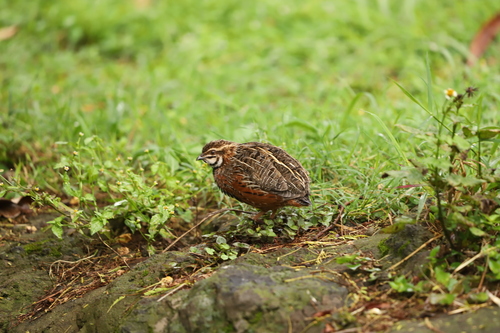
Harlequin Quail (Coturnix delegorguei) Harlequin Quail
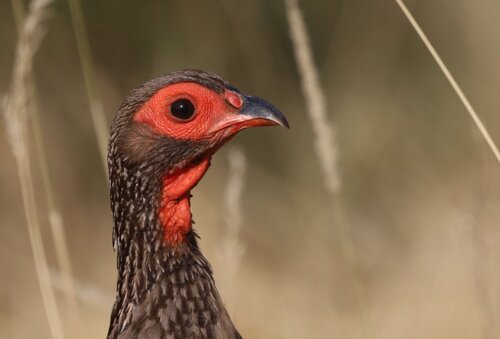
Swainson's Spurfowl (Pternistis swainsonii) Swainson's Spurfowl

Media

Loading…

In short

The most reliable way to separate Harlequin Quail from Swainson's Spurfowl is by overall size and structure: Harlequin Quail is a small, compact gamebird, while Swainson's Spurfowl is much larger and heavier-bodied. If you see the birds in flight or on the ground, note the quail's short, rounded wings and dumpy profile compared to the spurfowl's bigger, longer-legged, and more upright stance. Plumage differences are less well documented in these notes, but structure and bulk are clear in the field. Both species are ground-dwelling African gamebirds, so confusion is most likely when only brief views are obtained.

Identification tips

  1. Size is the quickest check: Harlequin Quail is much smaller and more compact than Swainson's Spurfowl. If the bird looks pigeon-sized or smaller, it's likely a quail; if it's chicken-sized, it's a spurfowl.
  2. Structure in profile: Quail are dumpy, short-necked, and short-tailed, with a rounded body. Spurfowl are longer-legged, longer-necked, and stand more upright, with a heavier, bulkier look.
  3. Flight style: Harlequin Quail flushes with a rapid, whirring flight, hugging the ground and dropping quickly. Swainson's Spurfowl takes off more heavily, with slower wingbeats and may fly up to perch in low trees or bushes.
  4. Leg length: Spurfowl have noticeably longer legs, often visible as they walk or run; quail legs are short and usually hidden by body feathers.
  5. Bill shape: Both have short, strong bills, but the spurfowl's is proportionally larger and more robust, suited to a wider diet.
  6. Group size: Harlequin Quail are usually seen singly or in small coveys; Swainson's Spurfowl may be in pairs or small family groups, sometimes more conspicuous.
  7. Habitat context: If you are in open grassland with dense cover, quail is more likely; in bushy, open woodland or near cultivation, spurfowl is more probable.
  8. Behavior when disturbed: Quail freeze or crouch, then flush low and fast; spurfowl may run, then fly up with a noisy takeoff, sometimes perching visibly.
  9. Plumage pattern: If seen well, Harlequin Quail may show more intricate patterning, but this is not always visible or reliable from a distance.
  10. Vocalizations: Not documented in these notes, so do not rely on calls for separation here.
  11. Season and sex: No seasonal or sexual dimorphism details are provided in these notes, so do not use these as primary marks.
  12. Common pitfalls: At a distance or in poor light, both can appear as brown, ground-dwelling birds—use size and jizz, not color, for quick separation.
  13. Local abundance: Both are native to sub-Saharan Africa, but Swainson's Spurfowl is more widespread in southern Africa and may be more likely near human-modified habitats.
  14. Check for spurs: Spurfowl (as the name suggests) may show a spur on the leg, but this is rarely visible in the field and not a primary mark.
  15. If in doubt: Always try to get a sense of relative size and structure before relying on plumage or habitat alone.

Size

Harlequin Quail is much smaller, with a body mass of about 75g [wikidata], while Swainson's Spurfowl is substantially larger and bulkier (no mass given, but all spurfowls are much heavier than quails). The quail is a compact, rounded bird; the spurfowl is robust, with a longer neck and legs, and a heavier build. Even at a distance, the size gap is usually obvious if both are seen together or with a familiar reference.

Plumage

No age-specific or flight plumage details are provided in the notes for either species. Therefore, plumage is not the most reliable field mark in this comparison. Both species are generally brownish gamebirds, but Swainson's Spurfowl typically shows a more uniform, darker appearance with less patterning than the intricately marked Harlequin Quail. However, without detailed descriptions of wing or juvenile patterns, focus on structure and size for identification.

Behaviour

Both species are terrestrial and prefer to walk or run rather than fly when disturbed. Harlequin Quail tends to flush low and fast, flying only short distances with rapid wingbeats before dropping back into cover. Swainson's Spurfowl is more likely to be seen walking in the open, often in pairs or small groups, and when flushed, flies with slower, more labored wingbeats and may perch in low trees or bushes. The spurfowl's behavior is generally bolder and more conspicuous than the quail's secretive habits.

Habitat

Both species inhabit open country in sub-Saharan Africa, but Harlequin Quail prefers grassy fields and savannas with dense ground cover, while Swainson's Spurfowl is more often found in open woodlands, agricultural areas, and bushy grasslands. The spurfowl is more tolerant of disturbed habitats and may be seen near human habitation, whereas the quail is more strictly tied to grassland and avoids open, exposed areas.

Submit a better description

Use the same sections as the comparison. Your text is published immediately.

The most reliable way to separate Harlequin Quail from Swainson's Spurfowl is by overall size and structure: Harlequin Quail is a small, compact gamebird, while Swainson's Spurfowl is much larger and heavier-bodied. If you see the birds in flight or on the ground, note the quail's short, rounded wings and dumpy profile compared to the spurfowl's bigger, longer-legged, and more upright stance. Plumage differences are less well documented in these notes, but structure and bulk are clear in the field. Both species are ground-dwelling African gamebirds, so confusion is most likely when only brief views are obtained.

  1. Size is the quickest check: Harlequin Quail is much smaller and more compact than Swainson's Spurfowl. If the bird looks pigeon-sized or smaller, it's likely a quail; if it's chicken-sized, it's a spurfowl.
  2. Structure in profile: Quail are dumpy, short-necked, and short-tailed, with a rounded body. Spurfowl are longer-legged, longer-necked, and stand more upright, with a heavier, bulkier look.
  3. Flight style: Harlequin Quail flushes with a rapid, whirring flight, hugging the ground and dropping quickly. Swainson's Spurfowl takes off more heavily, with slower wingbeats and may fly up to perch in low trees or bushes.
  4. Leg length: Spurfowl have noticeably longer legs, often visible as they walk or run; quail legs are short and usually hidden by body feathers.
  5. Bill shape: Both have short, strong bills, but the spurfowl's is proportionally larger and more robust, suited to a wider diet.
  6. Group size: Harlequin Quail are usually seen singly or in small coveys; Swainson's Spurfowl may be in pairs or small family groups, sometimes more conspicuous.
  7. Habitat context: If you are in open grassland with dense cover, quail is more likely; in bushy, open woodland or near cultivation, spurfowl is more probable.
  8. Behavior when disturbed: Quail freeze or crouch, then flush low and fast; spurfowl may run, then fly up with a noisy takeoff, sometimes perching visibly.
  9. Plumage pattern: If seen well, Harlequin Quail may show more intricate patterning, but this is not always visible or reliable from a distance.
  10. Vocalizations: Not documented in these notes, so do not rely on calls for separation here.
  11. Season and sex: No seasonal or sexual dimorphism details are provided in these notes, so do not use these as primary marks.
  12. Common pitfalls: At a distance or in poor light, both can appear as brown, ground-dwelling birds—use size and jizz, not color, for quick separation.
  13. Local abundance: Both are native to sub-Saharan Africa, but Swainson's Spurfowl is more widespread in southern Africa and may be more likely near human-modified habitats.
  14. Check for spurs: Spurfowl (as the name suggests) may show a spur on the leg, but this is rarely visible in the field and not a primary mark.
  15. If in doubt: Always try to get a sense of relative size and structure before relying on plumage or habitat alone.

Harlequin Quail is much smaller, with a body mass of about 75g [wikidata], while Swainson's Spurfowl is substantially larger and bulkier (no mass given, but all spurfowls are much heavier than quails). The quail is a compact, rounded bird; the spurfowl is robust, with a longer neck and legs, and a heavier build. Even at a distance, the size gap is usually obvious if both are seen together or with a familiar reference.

No age-specific or flight plumage details are provided in the notes for either species. Therefore, plumage is not the most reliable field mark in this comparison. Both species are generally brownish gamebirds, but Swainson's Spurfowl typically shows a more uniform, darker appearance with less patterning than the intricately marked Harlequin Quail. However, without detailed descriptions of wing or juvenile patterns, focus on structure and size for identification.

Both species are terrestrial and prefer to walk or run rather than fly when disturbed. Harlequin Quail tends to flush low and fast, flying only short distances with rapid wingbeats before dropping back into cover. Swainson's Spurfowl is more likely to be seen walking in the open, often in pairs or small groups, and when flushed, flies with slower, more labored wingbeats and may perch in low trees or bushes. The spurfowl's behavior is generally bolder and more conspicuous than the quail's secretive habits.

Both species inhabit open country in sub-Saharan Africa, but Harlequin Quail prefers grassy fields and savannas with dense ground cover, while Swainson's Spurfowl is more often found in open woodlands, agricultural areas, and bushy grasslands. The spurfowl is more tolerant of disturbed habitats and may be seen near human habitation, whereas the quail is more strictly tied to grassland and avoids open, exposed areas.

Discard your changes?

You have unsaved edits. If you leave now, those changes will be lost.

Harlequin Quail · Swainson's Spurfowl · My Tricky Birds