

Greylag Goose vs Greater White-fronted Goose
Anser anser versus Anser albifrons
Play a quiz with Greylag Goose and Greater White-fronted Goose
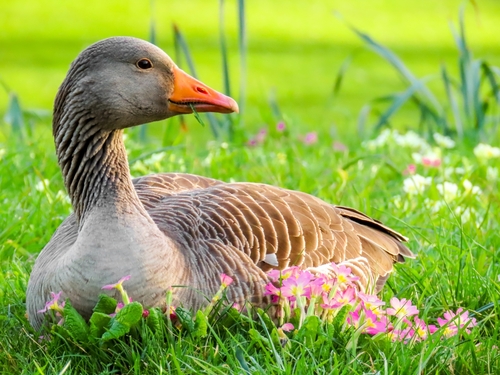 Greylag Goose
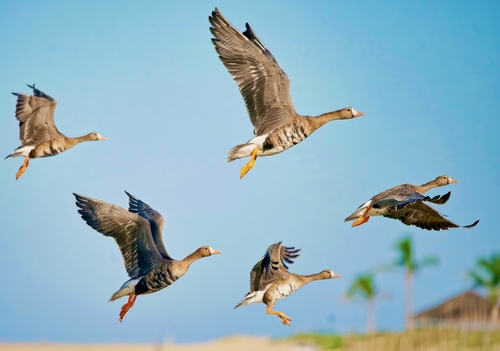 Greater White-fronted Goose
In short
The most reliable field mark to separate Greylag Goose from Greater White-fronted Goose is overall size and structure: Greylag is distinctly larger and bulkier, with a thick neck and large orange bill, while Greater White-fronted is smaller, slimmer, and has a pinkish bill with a white blaze at the bill base. In flight or at rest, Greylag shows a pale grey forewing and rump, whereas adult Greater White-fronted has a white facial blaze and, in most subspecies, bold white wing bars and a darker, more uniform upperwing. Juvenile and immature birds can be tricky, but the Greylag never shows the white face or the same degree of wing barring. Leg color (pink in Greylag, orange in Greater White-fronted) and the extent of belly barring (variable in both, but usually more extensive in Greater White-fronted) can also help. Calls are different, but not always easy to distinguish at distance.
Identification tips
- Size and structure: Greylag is always larger and bulkier, with a thick neck and large head. Greater White-fronted is smaller, slimmer, and more compact; this is especially obvious in mixed flocks.
- Bill color and shape: Greylag has a large, deep orange bill; Greater White-fronted has a shorter, pinkish bill (sometimes orange-yellow in Greenland birds), often with a dark nail, and the bill is slimmer in proportion to the head.
- Facial markings: Only Greater White-fronted shows a clear white blaze at the base of the bill (adults and most immatures). Greylag never shows this mark.
- Leg color: Greylag legs are pink; Greater White-fronted legs are orange. This is often visible when birds are standing or walking.
- Neck pattern: Greylag adults show a concertina pattern of feather folds on the neck; Greater White-fronted has a smoother neck without this effect.
- Belly barring: Both species can show black barring on the belly, but it is usually more extensive and bolder in Greater White-fronted. However, this is variable and not always reliable, especially in juveniles.
- Upperwing in flight (adults and older immatures): Greylag shows a pale grey forewing and rump, with light-colored wing coverts contrasting with darker flight feathers. Greater White-fronted (especially A. a. albifrons) shows bold white-tipped coverts forming a wing bar, and the upperwing is darker overall.
- Juvenile/immature confusion: Young Greylag lack both the white facial blaze and the strong wing bars of Greater White-fronted. Juvenile Greater White-fronted may have less distinct belly barring, but usually show at least some white at the bill base and pale fringes on the upperwing coverts.
- Tail pattern: Greater White-fronted has a darker tail with a broad white tip and sides, more pronounced than in Greylag.
- General plumage tone: Greylag is paler grey-brown overall, especially on the forewing and rump; Greater White-fronted is browner, with a more contrasting face and underparts.
- Voice: Greylag's call is deeper and more honking; Greater White-fronted is higher-pitched and yelping. Use with caution unless calls are clear.
- Habitat context: Greylag is more likely in lowland farmland and open wetlands, often in larger, noisier flocks. Greater White-fronted is more migratory and may be found in wilder areas or mixed with other geese.
- Sex and age: Both sexes are similar in each species, but be aware that juveniles are duller and lack some adult marks. Always check for the white facial blaze and wing bars in Greater White-fronted.
- Pitfalls: Don't rely solely on belly barring or bill color, as both can be variable. Always combine several marks, especially in mixed flocks or when viewing immatures.
- Best approach: Start with size and structure, then check for white at the bill base, leg color, and wing pattern. Use voice and habitat as supporting clues.
Size
Greylag Goose is the larger of the two, with an average body mass of about 3465 g and a length of 74–91 cm. Greater White-fronted Goose is smaller, with a length of 64–81 cm and a maximum weight just over 3.3 kg, but typically lighter than Greylag. In the field, Greylag appears bulkier and heavier-bodied, with a thicker neck and larger head, while Greater White-fronted is more slender and compact. When mixed flocks are present, Greylag stands out as the largest Anser species.
Plumage
-
Juveniles/Immatures: Greylag juveniles lack the black belly barring and white facial blaze of Greater White-fronted. Their upperparts are plain grey-brown with pale fringes, but never show the strong white wing bars or facial markings of Greater White-fronted. Juvenile Greater White-fronted may have less distinct belly barring and a duller face, but the white at the bill base is usually visible, and the upperwing coverts often show pale fringes forming wing bars (especially in A. a. albifrons).
-
Adults: Greylag adults have a uniform greyish-brown plumage with a pale grey forewing and rump, orange bill, and pink legs. The neck often shows a concertina pattern of feather folds. Greater White-fronted adults are browner, with a white blaze at the bill base, pinkish bill, orange legs, and bold black belly bars (variable but often extensive). The upperwing in flight shows a dark panel with white-tipped coverts forming a wing bar (especially in European birds). The tail of Greater White-fronted is darker with a broader white tip and sides than Greylag.
Behaviour
Both species are gregarious and often found in flocks, sometimes mixed. Greylag is more likely to be seen in agricultural fields and open wetlands, often grazing in large, noisy groups. Greater White-fronted is also sociable but may be more wary and is often found in slightly smaller, tighter flocks. Both species feed on grasses and crops, but Greylag's larger size gives it a more ponderous gait and slower, heavier flight. Greater White-fronted tends to be more agile and quick in flight.
Habitat
Both species use wetlands, lakes, and flooded fields, but Greylag is more likely to be found in lowland agricultural areas and is often the default large goose in much of Europe. Greater White-fronted is more strictly migratory, breeding farther north and wintering in similar habitats but often in slightly wilder or less disturbed areas. In mixed flocks, Greylag is usually the dominant, larger species.
Voice
Greylag Goose gives a loud, nasal cackling call, "aahng-ung-ung," resembling the honk of domestic geese, and flocks can sound like baying hounds. Greater White-fronted Goose has a higher-pitched, laughing cackle, often described as "he-he," with a distinct break between notes. While both are noisy, the Greylag's voice is deeper and more resonant, while Greater White-fronted is sharper and more yelping. Calls can be useful but are best used in combination with visual marks.
Greylag Goose · Greater White-fronted Goose · My Tricky Birds