

Oca selvatica vs Oca lombardella
Anser anser contro Anser albifrons
Fai un quiz con Oca selvatica e Oca lombardella
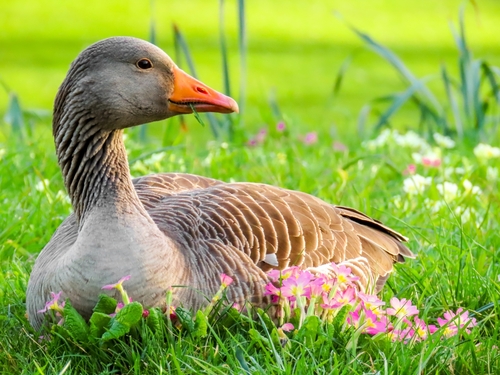 Oca selvatica
 Oca lombardella
In breve
Il segno distintivo più affidabile per separare l'Oca selvatica dall'Oca lombardella è la dimensione e la struttura complessive: l'Oca selvatica è decisamente più grande e massiccia, con un collo spesso e un grande becco arancione, mentre l'Oca lombardella è più piccola, snella e ha un becco rosato con una macchia bianca alla base del becco. In volo o a riposo, l'Oca selvatica mostra un'ala anteriore e un'area caudale grigio chiaro, mentre l'Oca lombardella adulta ha una macchia facciale bianca e, nella maggior parte delle sottospecie, barre bianche audaci sulle ali e un'ala superiore più scura e uniforme. Gli uccelli giovani e immaturi possono essere difficili da distinguere, ma l'Oca selvatica non mostra mai il volto bianco o lo stesso grado di barre sulle ali. Il colore delle zampe (rosa nell'Oca selvatica, arancione nell'Oca lombardella) e l'estensione delle barre sul ventre (variabile in entrambi, ma di solito più estesa nell'Oca lombardella) possono anche aiutare. I richiami sono diversi, ma non sempre facili da distinguere a distanza.
Consigli di identificazione
- Dimensione e struttura: L'Oca selvatica è sempre più grande e massiccia, con un collo spesso e una grande testa. L'Oca lombardella è più piccola, snella e più compatta; questo è particolarmente evidente nei gruppi misti.
- Colore e forma del becco: L'Oca selvatica ha un grande becco arancione profondo; l'Oca lombardella ha un becco più corto e rosato (a volte arancio-giallo negli uccelli della Groenlandia), spesso con un'unghia scura, e il becco è più snello in proporzione alla testa.
- Marcature facciali: Solo l'Oca lombardella mostra una chiara macchia bianca alla base del becco (adulti e la maggior parte degli immaturi). L'Oca selvatica non mostra mai questo segno.
- Colore delle zampe: Le zampe dell'Oca selvatica sono rosa; le zampe dell'Oca lombardella sono arancioni. Questo è spesso visibile quando gli uccelli sono in piedi o camminano.
- Schema del collo: Gli adulti dell'Oca selvatica mostrano un modello a fisarmonica di pieghe di piume sul collo; l'Oca lombardella ha un collo più liscio senza questo effetto.
- Barre sul ventre: Entrambe le specie possono mostrare barre nere sul ventre, ma di solito sono più estese e audaci nell'Oca lombardella. Tuttavia, questo è variabile e non sempre affidabile, specialmente negli uccelli giovani.
- Ala superiore in volo (adulti e immaturi più grandi): L'Oca selvatica mostra un'ala anteriore e un'area caudale grigio chiaro, con copritrici delle ali di colore chiaro che contrastano con le piume di volo più scure. L'Oca lombardella (soprattutto A. a. albifrons) mostra copritrici audaci con punte bianche che formano una barra alare, e l'ala superiore è più scura nel complesso.
- Confusione tra giovani/immaturi: I giovani dell'Oca selvatica mancano sia della macchia facciale bianca che delle forti barre sulle ali dell'Oca lombardella. Gli immaturi dell'Oca lombardella possono avere barre sul ventre meno distinte, ma di solito mostrano almeno un po' di bianco alla base del becco e frange chiare sulle copritrici delle ali superiori.
- Schema della coda: L'Oca lombardella ha una coda più scura con una punta e lati bianchi più ampi, più pronunciati rispetto all'Oca selvatica.
- Tono generale del piumaggio: L'Oca selvatica è di un grigio-marrone più chiaro nel complesso, specialmente sull'ala anteriore e sull'area caudale; l'Oca lombardella è più marrone, con un volto e parti inferiori più contrastanti.
- Voce: Il richiamo dell'Oca selvatica è più profondo e più simile a un honk; l'Oca lombardella è di tono più acuto e abbaiante. Usare con cautela a meno che i richiami non siano chiari.
- Contesto dell'habitat: L'Oca selvatica è più probabile che si trovi in terreni agricoli di pianura e in zone umide aperte, spesso in gruppi più grandi e rumorosi. L'Oca lombardella è più migratoria e può essere trovata in aree più selvagge o mescolata con altre oche.
- Sesso e età: Entrambi i sessi sono simili in ciascuna specie, ma si deve essere consapevoli che i giovani sono più opachi e mancano di alcuni segni degli adulti. Controllare sempre la macchia facciale bianca e le barre sulle ali nell'Oca lombardella.
- Trappole: Non fare affidamento solo sulle barre sul ventre o sul colore del becco, poiché entrambi possono essere variabili. Combinare sempre diversi segni, specialmente in gruppi misti o quando si osservano immaturi.
- Miglior approccio: Iniziare con dimensione e struttura, poi controllare la presenza di bianco alla base del becco, il colore delle zampe e il modello delle ali. Usare la voce e l'habitat come indizi di supporto.
Taglia
L'Oca selvatica è la più grande delle due, con una massa corporea media di circa 3465 g e una lunghezza di 74–91 cm. L'Oca lombardella è più piccola, con una lunghezza di 64–81 cm e un peso massimo poco superiore ai 3,3 kg, ma tipicamente più leggera dell'Oca selvatica. Sul campo, l'Oca selvatica appare più massiccia e pesante, con un collo più spesso e una testa più grande, mentre l'Oca lombardella è più snella e compatta. Quando sono presenti gruppi misti, l'Oca selvatica si distingue come la più grande delle specie di Anser.
Piumaggio
-
Giovani/Immaturi: I giovani dell'Oca selvatica mancano delle barre nere sul ventre e della macchia facciale bianca dell'Oca lombardella. Le loro parti superiori sono di un grigio-marrone uniforme con frange chiare, ma non mostrano mai le forti barre bianche sulle ali o le marcature facciali dell'Oca lombardella. Gli immaturi dell'Oca lombardella possono avere barre sul ventre meno distinte e un volto più opaco, ma il bianco alla base del becco è di solito visibile, e le copritrici delle ali superiori mostrano spesso frange chiare che formano barre alari (soprattutto in A. a. albifrons).
-
Adulti: Gli adulti dell'Oca selvatica hanno un piumaggio uniforme grigio-marrone con un'ala anteriore e un'area caudale grigio chiaro, becco arancione e zampe rosa. Il collo mostra spesso un modello a fisarmonica di pieghe di piume. Gli adulti dell'Oca lombardella sono più marroni, con una macchia bianca alla base del becco, becco rosato, zampe arancioni e barre nere audaci sul ventre (variabili ma spesso estese). L'ala superiore in volo mostra un pannello scuro con copritrici bianche che formano una barra alare (soprattutto negli uccelli europei). La coda dell'Oca lombardella è più scura con una punta e lati bianchi più ampi rispetto all'Oca selvatica.
Comportamento
Entrambe le specie sono gregarie e spesso si trovano in gruppi, a volte misti. L'Oca selvatica è più probabile che venga vista in campi agricoli e in zone umide aperte, spesso pascolando in grandi gruppi rumorosi. L'Oca lombardella è anche socievole ma può essere più diffidente e si trova spesso in gruppi leggermente più piccoli e compatti. Entrambe le specie si nutrono di erba e colture, ma la maggiore dimensione dell'Oca selvatica le conferisce un passo più pesante e un volo più lento e pesante. L'Oca lombardella tende ad essere più agile e veloce in volo.
Habitat
Entrambe le specie utilizzano zone umide, laghi e campi allagati, ma l'Oca selvatica è più probabile che si trovi in aree agricole di pianura ed è spesso l'oca grande di default in gran parte dell'Europa. L'Oca lombardella è più strettamente migratoria, nidificando più a nord e svernando in habitat simili ma spesso in aree leggermente più selvagge o meno disturbate. Nei gruppi misti, l'Oca selvatica è di solito la specie dominante e più grande.
Voce
L'Oca selvatica emette un forte richiamo nasale, "aahng-ung-ung," che somiglia all'honk delle oche domestiche, e i gruppi possono sembrare come cani da caccia. L'Oca lombardella ha un cackle più acuto e ridacchiante, spesso descritto come "he-he," con una pausa distinta tra le note. Anche se entrambe sono rumorose, la voce dell'Oca selvatica è più profonda e più risonante, mentre l'Oca lombardella è più acuta e abbaiante. I richiami possono essere utili ma è meglio usarli in combinazione con segni visivi.