

Motmot

Grey-tailed Tattler vs Wandering Tattler

Tringa brevipes versus Tringa incana

Play a quiz with Grey-tailed Tattler and Wandering Tattler
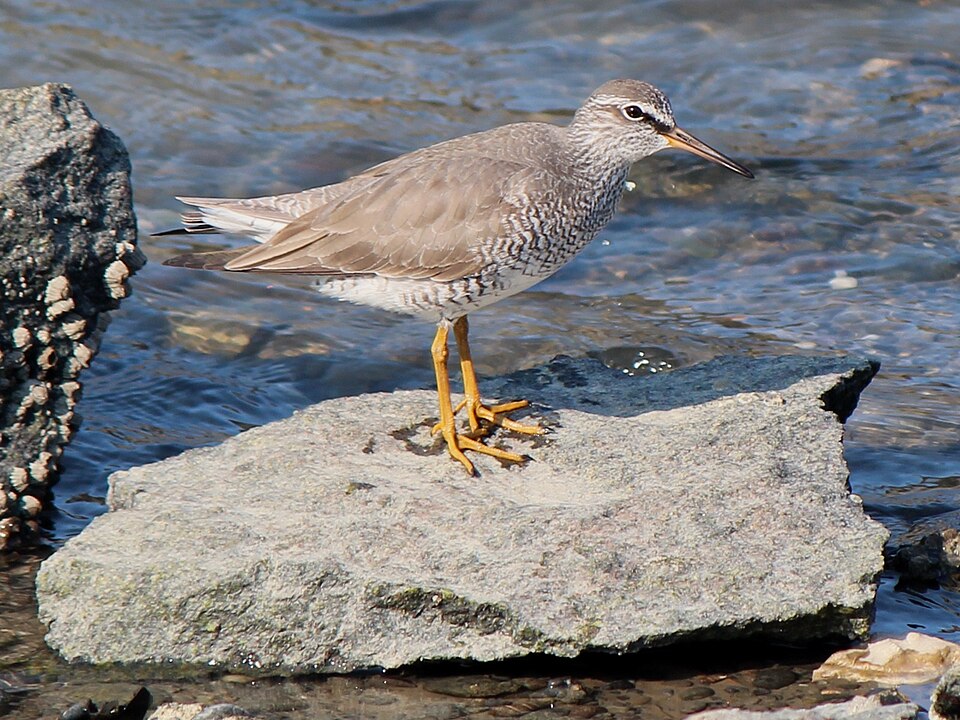
Grey-tailed Tattler (Tringa brevipes) Grey-tailed Tattler
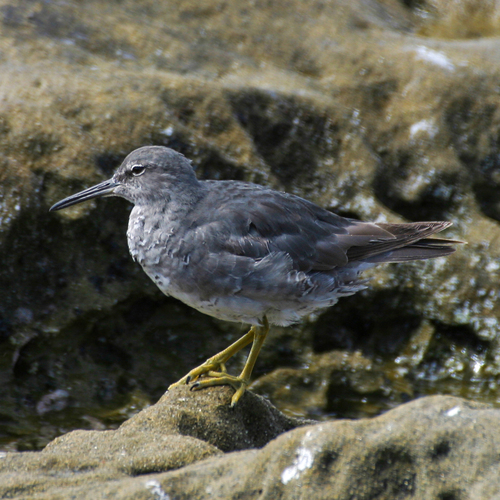
Wandering Tattler (Tringa incana) Wandering Tattler

Media

Loading…

In short

Grey-tailed Tattler and Wandering Tattler are extremely similar shorebirds, best separated by their calls in the field: Grey-tailed gives a clear, disyllabic whistle, while Wandering produces a rapid, rippling trill. Both species share plain grey upperparts and a scaly breast pattern in breeding plumage, with no strong differences in juvenile or immature wing pattern described in the sources. Structural and plumage differences are subtle and unreliable at most ages, so voice is the most practical field mark. Size and shape overlap heavily, but Wandering Tattler averages slightly heavier. In silent birds, identification is challenging and often not possible without close study or call.

Identification tips

  1. Call is key: If you hear a clear, two-note whistle, suspect Grey-tailed; if you hear a rapid, rippling trill or staccato burst, it's Wandering. This works for all ages and seasons.
  2. No distinctive juvenile/immature wing pattern: Both species lack strong upperwing markings in flight, so do not rely on wing panels, trailing edges, or 'W' patterns to separate them at any age.
  3. Breast and belly pattern: In breeding plumage, both show scaly or barred markings extending onto the belly. Wandering Tattler may appear more heavily barred below, but this is not always reliable, and Grey-tailed can be similar.
  4. Supercilium (eyebrow): Both species have a fairly prominent but not striking supercilium. It is not a strong separator, but in some Grey-tailed, the supercilium may look a bit weaker.
  5. Bill color and shape: Grey-tailed has a bill with a pale base and dark tip; Wandering's bill is described as dark grey. This is subtle and not reliable at distance or in poor light.
  6. Leg color: Grey-tailed's legs are short and yellowish; Wandering's are short and dark yellow. This is variable and not a strong field mark, especially in muddy conditions or poor light.
  7. Size and structure: Wandering Tattler averages heavier, but both are similar in length and overall shape. Do not rely on size unless you have a direct comparison.
  8. Underwing and upperpart color: Both have plain, greyish upperparts and underwings; no strong contrast here.
  9. Habitat overlap: Both occur on similar coasts and riverbeds; do not use habitat alone for identification unless you are outside the normal range of one species.
  10. Behavior: Both forage in similar ways and may perch in trees; behavior is not a separator.
  11. Flock size: Both are usually solitary or in small groups, except at roosts; flocking is not a separator.
  12. Geographic context: If you are in Australia or Southeast Asia in winter, Grey-tailed is more likely; in the Pacific islands, Wandering is more likely, but vagrancy occurs.
  13. Sex and age: No plumage differences between sexes; age-related differences are not described as diagnostic.
  14. When silent: If the bird is silent and not in the hand, identification is often not possible. Use context and call whenever possible.
  15. Do not rely on subtle marks: Most field marks (bill, leg color, supercilium) are variable and overlap; only the call is truly diagnostic in the field.

Size

Both species are similar in size and shape, resembling Common Redshank. Wandering Tattler averages heavier (mean adult mass ~108.5g [wikidata]), but this is not a reliable field mark due to overlap and lack of comparative data for Grey-tailed Tattler. Length and wingspan are not distinctly different in the field. Both have stocky bodies, short yellowish to dark yellow legs, and similar bill structure.

Plumage

No distinctive juvenile or immature upperwing pattern is described for either species, and both lack the strong wing markings seen in other Tringa. In all ages, both have plain, greyish upperparts and wings, and a white belly. Breeding adults of both species show a scaly or barred pattern extending from the breast onto the belly, and a fairly prominent but not striking supercilium. Underparts are heavily barred in breeding Wandering Tattler, but Grey-tailed can show similar barring. Face, neck, and underwing are grey in both. The bill is dark with a paler base in Grey-tailed, and dark grey in Wandering, but this is subtle. Leg color is short yellowish (Grey-tailed) vs dark yellow (Wandering), but this is not always reliable. There is no mention of age-specific flight marks or upperwing contrasts that would allow separation of juveniles or immatures.

Behaviour

Both species forage by sight on the ground or in shallow water, picking at invertebrates. They are not highly gregarious, usually seen singly or in small groups except at roosts. Both will perch in trees and may use old nests for breeding. No behavioral trait is diagnostic for separation.

Habitat

Habitat preferences overlap: both breed on stony riverbeds (Grey-tailed in northeast Siberia; Wandering not specified here), and winter on muddy or sandy coasts. Both are migratory, with Grey-tailed wintering from Southeast Asia to Australia and Wandering more widespread in the Pacific. Habitat is not a reliable separator except at the extremes of their ranges.

Voice

This is the single most reliable field mark. Grey-tailed Tattler gives a clear, disyllabic whistle, while Wandering Tattler produces a rapid, rippling trill or staccato call, sometimes with three or four beats per call. When heard well, this difference is diagnostic.

Submit a better description

Use the same sections as the comparison. Your text is published immediately.

Grey-tailed Tattler and Wandering Tattler are extremely similar shorebirds, best separated by their calls in the field: Grey-tailed gives a clear, disyllabic whistle, while Wandering produces a rapid, rippling trill. Both species share plain grey upperparts and a scaly breast pattern in breeding plumage, with no strong differences in juvenile or immature wing pattern described in the sources. Structural and plumage differences are subtle and unreliable at most ages, so voice is the most practical field mark. Size and shape overlap heavily, but Wandering Tattler averages slightly heavier. In silent birds, identification is challenging and often not possible without close study or call.

  1. Call is key: If you hear a clear, two-note whistle, suspect Grey-tailed; if you hear a rapid, rippling trill or staccato burst, it's Wandering. This works for all ages and seasons.
  2. No distinctive juvenile/immature wing pattern: Both species lack strong upperwing markings in flight, so do not rely on wing panels, trailing edges, or 'W' patterns to separate them at any age.
  3. Breast and belly pattern: In breeding plumage, both show scaly or barred markings extending onto the belly. Wandering Tattler may appear more heavily barred below, but this is not always reliable, and Grey-tailed can be similar.
  4. Supercilium (eyebrow): Both species have a fairly prominent but not striking supercilium. It is not a strong separator, but in some Grey-tailed, the supercilium may look a bit weaker.
  5. Bill color and shape: Grey-tailed has a bill with a pale base and dark tip; Wandering's bill is described as dark grey. This is subtle and not reliable at distance or in poor light.
  6. Leg color: Grey-tailed's legs are short and yellowish; Wandering's are short and dark yellow. This is variable and not a strong field mark, especially in muddy conditions or poor light.
  7. Size and structure: Wandering Tattler averages heavier, but both are similar in length and overall shape. Do not rely on size unless you have a direct comparison.
  8. Underwing and upperpart color: Both have plain, greyish upperparts and underwings; no strong contrast here.
  9. Habitat overlap: Both occur on similar coasts and riverbeds; do not use habitat alone for identification unless you are outside the normal range of one species.
  10. Behavior: Both forage in similar ways and may perch in trees; behavior is not a separator.
  11. Flock size: Both are usually solitary or in small groups, except at roosts; flocking is not a separator.
  12. Geographic context: If you are in Australia or Southeast Asia in winter, Grey-tailed is more likely; in the Pacific islands, Wandering is more likely, but vagrancy occurs.
  13. Sex and age: No plumage differences between sexes; age-related differences are not described as diagnostic.
  14. When silent: If the bird is silent and not in the hand, identification is often not possible. Use context and call whenever possible.
  15. Do not rely on subtle marks: Most field marks (bill, leg color, supercilium) are variable and overlap; only the call is truly diagnostic in the field.

Both species are similar in size and shape, resembling Common Redshank. Wandering Tattler averages heavier (mean adult mass ~108.5g [wikidata]), but this is not a reliable field mark due to overlap and lack of comparative data for Grey-tailed Tattler. Length and wingspan are not distinctly different in the field. Both have stocky bodies, short yellowish to dark yellow legs, and similar bill structure.

No distinctive juvenile or immature upperwing pattern is described for either species, and both lack the strong wing markings seen in other Tringa. In all ages, both have plain, greyish upperparts and wings, and a white belly. Breeding adults of both species show a scaly or barred pattern extending from the breast onto the belly, and a fairly prominent but not striking supercilium. Underparts are heavily barred in breeding Wandering Tattler, but Grey-tailed can show similar barring. Face, neck, and underwing are grey in both. The bill is dark with a paler base in Grey-tailed, and dark grey in Wandering, but this is subtle. Leg color is short yellowish (Grey-tailed) vs dark yellow (Wandering), but this is not always reliable. There is no mention of age-specific flight marks or upperwing contrasts that would allow separation of juveniles or immatures.

Both species forage by sight on the ground or in shallow water, picking at invertebrates. They are not highly gregarious, usually seen singly or in small groups except at roosts. Both will perch in trees and may use old nests for breeding. No behavioral trait is diagnostic for separation.

Habitat preferences overlap: both breed on stony riverbeds (Grey-tailed in northeast Siberia; Wandering not specified here), and winter on muddy or sandy coasts. Both are migratory, with Grey-tailed wintering from Southeast Asia to Australia and Wandering more widespread in the Pacific. Habitat is not a reliable separator except at the extremes of their ranges.

This is the single most reliable field mark. Grey-tailed Tattler gives a clear, disyllabic whistle, while Wandering Tattler produces a rapid, rippling trill or staccato call, sometimes with three or four beats per call. When heard well, this difference is diagnostic.

Discard your changes?

You have unsaved edits. If you leave now, those changes will be lost.

Grey-tailed Tattler · Wandering Tattler · My Tricky Birds