

Motmot

Grey-rumped Swift vs Yellow-rumped Cacique

Chaetura cinereiventris versus Cacicus cela

Play a quiz with Grey-rumped Swift and Yellow-rumped Cacique
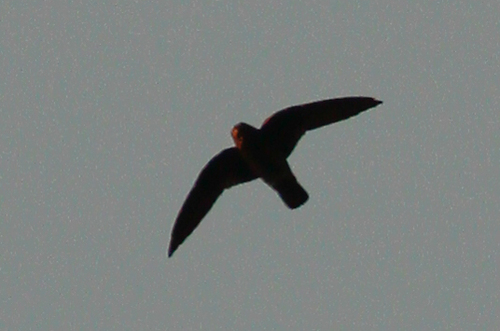
Grey-rumped Swift (Chaetura cinereiventris) Grey-rumped Swift
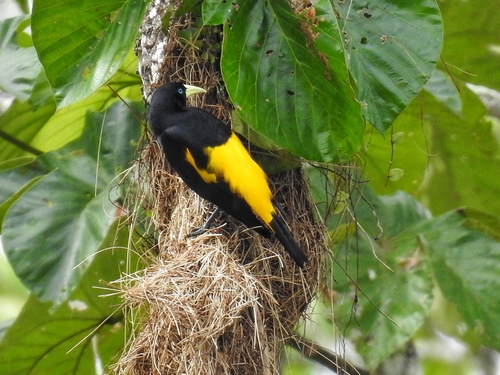
Yellow-rumped Cacique (Cacicus cela) Yellow-rumped Cacique

Media

Loading…

In short

The most reliable field mark for separating Grey-rumped Swift from Yellow-rumped Cacique is overall structure and flight style: the swift is a tiny, compact, sickle-winged aerialist with a short square tail, while the cacique is a much larger, long-tailed songbird with a pointed pale bill and a striking yellow rump and lower belly. In flight, the swift's gray rump is subtle and only contrasts gently with glossy black upperparts, whereas the cacique's yellow rump and lower belly are bold and extensive. Juvenile swifts may show pale fringes on the wings, but never the bright yellow or the long tail of a cacique. If seen perched, the cacique's blue eyes and pale bill are unmistakable; swifts never perch in the open. Vocalizations are also very different, with the swift giving short 'tsip' notes and the cacique producing complex songs and calls.

Identification tips

  1. Size and Structure: Cacique is nearly three times as long and many times heavier than the swift. If you see a small, compact, fast-flying bird, think swift; a large, long-tailed bird is a cacique.
  2. Tail Shape: Grey-rumped Swift has a short, square tail; Yellow-rumped Cacique has a long, straight tail. This is especially obvious in flight.
  3. Bill: Swifts have tiny, barely visible bills; caciques have a long, pointed, pale yellow bill (brownish at base in juveniles). Bill color and length are key if seen perched.
  4. Rump Color: Swift shows a wide gray rump that gently contrasts with black upperparts; cacique has a bright yellow rump and tail base, which is much more conspicuous.
  5. Belly Color: Cacique shows a yellow lower belly; swift is gray below with no yellow at all.
  6. Wing Pattern (Juveniles): Juvenile swifts may show pale fringes on the wing feathers, giving a slightly scaly look, but never any yellow. Juvenile caciques are duller but still have yellow rump and belly.
  7. Eye Color: Adult caciques have blue eyes, a unique feature if seen well; swifts have dark eyes.
  8. Perching Behavior: Swifts are almost never seen perched in the open; caciques perch openly on branches and wires.
  9. Flight Style: Swifts fly rapidly with stiff, sickle-shaped wings and quick, darting movements. Caciques fly with slower, more direct wingbeats and may glide between trees.
  10. Vocalizations: Swifts give simple 'tsip' and burry notes; caciques have complex, musical, and varied songs and calls, often heard from colonies.
  11. Habitat Context: Swifts are seen high in the sky, often in groups; caciques are found in trees, especially near colonies, and often forage in the canopy.
  12. Sex Differences: Cacique males are larger and brighter than females, but both sexes show yellow rump and belly. Swifts show no sexual dimorphism.
  13. Juvenile Pitfalls: Juvenile caciques have dark eyes and a brownish bill base but still show yellow rump/belly. Juvenile swifts have pale wing fringes but never yellow.
  14. Subspecies Variation: Some swift subspecies have paler or darker underparts, but none approach the cacique's yellow. Cacique variation is mainly in tone, not pattern.
  15. Colony Behavior: If you see many birds together at a noisy nest colony in a tree, they're almost certainly caciques, not swifts.

Size

Yellow-rumped Cacique is dramatically larger: males average 28 cm (11 in) and 104 g (3.7 oz), females 23 cm (9.1 in) and 60 g (2.1 oz) [wikipedia]. Grey-rumped Swift is much smaller at about 10.5 cm (4.1 in) and 17 g (0.60 oz) [wikipedia]. The cacique is nearly three times the length and several times the mass of the swift, with a proportionally much longer tail and heavier body. This size gap is obvious even at a distance.

Plumage

Juvenile Grey-rumped Swifts resemble adults but have pale fringes on many wing feathers, which can be visible in good light and may give a slightly scaly look to the upperwing—this is subtle and only seen at close range or in photos. All ages of Grey-rumped Swift show a wide gray rump and uppertail coverts contrasting with glossy black upperparts, but the contrast is gentle, not bold. Underparts are lighter gray, never with any yellow. By contrast, all ages of Yellow-rumped Cacique (including juveniles) show a bright yellow rump, tail base, lower belly, and wing epaulets against otherwise black plumage. Juvenile caciques are duller black, have dark eyes, and a brown bill base, but still show the yellow rump and belly. No swift ever shows yellow in the plumage. In flight, the cacique's yellow rump and belly are obvious, while the swift's gray rump is much less conspicuous.

Behaviour

Grey-rumped Swifts are almost always seen in fast, direct flight high overhead, rarely perching except out of sight in nest cavities. Their flight is rapid, with stiff, sickle-shaped wings and quick, darting movements. Yellow-rumped Caciques are often seen perched in the open, especially near colonies, and fly with slower, more direct wingbeats typical of icterids. Caciques may be seen foraging in trees, displaying, or moving in groups, while swifts are always aerial and never perch visibly. If you see the bird perched on a branch or wire, it is a cacique, not a swift.

Habitat

Both species overlap broadly in northern and central South America and can occur in similar lowland forested areas, but their microhabitat use differs. Grey-rumped Swifts are aerial, foraging high above forests, clearings, and open country, rarely coming low except near nest sites. Yellow-rumped Caciques are found in forest edges, clearings, and near water, often around colonies in tall trees. Caciques are much more likely to be seen in or near trees, especially at nest colonies, while swifts are almost always seen in the open sky.

Voice

Grey-rumped Swift gives a bright, repeated short 'tsip' and a series of 3–4 slightly downslurred burry notes ('trrreeew-trrreeew-trrreeew') [wikipedia]. These calls are simple and high-pitched. Yellow-rumped Cacique produces a complex, varied song with fluting notes, cackles, wheezes, and sometimes mimicry, and colonies are very noisy. The cacique's vocalizations are much more varied, musical, and conspicuous than the swift's simple calls.

Submit a better description

Use the same sections as the comparison. Your text is published immediately.

The most reliable field mark for separating Grey-rumped Swift from Yellow-rumped Cacique is overall structure and flight style: the swift is a tiny, compact, sickle-winged aerialist with a short square tail, while the cacique is a much larger, long-tailed songbird with a pointed pale bill and a striking yellow rump and lower belly. In flight, the swift's gray rump is subtle and only contrasts gently with glossy black upperparts, whereas the cacique's yellow rump and lower belly are bold and extensive. Juvenile swifts may show pale fringes on the wings, but never the bright yellow or the long tail of a cacique. If seen perched, the cacique's blue eyes and pale bill are unmistakable; swifts never perch in the open. Vocalizations are also very different, with the swift giving short 'tsip' notes and the cacique producing complex songs and calls.

  1. Size and Structure: Cacique is nearly three times as long and many times heavier than the swift. If you see a small, compact, fast-flying bird, think swift; a large, long-tailed bird is a cacique.
  2. Tail Shape: Grey-rumped Swift has a short, square tail; Yellow-rumped Cacique has a long, straight tail. This is especially obvious in flight.
  3. Bill: Swifts have tiny, barely visible bills; caciques have a long, pointed, pale yellow bill (brownish at base in juveniles). Bill color and length are key if seen perched.
  4. Rump Color: Swift shows a wide gray rump that gently contrasts with black upperparts; cacique has a bright yellow rump and tail base, which is much more conspicuous.
  5. Belly Color: Cacique shows a yellow lower belly; swift is gray below with no yellow at all.
  6. Wing Pattern (Juveniles): Juvenile swifts may show pale fringes on the wing feathers, giving a slightly scaly look, but never any yellow. Juvenile caciques are duller but still have yellow rump and belly.
  7. Eye Color: Adult caciques have blue eyes, a unique feature if seen well; swifts have dark eyes.
  8. Perching Behavior: Swifts are almost never seen perched in the open; caciques perch openly on branches and wires.
  9. Flight Style: Swifts fly rapidly with stiff, sickle-shaped wings and quick, darting movements. Caciques fly with slower, more direct wingbeats and may glide between trees.
  10. Vocalizations: Swifts give simple 'tsip' and burry notes; caciques have complex, musical, and varied songs and calls, often heard from colonies.
  11. Habitat Context: Swifts are seen high in the sky, often in groups; caciques are found in trees, especially near colonies, and often forage in the canopy.
  12. Sex Differences: Cacique males are larger and brighter than females, but both sexes show yellow rump and belly. Swifts show no sexual dimorphism.
  13. Juvenile Pitfalls: Juvenile caciques have dark eyes and a brownish bill base but still show yellow rump/belly. Juvenile swifts have pale wing fringes but never yellow.
  14. Subspecies Variation: Some swift subspecies have paler or darker underparts, but none approach the cacique's yellow. Cacique variation is mainly in tone, not pattern.
  15. Colony Behavior: If you see many birds together at a noisy nest colony in a tree, they're almost certainly caciques, not swifts.

Yellow-rumped Cacique is dramatically larger: males average 28 cm (11 in) and 104 g (3.7 oz), females 23 cm (9.1 in) and 60 g (2.1 oz) [wikipedia]. Grey-rumped Swift is much smaller at about 10.5 cm (4.1 in) and 17 g (0.60 oz) [wikipedia]. The cacique is nearly three times the length and several times the mass of the swift, with a proportionally much longer tail and heavier body. This size gap is obvious even at a distance.

Juvenile Grey-rumped Swifts resemble adults but have pale fringes on many wing feathers, which can be visible in good light and may give a slightly scaly look to the upperwing—this is subtle and only seen at close range or in photos. All ages of Grey-rumped Swift show a wide gray rump and uppertail coverts contrasting with glossy black upperparts, but the contrast is gentle, not bold. Underparts are lighter gray, never with any yellow. By contrast, all ages of Yellow-rumped Cacique (including juveniles) show a bright yellow rump, tail base, lower belly, and wing epaulets against otherwise black plumage. Juvenile caciques are duller black, have dark eyes, and a brown bill base, but still show the yellow rump and belly. No swift ever shows yellow in the plumage. In flight, the cacique's yellow rump and belly are obvious, while the swift's gray rump is much less conspicuous.

Grey-rumped Swifts are almost always seen in fast, direct flight high overhead, rarely perching except out of sight in nest cavities. Their flight is rapid, with stiff, sickle-shaped wings and quick, darting movements. Yellow-rumped Caciques are often seen perched in the open, especially near colonies, and fly with slower, more direct wingbeats typical of icterids. Caciques may be seen foraging in trees, displaying, or moving in groups, while swifts are always aerial and never perch visibly. If you see the bird perched on a branch or wire, it is a cacique, not a swift.

Both species overlap broadly in northern and central South America and can occur in similar lowland forested areas, but their microhabitat use differs. Grey-rumped Swifts are aerial, foraging high above forests, clearings, and open country, rarely coming low except near nest sites. Yellow-rumped Caciques are found in forest edges, clearings, and near water, often around colonies in tall trees. Caciques are much more likely to be seen in or near trees, especially at nest colonies, while swifts are almost always seen in the open sky.

Grey-rumped Swift gives a bright, repeated short 'tsip' and a series of 3–4 slightly downslurred burry notes ('trrreeew-trrreeew-trrreeew') [wikipedia]. These calls are simple and high-pitched. Yellow-rumped Cacique produces a complex, varied song with fluting notes, cackles, wheezes, and sometimes mimicry, and colonies are very noisy. The cacique's vocalizations are much more varied, musical, and conspicuous than the swift's simple calls.

Discard your changes?

You have unsaved edits. If you leave now, those changes will be lost.

Grey-rumped Swift · Yellow-rumped Cacique · My Tricky Birds