

Motmot

Grey Kingbird vs Bananaquit

Tyrannus dominicensis versus Coereba flaveola

Play a quiz with Grey Kingbird and Bananaquit
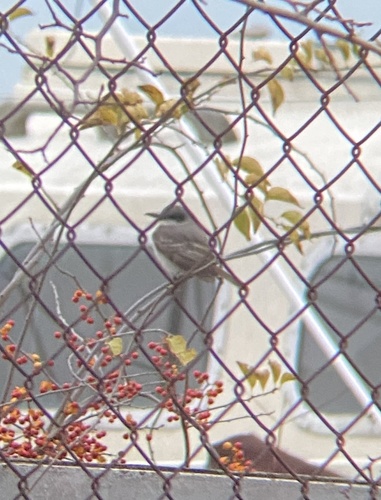
Grey Kingbird (Tyrannus dominicensis) Grey Kingbird
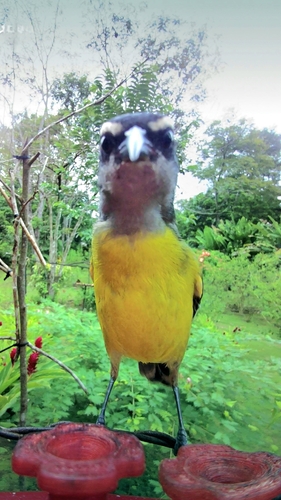
Bananaquit (Coereba flaveola) Bananaquit

Media

Loading…

In short

The most reliable way to separate Grey Kingbird from Bananaquit is by overall size and structure: Grey Kingbird is a large, robust flycatcher with a heavy, straight bill, while Bananaquit is a tiny, active nectar-feeder with a slender, strongly curved bill. Immature Grey Kingbirds may show rufous edges on the wings and tail, but even young birds are much larger and bulkier than any Bananaquit. In flight or perched, note the kingbird's gray upperparts, white underparts, and dark mask versus the bananaquit's dark upperparts, bold white eyestripe, and yellow underparts. Bill shape and feeding behavior are also instantly different in the field.

Identification tips

  1. Size is the fastest separator: Grey Kingbird is about twice as long and many times heavier than Bananaquit. If the bird looks sparrow-sized or smaller, it's not a kingbird.
  2. Bill shape: Grey Kingbird has a thick, straight, dark bill suited for catching insects; Bananaquit has a slender, strongly curved bill adapted for nectar feeding. Bill shape is visible even at a distance.
  3. Wing and tail structure: Kingbird has long, broad wings and a long, straight tail; Bananaquit's wings and tail are short and rounded. In flight, kingbird appears powerful and direct, while bananaquit is fluttery and weak.
  4. Juvenile marks: Young Grey Kingbirds have rufous edges on wing coverts, rump, and tail. Bananaquit juveniles are just duller versions of adults, lacking rufous tones or kingbird-like patterning.
  5. Facial pattern: Grey Kingbird shows a dusky mask through the eye and a plain gray crown (with a hidden yellow crown stripe). Bananaquit always has a bold white eyestripe and blackish crown, giving a striking 'masked' look that is very different from the kingbird's.
  6. Underparts: Kingbird is white below with a grayish chest; Bananaquit has a yellow chest, belly, and rump, sometimes with a white or gray throat depending on subspecies. No kingbird shows yellow underparts.
  7. Upperparts: Kingbird is gray above with brownish wings and tail; Bananaquit is dark gray to blackish above, sometimes nearly black in some island subspecies.
  8. Behavior: Kingbird perches upright on wires or exposed branches, often sallying for insects. Bananaquit is constantly moving, probing flowers, and rarely perches in the open for long.
  9. Feeding: Kingbird catches insects in flight or from perches; Bananaquit feeds on nectar and fruit, often seen at flowers or sugar feeders.
  10. Habitat context: In gardens or near human habitation, Bananaquit is more likely, especially if seen at flowers or feeders. Kingbird prefers open areas and prominent perches.
  11. Aggression: Kingbird may be seen chasing larger birds or aggressively defending territory; Bananaquit is not aggressive toward other birds.
  12. Tail movement: Kingbird may flick or fan its tail when agitated; Bananaquit does not show this behavior.
  13. Voice: If you hear a loud, rolling trill ('pipiri, pipiri'), it's Grey Kingbird. Bananaquit's call is not described here.
  14. Sexes similar: Both species show little sexual dimorphism, so these marks work for both males and females.
  15. Subspecies variation in Bananaquit: Some Bananaquit subspecies have paler throats or more blackish plumage, but all retain the white eyestripe and yellow belly, never matching the kingbird's pattern.

Size

Grey Kingbird is dramatically larger, averaging about 43.8 g in body mass and 23 cm in length [wikidata, wikipedia]. Bananaquit is much smaller, ranging from 5.5 to 19 g and 10–13 cm in length [wikipedia]. Even a juvenile Grey Kingbird dwarfs the largest Bananaquit. The kingbird's bulk, long tail, and heavy bill are obvious at a glance, while Bananaquit is a tiny, delicate bird with a short tail and slender body.

Plumage

Juvenile Grey Kingbirds show rufous edges on the wing coverts, rump, and tail, a feature not present in Bananaquit at any age. Adult Grey Kingbirds are gray above with brownish wings and tail, white underparts, a gray-tinged chest, and a dusky mask through the eye; they have a concealed yellow crown stripe that is rarely visible. Bananaquits, regardless of age, have dark gray to blackish upperparts, a black crown and sides of the head, a prominent white eyestripe, and yellow underparts (chest, belly, and rump). Juvenile Bananaquits are duller, with partially yellow eyebrows and throat, but never show the kingbird's mask or gray/white underpart pattern. Subspecies variation in Bananaquit can affect throat and chest color, but the white eyestripe and yellow belly remain distinctive. In flight, the kingbird's broad wings and long tail contrast with the bananaquit's short, rounded wings and short tail.

Behaviour

Grey Kingbirds are assertive, often seen sallying from exposed perches to catch insects, and will aggressively mob much larger birds. They perch upright and still, scanning for prey. Bananaquits are restless, constantly moving through foliage, probing flowers for nectar, and rarely sitting still for long. They cannot hover like hummingbirds and must perch to feed. Bananaquits are also notably tame around humans and often visit feeders for sugar or fruit.

Habitat

Both species can be found in open or semi-open habitats, including gardens and parks, especially in the Caribbean. However, Grey Kingbird prefers more open areas and prominent perches, while Bananaquit is more often found in shrubby edges, gardens, and among flowering plants. Bananaquit is absent from dense forests and high elevations, and is more likely to be seen in close proximity to human habitation, especially where flowers or sugar are available.

Voice

Grey Kingbird gives a loud, rolling trill: 'pipiri, pipiri,' which is the basis for many of its local names. Bananaquit's vocalizations are not described in the provided notes, so voice is not a reliable separator based on this information.

Submit a better description

Use the same sections as the comparison. Your text is published immediately.

The most reliable way to separate Grey Kingbird from Bananaquit is by overall size and structure: Grey Kingbird is a large, robust flycatcher with a heavy, straight bill, while Bananaquit is a tiny, active nectar-feeder with a slender, strongly curved bill. Immature Grey Kingbirds may show rufous edges on the wings and tail, but even young birds are much larger and bulkier than any Bananaquit. In flight or perched, note the kingbird's gray upperparts, white underparts, and dark mask versus the bananaquit's dark upperparts, bold white eyestripe, and yellow underparts. Bill shape and feeding behavior are also instantly different in the field.

  1. Size is the fastest separator: Grey Kingbird is about twice as long and many times heavier than Bananaquit. If the bird looks sparrow-sized or smaller, it's not a kingbird.
  2. Bill shape: Grey Kingbird has a thick, straight, dark bill suited for catching insects; Bananaquit has a slender, strongly curved bill adapted for nectar feeding. Bill shape is visible even at a distance.
  3. Wing and tail structure: Kingbird has long, broad wings and a long, straight tail; Bananaquit's wings and tail are short and rounded. In flight, kingbird appears powerful and direct, while bananaquit is fluttery and weak.
  4. Juvenile marks: Young Grey Kingbirds have rufous edges on wing coverts, rump, and tail. Bananaquit juveniles are just duller versions of adults, lacking rufous tones or kingbird-like patterning.
  5. Facial pattern: Grey Kingbird shows a dusky mask through the eye and a plain gray crown (with a hidden yellow crown stripe). Bananaquit always has a bold white eyestripe and blackish crown, giving a striking 'masked' look that is very different from the kingbird's.
  6. Underparts: Kingbird is white below with a grayish chest; Bananaquit has a yellow chest, belly, and rump, sometimes with a white or gray throat depending on subspecies. No kingbird shows yellow underparts.
  7. Upperparts: Kingbird is gray above with brownish wings and tail; Bananaquit is dark gray to blackish above, sometimes nearly black in some island subspecies.
  8. Behavior: Kingbird perches upright on wires or exposed branches, often sallying for insects. Bananaquit is constantly moving, probing flowers, and rarely perches in the open for long.
  9. Feeding: Kingbird catches insects in flight or from perches; Bananaquit feeds on nectar and fruit, often seen at flowers or sugar feeders.
  10. Habitat context: In gardens or near human habitation, Bananaquit is more likely, especially if seen at flowers or feeders. Kingbird prefers open areas and prominent perches.
  11. Aggression: Kingbird may be seen chasing larger birds or aggressively defending territory; Bananaquit is not aggressive toward other birds.
  12. Tail movement: Kingbird may flick or fan its tail when agitated; Bananaquit does not show this behavior.
  13. Voice: If you hear a loud, rolling trill ('pipiri, pipiri'), it's Grey Kingbird. Bananaquit's call is not described here.
  14. Sexes similar: Both species show little sexual dimorphism, so these marks work for both males and females.
  15. Subspecies variation in Bananaquit: Some Bananaquit subspecies have paler throats or more blackish plumage, but all retain the white eyestripe and yellow belly, never matching the kingbird's pattern.

Grey Kingbird is dramatically larger, averaging about 43.8 g in body mass and 23 cm in length [wikidata, wikipedia]. Bananaquit is much smaller, ranging from 5.5 to 19 g and 10–13 cm in length [wikipedia]. Even a juvenile Grey Kingbird dwarfs the largest Bananaquit. The kingbird's bulk, long tail, and heavy bill are obvious at a glance, while Bananaquit is a tiny, delicate bird with a short tail and slender body.

Juvenile Grey Kingbirds show rufous edges on the wing coverts, rump, and tail, a feature not present in Bananaquit at any age. Adult Grey Kingbirds are gray above with brownish wings and tail, white underparts, a gray-tinged chest, and a dusky mask through the eye; they have a concealed yellow crown stripe that is rarely visible. Bananaquits, regardless of age, have dark gray to blackish upperparts, a black crown and sides of the head, a prominent white eyestripe, and yellow underparts (chest, belly, and rump). Juvenile Bananaquits are duller, with partially yellow eyebrows and throat, but never show the kingbird's mask or gray/white underpart pattern. Subspecies variation in Bananaquit can affect throat and chest color, but the white eyestripe and yellow belly remain distinctive. In flight, the kingbird's broad wings and long tail contrast with the bananaquit's short, rounded wings and short tail.

Grey Kingbirds are assertive, often seen sallying from exposed perches to catch insects, and will aggressively mob much larger birds. They perch upright and still, scanning for prey. Bananaquits are restless, constantly moving through foliage, probing flowers for nectar, and rarely sitting still for long. They cannot hover like hummingbirds and must perch to feed. Bananaquits are also notably tame around humans and often visit feeders for sugar or fruit.

Both species can be found in open or semi-open habitats, including gardens and parks, especially in the Caribbean. However, Grey Kingbird prefers more open areas and prominent perches, while Bananaquit is more often found in shrubby edges, gardens, and among flowering plants. Bananaquit is absent from dense forests and high elevations, and is more likely to be seen in close proximity to human habitation, especially where flowers or sugar are available.

Grey Kingbird gives a loud, rolling trill: 'pipiri, pipiri,' which is the basis for many of its local names. Bananaquit's vocalizations are not described in the provided notes, so voice is not a reliable separator based on this information.

Discard your changes?

You have unsaved edits. If you leave now, those changes will be lost.

Grey Kingbird · Bananaquit · My Tricky Birds