

Gray Kingbird vs Bananaquit
Tyrannus dominicensis contro Coereba flaveola
Fai un quiz con Gray Kingbird e Bananaquit
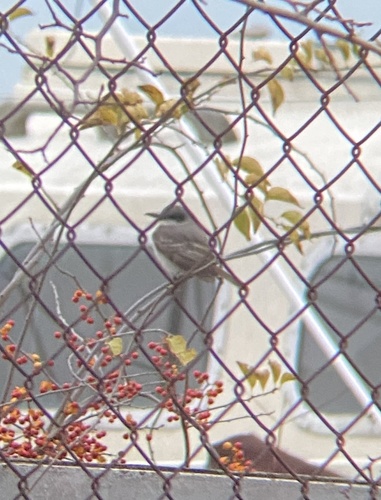 Gray Kingbird
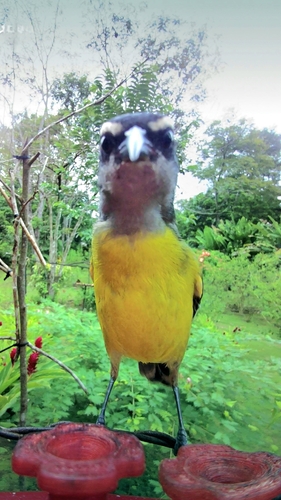 Bananaquit
In breve
Il modo più affidabile per separare il Gray Kingbird dal Bananaquit è attraverso le dimensioni e la struttura complessive: il Gray Kingbird è un grande e robusto catturatore di insetti con un becco pesante e dritto, mentre il Bananaquit è un piccolo e attivo nutrizionista di nettare con un becco sottile e fortemente curvato. I Gray Kingbird immaturi possono mostrare bordi rugginosi sulle ali e sulla coda, ma anche i giovani uccelli sono molto più grandi e robusti di qualsiasi Bananaquit. In volo o posati, nota le parti superiori grigie del kingbird, le parti inferiori bianche e la maschera scura rispetto alle parti superiori scure del bananaquit, alla marcata striscia bianca sugli occhi e alle parti inferiori gialle. La forma del becco e il comportamento alimentare sono anche istantaneamente diversi sul campo.
Consigli di identificazione
- Le dimensioni sono il separatore più veloce: Il Gray Kingbird è circa due volte più lungo e molte volte più pesante del Bananaquit. Se l'uccello sembra delle dimensioni di un passero o più piccolo, non è un kingbird.
- Forma del becco: Il Gray Kingbird ha un becco spesso, dritto e scuro adatto per catturare insetti; il Bananaquit ha un becco sottile e fortemente curvato adattato per l'alimentazione al nettare. La forma del becco è visibile anche da lontano.
- Struttura delle ali e della coda: Il kingbird ha ali lunghe e larghe e una coda lunga e dritta; le ali e la coda del bananaquit sono corte e arrotondate. In volo, il kingbird appare potente e diretto, mentre il bananaquit è svolazzante e debole.
- Segni giovanili: I giovani Gray Kingbird hanno bordi rugginosi sulle copritrici delle ali, sul dorso e sulla coda. I giovani Bananaquit sono solo versioni più opache degli adulti, privi di toni rugginosi o di un pattern simile a quello del kingbird.
- Pattern facciale: Il Gray Kingbird mostra una maschera scura attraverso l'occhio e una corona grigia semplice (con una striscia gialla nascosta sulla corona). Il Bananaquit ha sempre una marcata striscia bianca sugli occhi e una corona nerognola, dando un aspetto 'mascherato' molto diverso da quello del kingbird.
- Parti inferiori: Il kingbird è bianco sotto con un petto grigiastro; il Bananaquit ha un petto, una pancia e un dorso gialli, a volte con una gola bianca o grigia a seconda della sottospecie. Nessun kingbird mostra parti inferiori gialle.
- Parti superiori: Il kingbird è grigio sopra con ali e coda marroni; il Bananaquit è grigio scuro fino a nerastro sopra, a volte quasi nero in alcune sottospecie insulari.
- Comportamento: Il kingbird si posiziona eretto su fili o rami esposti, spesso lanciandosi per catturare insetti. Il Bananaquit è costantemente in movimento, sondando i fiori, e raramente si posa in un luogo aperto per lungo tempo.
- Alimentazione: Il kingbird cattura insetti in volo o da posatoi; il Bananaquit si nutre di nettare e frutta, spesso visto sui fiori o ai mangiatoie per zucchero.
- Contesto dell'habitat: Nei giardini o vicino all'abitazione umana, il Bananaquit è più probabile, specialmente se visto sui fiori o ai mangiatoie. Il kingbird preferisce aree aperte e posatoi prominenti.
- Aggressività: Il kingbird può essere visto inseguire uccelli più grandi o difendere aggressivamente il territorio; il Bananaquit non è aggressivo verso altri uccelli.
- Movimento della coda: Il kingbird può flickare o aprire la coda quando è agitato; il Bananaquit non mostra questo comportamento.
- Voce: Se senti un forte trill rotolante ('pipiri, pipiri'), è il Gray Kingbird. Il richiamo del Bananaquit non è descritto qui.
- Sessi simili: Entrambe le specie mostrano poco dimorfismo sessuale, quindi questi segni funzionano per maschi e femmine.
- Variazione delle sottospecie nel Bananaquit: Alcune sottospecie di Bananaquit hanno gole più chiare o piumaggio più nerastro, ma tutte mantengono la striscia bianca sugli occhi e la pancia gialla, senza mai corrispondere al pattern del kingbird.
Taglia
Il Gray Kingbird è drammaticamente più grande, con una massa corporea media di circa 43,8 g e una lunghezza di 23 cm [wikidata, wikipedia]. Il Bananaquit è molto più piccolo, con un peso che varia da 5,5 a 19 g e una lunghezza di 10–13 cm [wikipedia]. Anche un giovane Gray Kingbird sovrasta il più grande Bananaquit. La massa del kingbird, la lunga coda e il becco pesante sono evidenti a colpo d'occhio, mentre il Bananaquit è un uccello piccolo e delicato con una coda corta e un corpo snello.
Piumaggio
I giovani Gray Kingbird mostrano bordi rugginosi sulle copritrici delle ali, sul dorso e sulla coda, una caratteristica non presente nel Bananaquit a nessuna età. Gli adulti Gray Kingbird sono grigi sopra con ali e coda marroni, parti inferiori bianche, un petto grigiastro e una maschera scura attraverso l'occhio; hanno una striscia gialla nascosta sulla corona che è raramente visibile. I Bananaquit, indipendentemente dall'età, hanno parti superiori grigio scuro fino a nerastre, una corona nera e lati della testa, una marcata striscia bianca sugli occhi e parti inferiori gialle (petto, pancia e dorso). I giovani Bananaquit sono più opachi, con sopracciglia e gola parzialmente gialle, ma non mostrano mai la maschera del kingbird o il pattern delle parti inferiori grigie/bianche. La variazione delle sottospecie nel Bananaquit può influenzare il colore della gola e del petto, ma la striscia bianca sugli occhi e la pancia gialla rimangono distintive. In volo, le ampie ali e la lunga coda del kingbird contrastano con le ali corte e arrotondate e la coda corta del bananaquit.
Comportamento
I Gray Kingbird sono assertivi, spesso visti lanciarsi da posatoi esposti per catturare insetti e mobberanno aggressivamente uccelli molto più grandi. Si posano eretti e immobili, scrutando per la preda. I Bananaquit sono irrequieti, in continuo movimento tra il fogliame, sondando i fiori per il nettare e raramente si siedono fermi a lungo. Non possono sostare come i colibrì e devono posarsi per nutrirsi. I Bananaquit sono anche notevolmente docili intorno agli esseri umani e spesso visitano le mangiatoie per zucchero o frutta.
Habitat
Entrambe le specie possono essere trovate in habitat aperti o semi-aperti, inclusi giardini e parchi, specialmente nei Caraibi. Tuttavia, il Gray Kingbird preferisce aree più aperte e posatoi prominenti, mentre il Bananaquit si trova più spesso ai margini cespugliosi, nei giardini e tra le piante fiorite. Il Bananaquit è assente dalle foreste dense e dalle alte elevazioni, ed è più probabile vederlo in prossimità dell'abitazione umana, specialmente dove sono disponibili fiori o zucchero.
Voce
Il Gray Kingbird emette un forte trill rotolante: 'pipiri, pipiri,' che è alla base di molti dei suoi nomi locali. Le vocalizzazioni del Bananaquit non sono descritte nelle note fornite, quindi la voce non è un separatore affidabile basato su queste informazioni.