

Motmot

Grey-cheeked Bulbul vs Ochraceous Bulbul

Alophoixus tephrogenys versus Alophoixus ochraceus

Play a quiz with Grey-cheeked Bulbul and Ochraceous Bulbul
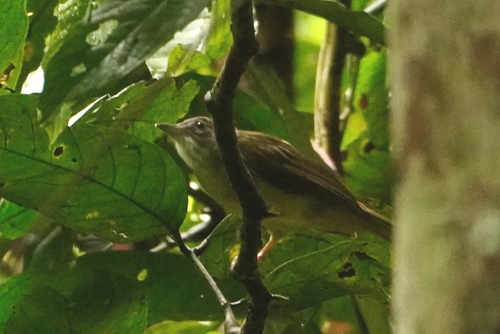
Grey-cheeked Bulbul (Alophoixus tephrogenys) Grey-cheeked Bulbul
Ochraceous Bulbul (Alophoixus ochraceus) Ochraceous Bulbul

Media

Loading…

In short

Grey-cheeked Bulbul and Ochraceous Bulbul are both medium-sized songbirds of Southeast Asian forests and can be confused where their ranges overlap. The most reliable field mark is facial coloration: Grey-cheeked Bulbul shows a distinctly grey cheek patch, while Ochraceous Bulbul has warmer, ochre-toned facial and underpart hues. Both species are structurally similar, but Ochraceous Bulbul tends to appear slightly warmer and more uniform overall. Habitat preferences can help: Ochraceous Bulbul is more often found in the mid-storey of broad-leaved evergreen forests up to 1500 m, while Grey-cheeked Bulbul ranges from lowland to montane forests. No strong age-specific wing or flight pattern differences are documented between these two species.

Identification tips

  1. Facial color is key: Grey-cheeked Bulbul shows a distinctly grey cheek patch, which contrasts with the rest of the face. Ochraceous Bulbul's face is warmer and more ochre-toned, blending with the underparts.
  2. Underpart tone: Ochraceous Bulbul usually has warmer, ochre or yellowish underparts, while Grey-cheeked Bulbul is generally cooler and greyer below.
  3. Overall color impression: In good light, Grey-cheeked Bulbul appears cooler and more contrasted, while Ochraceous Bulbul is warmer and more uniform in tone.
  4. No age-specific wing pattern: Both species lack distinctive juvenile or immature upperwing or flight marks, so do not rely on wing pattern in flight for separation.
  5. Habitat preference: Ochraceous Bulbul is more often seen in the mid-storey of broad-leaved evergreen forests up to 1500 m, while Grey-cheeked Bulbul can be found in both lowland and montane forests. Use this as a supporting clue, not a primary mark.
  6. Range overlap: Check your location—Ochraceous Bulbul is more likely in Sumatra and adjacent Southeast Asia, while Grey-cheeked Bulbul is found from the Malay Peninsula to the Greater Sunda Islands. In overlap zones, use plumage.
  7. No strong structural differences: Bill, tail, and body proportions are very similar and not useful for separation in the field.
  8. Perched vs. in flight: Both species are best identified when perched, as flight views do not reveal strong differences.
  9. Sexes similar: Both species show little or no sexual dimorphism in plumage, so sex is not a useful clue.
  10. Juvenile confusion: Juveniles and immatures are not described as having unique marks for either species, so use the same facial and underpart color cues as for adults.
  11. Lighting pitfalls: In poor light, the grey cheek of Grey-cheeked Bulbul may be hard to discern, and Ochraceous Bulbul may appear duller; try to get multiple angles and good light.
  12. Mixed flocks: Both species may join mixed-species flocks, so do not assume a single species based on flock composition.
  13. Voice not diagnostic: No distinctive vocal differences are documented in the available sources; rely on visual marks.
  14. Seasonal variation: No strong seasonal plumage changes are reported for either species; use the same marks year-round.
  15. Contextual clues: If you are in a broad-leaved rainforest mid-storey at mid-elevation in Sumatra, lean toward Ochraceous Bulbul; in lowland or montane forest elsewhere, consider Grey-cheeked Bulbul, but always confirm with facial and underpart color.

Size

Both species are medium-sized bulbuls in the genus Alophoixus and are very similar in overall size and proportions. No reliable size or mass difference is documented between Grey-cheeked Bulbul and Ochraceous Bulbul based on available sources. In the field, size is not a useful separation point.

Plumage

There are no documented age-specific wing or flight pattern differences between these two species. Both adults and immatures lack distinctive upperwing markings that would allow for separation in flight. The key plumage difference is on the face and underparts: Grey-cheeked Bulbul has a clear grey cheek patch and generally cooler-toned plumage, while Ochraceous Bulbul has ochre or yellowish tones on the face and underparts, giving it a warmer and more uniform appearance. These differences are most apparent in good light and at close range, but can be subtle in poor viewing conditions. Juvenile and immature birds are not described as having unique marks that would aid separation.

Behaviour

Both species are typical bulbuls in their behavior, foraging in the mid to upper levels of the forest. Ochraceous Bulbul is noted for frequenting the mid-storey of broad-leaved evergreen and rainforest habitats. There are no striking behavioral differences that would reliably separate the two in the field.

Habitat

Habitat can provide useful context: Grey-cheeked Bulbul is found from the Malay Peninsula to the Greater Sunda Islands in both lowland and montane moist forests. Ochraceous Bulbul ranges from Southeast Asia to Sumatra and is usually found in the mid-storey of broad-leaved evergreen and rainforests, typically up to 1500 meters elevation. If you encounter a bulbul in the mid-storey of a broad-leaved rainforest at mid-elevation, Ochraceous Bulbul is more likely; in lowland or montane forest, especially outside Sumatra, Grey-cheeked Bulbul is more likely. However, ranges overlap and both can occur in similar habitats, so habitat alone is not diagnostic.

Submit a better description

Use the same sections as the comparison. Your text is published immediately.

Grey-cheeked Bulbul and Ochraceous Bulbul are both medium-sized songbirds of Southeast Asian forests and can be confused where their ranges overlap. The most reliable field mark is facial coloration: Grey-cheeked Bulbul shows a distinctly grey cheek patch, while Ochraceous Bulbul has warmer, ochre-toned facial and underpart hues. Both species are structurally similar, but Ochraceous Bulbul tends to appear slightly warmer and more uniform overall. Habitat preferences can help: Ochraceous Bulbul is more often found in the mid-storey of broad-leaved evergreen forests up to 1500 m, while Grey-cheeked Bulbul ranges from lowland to montane forests. No strong age-specific wing or flight pattern differences are documented between these two species.

  1. Facial color is key: Grey-cheeked Bulbul shows a distinctly grey cheek patch, which contrasts with the rest of the face. Ochraceous Bulbul's face is warmer and more ochre-toned, blending with the underparts.
  2. Underpart tone: Ochraceous Bulbul usually has warmer, ochre or yellowish underparts, while Grey-cheeked Bulbul is generally cooler and greyer below.
  3. Overall color impression: In good light, Grey-cheeked Bulbul appears cooler and more contrasted, while Ochraceous Bulbul is warmer and more uniform in tone.
  4. No age-specific wing pattern: Both species lack distinctive juvenile or immature upperwing or flight marks, so do not rely on wing pattern in flight for separation.
  5. Habitat preference: Ochraceous Bulbul is more often seen in the mid-storey of broad-leaved evergreen forests up to 1500 m, while Grey-cheeked Bulbul can be found in both lowland and montane forests. Use this as a supporting clue, not a primary mark.
  6. Range overlap: Check your location—Ochraceous Bulbul is more likely in Sumatra and adjacent Southeast Asia, while Grey-cheeked Bulbul is found from the Malay Peninsula to the Greater Sunda Islands. In overlap zones, use plumage.
  7. No strong structural differences: Bill, tail, and body proportions are very similar and not useful for separation in the field.
  8. Perched vs. in flight: Both species are best identified when perched, as flight views do not reveal strong differences.
  9. Sexes similar: Both species show little or no sexual dimorphism in plumage, so sex is not a useful clue.
  10. Juvenile confusion: Juveniles and immatures are not described as having unique marks for either species, so use the same facial and underpart color cues as for adults.
  11. Lighting pitfalls: In poor light, the grey cheek of Grey-cheeked Bulbul may be hard to discern, and Ochraceous Bulbul may appear duller; try to get multiple angles and good light.
  12. Mixed flocks: Both species may join mixed-species flocks, so do not assume a single species based on flock composition.
  13. Voice not diagnostic: No distinctive vocal differences are documented in the available sources; rely on visual marks.
  14. Seasonal variation: No strong seasonal plumage changes are reported for either species; use the same marks year-round.
  15. Contextual clues: If you are in a broad-leaved rainforest mid-storey at mid-elevation in Sumatra, lean toward Ochraceous Bulbul; in lowland or montane forest elsewhere, consider Grey-cheeked Bulbul, but always confirm with facial and underpart color.

Both species are medium-sized bulbuls in the genus Alophoixus and are very similar in overall size and proportions. No reliable size or mass difference is documented between Grey-cheeked Bulbul and Ochraceous Bulbul based on available sources. In the field, size is not a useful separation point.

There are no documented age-specific wing or flight pattern differences between these two species. Both adults and immatures lack distinctive upperwing markings that would allow for separation in flight. The key plumage difference is on the face and underparts: Grey-cheeked Bulbul has a clear grey cheek patch and generally cooler-toned plumage, while Ochraceous Bulbul has ochre or yellowish tones on the face and underparts, giving it a warmer and more uniform appearance. These differences are most apparent in good light and at close range, but can be subtle in poor viewing conditions. Juvenile and immature birds are not described as having unique marks that would aid separation.

Both species are typical bulbuls in their behavior, foraging in the mid to upper levels of the forest. Ochraceous Bulbul is noted for frequenting the mid-storey of broad-leaved evergreen and rainforest habitats. There are no striking behavioral differences that would reliably separate the two in the field.

Habitat can provide useful context: Grey-cheeked Bulbul is found from the Malay Peninsula to the Greater Sunda Islands in both lowland and montane moist forests. Ochraceous Bulbul ranges from Southeast Asia to Sumatra and is usually found in the mid-storey of broad-leaved evergreen and rainforests, typically up to 1500 meters elevation. If you encounter a bulbul in the mid-storey of a broad-leaved rainforest at mid-elevation, Ochraceous Bulbul is more likely; in lowland or montane forest, especially outside Sumatra, Grey-cheeked Bulbul is more likely. However, ranges overlap and both can occur in similar habitats, so habitat alone is not diagnostic.

Discard your changes?

You have unsaved edits. If you leave now, those changes will be lost.

Grey-cheeked Bulbul · Ochraceous Bulbul · My Tricky Birds