

Gray-cheeked Bulbul vs Ochraceous Bulbul
Alophoixus tephrogenys contro Alophoixus ochraceus
Fai un quiz con Gray-cheeked Bulbul e Ochraceous Bulbul
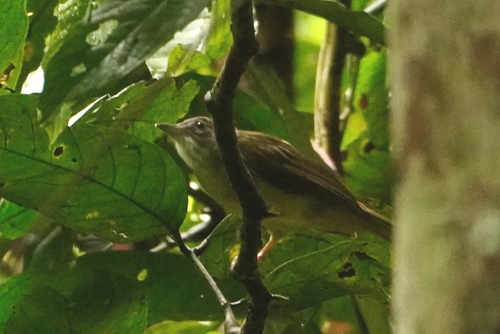 Gray-cheeked Bulbul
 Ochraceous Bulbul
In breve
Gray-cheeked Bulbul e Ochraceous Bulbul sono entrambi uccelli canori di dimensioni medie delle foreste del sud-est asiatico e possono essere confusi dove i loro areali si sovrappongono. Il segno distintivo più affidabile è la colorazione facciale: il Gray-cheeked Bulbul mostra una chiara macchia grigia sulla guancia, mentre l'Ochraceous Bulbul ha tonalità facciali e inferiori più calde e ocra. Entrambe le specie sono strutturalmente simili, ma l'Ochraceous Bulbul tende ad apparire leggermente più caldo e più uniforme nel complesso. Le preferenze di habitat possono aiutare: l'Ochraceous Bulbul si trova più spesso nel piano medio delle foreste sempreverdi a foglia larga fino a 1500 m, mentre il Gray-cheeked Bulbul si trova dalle foreste di pianura a quelle montane. Non sono documentate differenze significative nei modelli di volo o nelle ali specifiche per età tra queste due specie.
Consigli di identificazione
- Facial color is key: Il Gray-cheeked Bulbul mostra una chiara macchia grigia sulla guancia, che contrasta con il resto del viso. Il viso dell'Ochraceous Bulbul è più caldo e con tonalità ocra, fondendosi con le parti inferiori.
- Underpart tone: L'Ochraceous Bulbul ha solitamente parti inferiori più calde, ocra o giallastre, mentre il Gray-cheeked Bulbul è generalmente più fresco e grigio sotto.
- Overall color impression: In buona luce, il Gray-cheeked Bulbul appare più fresco e più contrastato, mentre l'Ochraceous Bulbul è più caldo e più uniforme nel tono.
- No age-specific wing pattern: Entrambe le specie mancano di segni distintivi sulle ali o di modelli di volo per giovani o immaturi, quindi non fare affidamento sul modello delle ali in volo per la separazione.
- Habitat preference: L'Ochraceous Bulbul è più spesso visto nel piano medio delle foreste sempreverdi a foglia larga fino a 1500 m, mentre il Gray-cheeked Bulbul può essere trovato sia nelle foreste di pianura che in quelle montane. Usa questo come indizio di supporto, non come segno primario.
- Range overlap: Controlla la tua posizione—l'Ochraceous Bulbul è più probabile in Sumatra e nel sud-est asiatico adiacente, mentre il Gray-cheeked Bulbul si trova dalla penisola malese alle isole della Grande Sunda. Nelle zone di sovrapposizione, usa il piumaggio.
- No strong structural differences: Il becco, la coda e le proporzioni del corpo sono molto simili e non utili per la separazione sul campo.
- Perched vs. in flight: Entrambe le specie sono meglio identificate quando sono posate, poiché le viste in volo non rivelano forti differenze.
- Sexes similar: Entrambe le specie mostrano poco o nessun dimorfismo sessuale nel piumaggio, quindi il sesso non è un indizio utile.
- Juvenile confusion: I giovani e gli immaturi non sono descritti come aventi segni unici per nessuna delle due specie, quindi usa gli stessi indizi di colore facciale e delle parti inferiori degli adulti.
- Lighting pitfalls: In scarsa illuminazione, la guancia grigia del Gray-cheeked Bulbul può essere difficile da discernere, e l'Ochraceous Bulbul può apparire più opaco; cerca di ottenere più angolazioni e buona luce.
- Mixed flocks: Entrambe le specie possono unirsi a stormi misti, quindi non assumere una singola specie basandoti sulla composizione dello stormo.
- Voice not diagnostic: Non sono documentate differenze vocali distintive nelle fonti disponibili; fai affidamento sui segni visivi.
- Seasonal variation: Non sono riportati forti cambiamenti nel piumaggio stagionale per nessuna delle due specie; usa gli stessi segni tutto l'anno.
- Contextual clues: Se ti trovi nel piano medio di una foresta pluviale a foglia larga a media elevazione in Sumatra, inclina verso l'Ochraceous Bulbul; in foreste di pianura o montane altrove, considera il Gray-cheeked Bulbul, ma conferma sempre con il colore facciale e delle parti inferiori.
Taglia
Entrambe le specie sono bulbuli di dimensioni medie del genere Alophoixus e sono molto simili in dimensioni e proporzioni complessive. Non sono documentate differenze affidabili di dimensioni o massa tra il Gray-cheeked Bulbul e l'Ochraceous Bulbul basate sulle fonti disponibili. Sul campo, la dimensione non è un punto utile per la separazione.
Piumaggio
Non ci sono differenze documentate nei modelli di volo o nelle ali specifiche per età tra queste due specie. Sia gli adulti che gli immaturi mancano di segni distintivi sulle ali superiori che consentirebbero la separazione in volo. La principale differenza nel piumaggio è sul viso e sulle parti inferiori: il Gray-cheeked Bulbul ha una chiara macchia grigia sulla guancia e un piumaggio generalmente più fresco, mentre l'Ochraceous Bulbul ha tonalità ocra o giallastre sul viso e sulle parti inferiori, conferendogli un aspetto più caldo e uniforme. Queste differenze sono più evidenti in buona luce e a distanza ravvicinata, ma possono essere sottili in condizioni di visione scadenti. Gli uccelli giovani e immaturi non sono descritti come aventi segni unici che aiuterebbero la separazione.
Comportamento
Entrambe le specie sono bulbuli tipici nel loro comportamento, foraggiando nei livelli medi e superiori della foresta. L'Ochraceous Bulbul è noto per frequentare il piano medio delle foreste sempreverdi a foglia larga e degli habitat di foresta pluviale. Non ci sono differenze comportamentali evidenti che separerebbero affidabilmente le due specie sul campo.
Habitat
L'habitat può fornire un utile contesto: il Gray-cheeked Bulbul si trova dalla penisola malese alle isole della Grande Sunda in foreste umide sia di pianura che montane. L'Ochraceous Bulbul si estende dal sud-est asiatico a Sumatra e si trova solitamente nel piano medio delle foreste sempreverdi a foglia larga e delle foreste pluviali, tipicamente fino a 1500 metri di elevazione. Se incontri un bulbul nel piano medio di una foresta pluviale a foglia larga a media elevazione, è più probabile che sia un Ochraceous Bulbul; nelle foreste di pianura o montane, specialmente al di fuori di Sumatra, è più probabile che sia un Gray-cheeked Bulbul. Tuttavia, gli areali si sovrappongono e entrambe possono verificarsi in habitat simili, quindi l'habitat da solo non è diagnostico.
Gray-cheeked Bulbul · Ochraceous Bulbul · I miei uccelli difficili