

Grey-bellied Cuckoo vs Common Cuckoo
Cacomantis passerinus versus Cuculus canorus
Play a quiz with Grey-bellied Cuckoo and Common Cuckoo
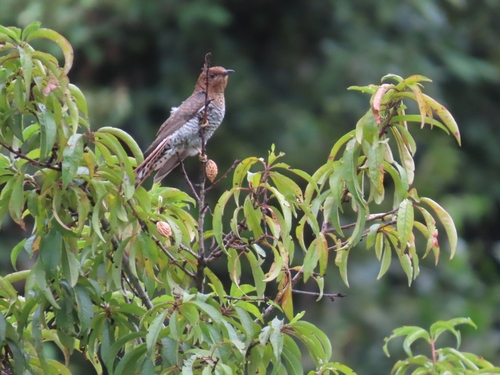 Grey-bellied Cuckoo
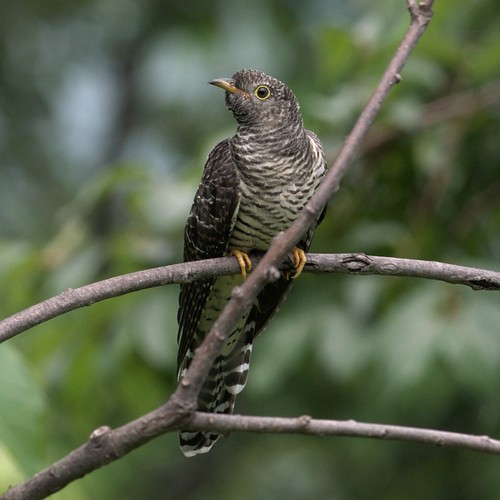 Common Cuckoo
In short
The most reliable field mark for separating Grey-bellied Cuckoo from Common Cuckoo is size: Common Cuckoo is much larger and bulkier, with a wingspan and body mass nearly double that of Grey-bellied. For birds in juvenile or female plumage, focus on upperwing and underpart barring: juvenile Common Cuckoos show a distinctive white nape patch and broad, creamy feather fringes on the upperwing, features never present in Grey-bellied. Adult Grey-bellied Cuckoos are compact, mostly grey with a white lower belly and a small white wing patch, while Common Cuckoo adults have a sharply demarcated grey breast and heavily barred underparts. Both can show rufous morphs, but the pattern and extent of barring differ. Voice and jizz also help: Common Cuckoo gives the classic 'cuck-oo' call and often perches with drooped wings, while Grey-bellied has a persistent 'pee-pip-pee-pee' and a more upright stance.
Identification tips
- Size is the fastest check: If the bird is large, long-tailed, and heavy-bodied (closer to a pigeon or small raptor), it's a Common Cuckoo. If it's noticeably smaller and more compact, it's Grey-bellied.
- Juvenile Common Cuckoo shows a white nape patch and broad, whitish feather fringes on upperwing coverts and primaries—never present in Grey-bellied of any age.
- Juvenile and rufous morph Common Cuckoo have heavily barred upperparts and tail, with creamy-white feather edges; Grey-bellied juveniles are dull grey, lacking strong barring and white nape.
- Adult male Common Cuckoo has a sharply defined grey throat and breast with a sudden transition to heavily barred underparts. Grey-bellied adult is mostly grey with a white lower belly and undertail, and a small white wing patch.
- Female Grey-bellied (rufous morph) is reddish brown above with dark barring and an unbarred tail; female Common Cuckoo (rufous morph) is also reddish brown but with narrower, more regular dark bars and a barred tail.
- In flight, Common Cuckoo looks long-winged and sparrowhawk-like, with regular wingbeats and a long, barred tail. Grey-bellied is shorter-winged, compact, and shows a small white wing patch.
- Common Cuckoo often perches with drooped wings and a raised or wagged tail, especially when singing. Grey-bellied tends to perch more upright and flicks its tail downward when calling.
- Voice is diagnostic: Common Cuckoo gives a clear 'cuck-oo' (male) or bubbling call (female); Grey-bellied gives a persistent 'pee-pip-pee-pee.'
- Common Cuckoo's underpart barring is always sharp and extensive; Grey-bellied's is less so, and the belly is often plain white.
- If you see a white patch on the wing, check size: on a small bird it's Grey-bellied; on a large bird, it's not diagnostic.
- Habitat overlap can occur, but Common Cuckoo is a migrant or winter visitor in much of Asia, while Grey-bellied is more likely resident.
- If the bird is associating with warblers in gardens or scrub in South Asia, Grey-bellied is more likely; in open moorland or temperate woodland, especially in Europe, Common Cuckoo is expected.
- Both species can show rufous morphs, but the pattern of barring and tail (barred in Common, unbarred in Grey-bellied female) helps.
- If the bird is calling persistently from a low perch with its tail depressed, suspect Grey-bellied. If calling from an open perch with drooped wings, suspect Common.
- Always consider season and location: Common Cuckoo is absent from most of South Asia outside migration and winter; Grey-bellied is widespread year-round in much of Asia.
Size
Common Cuckoo is substantially larger, measuring 32–34 cm in length with a wingspan of 55–60 cm and a body mass around 111.5 g [wikidata]. Grey-bellied Cuckoo is much smaller, at about 23 cm in length (no mass data available, but clearly lighter). In the field, Common Cuckoo appears long-winged and heavy-bodied, while Grey-bellied is compact and noticeably slighter. This size difference is often obvious even at a distance or in flight.
Plumage
- Juveniles: Juvenile Common Cuckoo is distinctive with a white nape patch and broad, whitish feather fringes on the upperwing coverts and primaries, plus heavily barred upperparts (especially in rufous morphs). Grey-bellied Cuckoo juveniles are duller grey, resembling the female, and lack the white nape patch and bold upperwing fringing.
- Adult males: Grey-bellied Cuckoo is mainly grey with a white lower belly and undertail, and a small white wing patch. Common Cuckoo adult males are slate-grey with a sharply defined grey throat and breast, contrasting with heavily barred underparts. The underpart barring in Common Cuckoo is more extensive and sharply defined than in Grey-bellied.
- Adult females: Both species can show rufous morphs. In Grey-bellied, some females are dark-barred reddish brown above with unbarred tails and strongly barred whitish underparts. Common Cuckoo rufous morph females have reddish-brown upperparts with narrow dark bars, and the barring pattern is more regular and extensive. The tail of Common Cuckoo is always barred, while Grey-bellied female's tail is unbarred.
- Flight views: Common Cuckoo in flight shows long, pointed wings and a long tail, with a sparrowhawk-like jizz. Grey-bellied appears shorter-winged and more compact, with a smaller white wing patch visible at close range.
Behaviour
Common Cuckoo often perches openly with drooped wings and a raised or wagged tail, especially when singing. Its flight is strong, direct, and reminiscent of a small raptor, with regular wingbeats. Grey-bellied Cuckoo tends to adopt a more upright posture when perched and is generally more active and restless. It often flicks its tail downward when calling. Both are brood parasites, but their hosts differ (not a field mark).
Habitat
Both species can occur in similar open habitats, but Common Cuckoo is more likely in temperate woodlands, moorland, and open country during migration and breeding in Europe and temperate Asia. Grey-bellied Cuckoo is found in a wider range of Asian habitats, often in scrub, gardens, and woodland edges. Overlap is possible in South Asia, but Common Cuckoo is a passage migrant or winter visitor there, while Grey-bellied is resident or more common.
Voice
Common Cuckoo males give the classic two-note 'cuck-oo' call, repeated in series, with a variable interval and sometimes other calls as the season progresses. Females have a loud, bubbling call. Grey-bellied Cuckoo is very vocal, with a persistent, high-pitched 'pee-pip-pee-pee' call, often given with the tail depressed. The calls are very different and diagnostic if heard well.