

gray-bellied cuckoo vs cuco-canoro
Cacomantis passerinus versus Cuculus canorus
Jogue um quiz com gray-bellied cuckoo e cuco-canoro
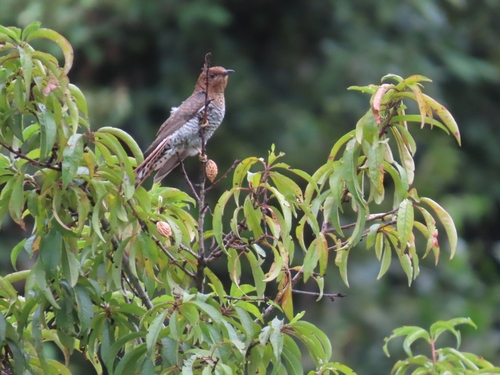 gray-bellied cuckoo
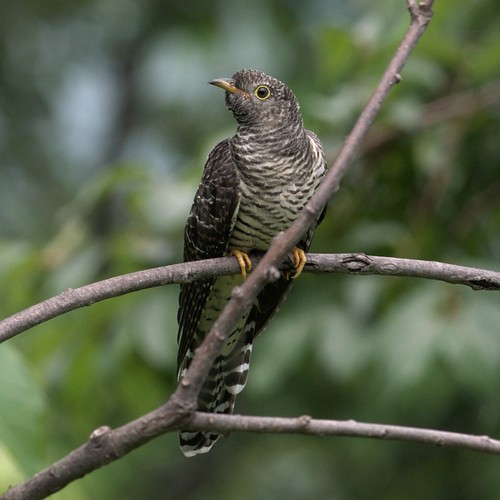 cuco-canoro
Em resumo
A marca de campo mais confiável para separar o gray-bellied cuckoo do cuco-canoro é o tamanho: o cuco-canoro é muito maior e mais robusto, com uma envergadura e massa corporal quase o dobro do gray-bellied. Para aves em plumagem juvenil ou feminina, concentre-se nas barras da parte superior da asa e das partes inferiores: os cucos-canoros juvenis mostram uma distinta mancha branca na nuca e largas franjas de penas cremosas na parte superior da asa, características nunca presentes no gray-bellied. Os cucos-gray-bellied adultos são compactos, principalmente cinzentos, com uma barriga inferior branca e uma pequena mancha branca na asa, enquanto os adultos cuco-canoro têm um peito cinza nitidamente demarcado e partes inferiores fortemente barradas. Ambos podem mostrar morfos ruivos, mas o padrão e a extensão das barras diferem. A voz e a postura também ajudam: o cuco-canoro emite o clássico chamado 'cuck-oo' e frequentemente pousa com as asas caídas, enquanto o gray-bellied tem um persistente 'pee-pip-pee-pee' e uma postura mais ereta.
Dicas de identificação
- O tamanho é a verificação mais rápida: Se a ave é grande, de cauda longa e corpo pesado (mais próximo de uma pomba ou pequeno rapinante), é um cuco-canoro. Se é visivelmente menor e mais compacto, é gray-bellied.
- O cuco-canoro juvenil mostra uma mancha branca na nuca e largas franjas de penas esbranquiçadas nas coberturas da asa superior e primárias—nunca presente no gray-bellied de qualquer idade.
- Juvenis e morfos ruivos do cuco-canoro têm partes superiores e cauda fortemente barradas, com bordas de penas cremosas; os juvenis gray-bellied são cinzentos opacos, sem forte barramento e sem mancha branca na nuca.
- O macho adulto do cuco-canoro tem uma garganta e peito cinza nitidamente definidos com uma transição súbita para partes inferiores fortemente barradas. O adulto gray-bellied é principalmente cinza com uma barriga inferior e subcauda brancas, e uma pequena mancha branca na asa.
- A fêmea gray-bellied (morf ruivo) é marrom avermelhada acima com barras escuras e uma cauda sem barras; a fêmea do cuco-canoro (morf ruivo) também é marrom avermelhada, mas com barras escuras mais estreitas e regulares e uma cauda barrada.
- Em voo, o cuco-canoro parece ter asas longas e é semelhante a um gavião, com batidas de asas regulares e uma cauda longa e barrada. O gray-bellied é mais curto nas asas, compacto e mostra uma pequena mancha branca na asa.
- O cuco-canoro frequentemente pousa com as asas caídas e a cauda levantada ou balançando, especialmente ao cantar. O gray-bellied tende a pousar de forma mais ereta e balança a cauda para baixo ao chamar.
- A voz é diagnóstica: o cuco-canoro emite um claro 'cuck-oo' (macho) ou um chamado borbulhante (fêmea); o gray-bellied emite um persistente 'pee-pip-pee-pee.'
- As barras das partes inferiores do cuco-canoro são sempre nítidas e extensas; as do gray-bellied são menos assim, e a barriga é frequentemente branca simples.
- Se você ver uma mancha branca na asa, verifique o tamanho: em uma ave pequena é gray-bellied; em uma ave grande, não é diagnóstico.
- Sobreposição de habitat pode ocorrer, mas o cuco-canoro é um migrante ou visitante de inverno em grande parte da Ásia, enquanto o gray-bellied é mais provável de ser residente.
- Se a ave estiver associando-se a tentilhões em jardins ou arbustos no Sul da Ásia, é mais provável que seja gray-bellied; em charnecas abertas ou florestas temperadas, especialmente na Europa, espera-se o cuco-canoro.
- Ambas as espécies podem mostrar morfos ruivos, mas o padrão de barramento e cauda (barrada no cuco-canoro, sem barras na fêmea gray-bellied) ajuda.
- Se a ave estiver chamando persistentemente de um poleiro baixo com a cauda deprimida, suspeite do gray-bellied. Se chamando de um poleiro aberto com as asas caídas, suspeite do cuco-canoro.
- Sempre considere a estação e a localização: o cuco-canoro está ausente na maior parte do Sul da Ásia fora da migração e inverno; o gray-bellied é amplamente distribuído durante todo o ano em grande parte da Ásia.
Tamanho
O cuco-canoro é substancialmente maior, medindo 32–34 cm de comprimento com uma envergadura de 55–60 cm e uma massa corporal em torno de 111,5 g [wikidata]. O gray-bellied cuckoo é muito menor, com cerca de 23 cm de comprimento (sem dados de massa disponíveis, mas claramente mais leve). No campo, o cuco-canoro parece ter asas longas e corpo pesado, enquanto o gray-bellied é compacto e visivelmente mais leve. Essa diferença de tamanho é frequentemente óbvia mesmo à distância ou em voo.
Plumagem
- Juvenis: O cuco-canoro juvenil é distinto com uma mancha branca na nuca e largas franjas de penas esbranquiçadas nas coberturas da asa superior e primárias, além de partes superiores fortemente barradas (especialmente em morfos ruivos). Os juvenis do gray-bellied cuckoo são cinzentos mais opacos, assemelhando-se à fêmea, e carecem da mancha branca na nuca e das franjas ousadas da asa superior.
- Machos adultos: O gray-bellied cuckoo é principalmente cinza com uma barriga inferior e subcauda brancas, e uma pequena mancha branca na asa. Os machos adultos do cuco-canoro são cinza-ardósia com uma garganta e peito cinza nitidamente definidos, contrastando com partes inferiores fortemente barradas. O barramento das partes inferiores no cuco-canoro é mais extenso e nitidamente definido do que no gray-bellied.
- Fêmeas adultas: Ambas as espécies podem mostrar morfos ruivos. No gray-bellied, algumas fêmeas são marrom avermelhadas com barras escuras acima, com caudas sem barras e partes inferiores brancas fortemente barradas. As fêmeas do cuco-canoro morfos ruivos têm partes superiores marrom-avermelhadas com barras escuras estreitas, e o padrão de barramento é mais regular e extenso. A cauda do cuco-canoro é sempre barrada, enquanto a cauda da fêmea gray-bellied é sem barras.
- Visões em voo: O cuco-canoro em voo mostra asas longas e pontiagudas e uma cauda longa, com uma aparência semelhante a um gavião. O gray-bellied parece ter asas mais curtas e ser mais compacto, com uma pequena mancha branca na asa visível de perto.
Comportamento
O cuco-canoro frequentemente pousa abertamente com as asas caídas e a cauda levantada ou balançando, especialmente ao cantar. Seu voo é forte, direto e lembra um pequeno rapinante, com batidas de asas regulares. O gray-bellied cuckoo tende a adotar uma postura mais ereta quando pousa e é geralmente mais ativo e inquieto. Frequentemente balança a cauda para baixo ao chamar. Ambos são parasitas de ninho, mas seus hospedeiros diferem (não é uma marca de campo).
Habitat
Ambas as espécies podem ocorrer em habitats abertos semelhantes, mas o cuco-canoro é mais provável em florestas temperadas, charnecas e áreas abertas durante a migração e reprodução na Europa e na Ásia temperada. O gray-bellied cuckoo é encontrado em uma gama mais ampla de habitats asiáticos, frequentemente em arbustos, jardins e bordas de florestas. A sobreposição é possível no Sul da Ásia, mas o cuco-canoro é um migrante de passagem ou visitante de inverno lá, enquanto o gray-bellied é residente ou mais comum.
Voz
Os machos do cuco-canoro emitem o clássico chamado de duas notas 'cuck-oo', repetido em série, com um intervalo variável e às vezes outros chamados à medida que a estação avança. As fêmeas têm um chamado alto e borbulhante. O gray-bellied cuckoo é muito vocal, com um chamado persistente e agudo 'pee-pip-pee-pee', frequentemente dado com a cauda deprimida. Os chamados são muito diferentes e diagnósticos se ouvidos bem.